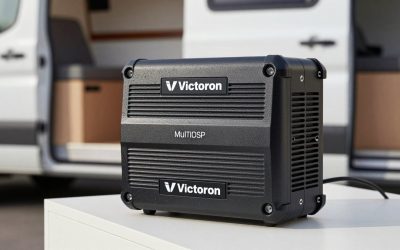
Pure Sine Wave Inverter Vanlife” style=”max-width:100%;height:auto;margin-bottom:1rem” loading=”lazy”>
TL;DR: A pure sine wave inverter is essential for running sensitive electronics, laptops, and AC appliances in your van. This guide covers how to choose the right size, wire it safely, and pick the best models for vanlife builds.
Pure Sine Wave Inverter for Vanlife: Complete Buyer’s Guide and Install Tips
Your van’s 12V system runs lights, fans, and a fridge with no problem. But the moment you want to charge a laptop properly, run a coffee maker, use a CPAP machine, or power any device with a sensitive processor — you need AC power. That means an inverter. And not just any inverter: a pure sine wave inverter.
As an Amazon Associate we earn from qualifying purchases.



The difference between pure sine wave and modified sine wave isn’t marketing — it’s physics. Sensitive electronics can be damaged, run inefficiently, or fail entirely on modified sine wave power. Pure sine wave output matches what comes out of a wall outlet at home. For vanlife, that means everything works, everything charges properly, and nothing gets fried.
🛒 Best Price Today on Amazon
Prime members get fast, free shipping on everything above, plus member-only deals. New members get a 30-day free trial — cancel anytime.
Start 30-Day Prime Free Trial →See Today’s Amazon Deals- Pure Sine Wave vs. Modified Sine Wave: What Actually Matters
- Top Pure Sine Wave Inverters for Vanlife
- How to Size Your Pure Sine Wave Inverter
- Wiring Your Pure Sine Wave Inverter: Safety First
- Maximizing Inverter Efficiency in a Van
- Pure Sine Wave Inverter for Vanlife: FAQ
- Build a Van Electrical System That Actually Works
- Related Guides
- Frequently Asked Questions
- Related Articles
Pure Sine Wave vs. Modified Sine Wave: What Actually Matters
Modified sine wave inverters are cheaper. That’s their only advantage. The tradeoff:
| Feature | Pure Sine Wave | Modified Sine Wave |
|---|---|---|
| Output quality | Identical to grid power | Stepped approximation |
| Laptop compatibility | Full — charges properly | May overheat charger |
| CPAP/medical devices | Safe | Not recommended |
| Variable speed motors | Efficient, quiet | Noisy, less efficient |
| LED dimmers | Flicker-free | Often flickers |
| Cost | Higher | Lower |
For a van build where you’re running a laptop daily, a CPAP nightly, or any quality audio gear — pure sine wave is the only option worth considering. The extra cost pays back in equipment longevity alone.
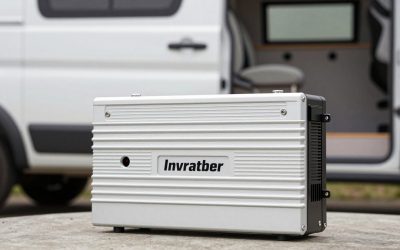
Top Pure Sine Wave Inverters for Vanlife
See also: How Long Will a 100Ah Battery Last in a Van? Runtime Math Explained • Best Level 2 EV Chargers for Home
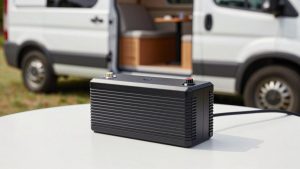
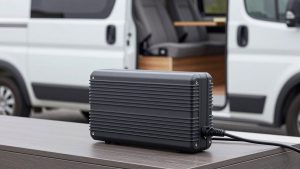
These inverters are proven in van and off-grid builds — matched for wattage, efficiency, and reliability:


As an Amazon Associate we earn from qualifying purchases. Product prices and availability are accurate as of the date/time indicated.


As an Amazon Associate we earn from qualifying purchases. Product prices and availability are accurate as of the date/time indicated.

Ivation Portable Camping Shower | Compact Handheld & Hands-Free Rechargeable Outdoor Shower Head & Cleaning System w/ 3.7V Pump, 6-Ft Hose, Bidet Head, Removable Filter, Multiuse Hook & USB Cable


As an Amazon Associate we earn from qualifying purchases. Product prices and availability are accurate as of the date/time indicated.
How to Size Your Pure Sine Wave Inverter
Choosing the right wattage is the most important decision. Undersize it and you’ll trip the overload protection constantly. Oversize it and you’re carrying dead weight and wasting idle draw.
Calculate Your Peak Load
List everything you might run simultaneously and add up the wattages. Most appliances list wattage on the label or in specs. Key figures for common van devices:
- Laptop (65W charger): 65W
- Coffee maker: 900-1200W
- Electric kettle: 1000-1500W
- Hair dryer (low setting): 600-800W
- CPAP machine: 30-60W
- Phone chargers (2x): 20-40W
- Blender: 300-600W
Add your simultaneous loads and select an inverter rated at least 20% above that total — this accounts for startup surge and gives the inverter room to breathe thermally.
Common Inverter Size Recommendations
- 300-500W: Laptop, phone charging, small devices only
- 1000-1500W: Most vanlife builds — handles coffee maker, kettle, and electronics
- 2000-3000W: Full-featured builds with heavy kitchen appliances or power tools
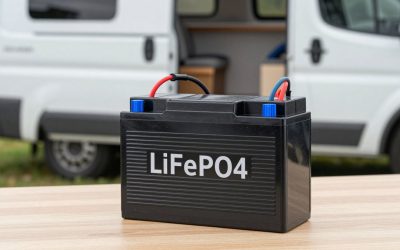
For most vanlifers, a 1000-2000W pure sine wave inverter covers everything without being overbuilt. Pair it with a solid battery bank — see our guide on LiFePO4 batteries for the best inverter-compatible options.
Wiring Your Pure Sine Wave Inverter: Safety First
Cable Sizing
Inverter wiring is the most safety-critical part of a van electrical build. Undersized cables overheat and cause fires. Use this as a baseline:
- 500W inverter: 4 AWG cable (up to 8 feet from battery)
- 1000W inverter: 2 AWG cable
- 2000W inverter: 1/0 AWG cable
- 3000W inverter: 2/0 AWG cable
Always run the shortest cable possible between inverter and battery. Every foot of cable adds resistance, which means heat and voltage drop.
Fusing Requirements
Install an ANL fuse or Class T fuse within 18 inches of the battery on the positive cable. This is non-negotiable — an unfused cable between battery and inverter is a fire hazard. Fuse size should match your inverter’s maximum input current (typically listed in the spec sheet) plus 25%.
For a complete van electrical system overview, read our MPPT solar charge controller guide — it covers how all the electrical components tie together.
Placement and Ventilation
Inverters generate heat under load. Mount yours in a ventilated location — not in a sealed cabinet, not directly against foam insulation. Leave at least 6 inches of clearance on the fan intake and exhaust sides. Many vanlifers mount their inverter under the bed platform or in a dedicated electrical compartment with ventilation holes.
Maximizing Inverter Efficiency in a Van
Every watt-hour matters when you’re running on battery. Inverters have idle draw even when nothing is plugged in — a 2000W inverter may draw 15-25W just being on. Switch it off when not in use.
- Use a dedicated switch: Wire a battery disconnect or rocker switch to power the inverter only when needed.
- Run high-wattage appliances when solar is producing: Coffee in the morning, cooking at midday. See our 200W solar panel guide for maximizing solar input.
- Battery voltage monitoring: Never run a lithium battery below 20% state of charge while inverting. Voltage drops under load; a battery showing 12.4V at rest may hit 11.8V under a 1500W inverter load.
- Consider a battery-to-battery charger: For high-draw appliances, charging your house battery from the alternator while driving keeps you topped up without relying solely on solar.
Also consider a portable power station as a complement — for light-duty inverter needs, a station may be more efficient than running the full house inverter.
Pure Sine Wave Inverter for Vanlife: FAQ
Can I run a coffee maker on a pure sine wave inverter in my van?
Yes — a pure sine wave inverter handles resistive heating loads like coffee makers perfectly. A standard drip coffee maker draws 900-1200W, so you’ll need at least a 1500W inverter (for headroom). The brief runtime of a coffee cycle (5-8 minutes) draws around 80-160Wh — very manageable with a 100Ah LiFePO4 battery.
What size pure sine wave inverter do I need for vanlife?
For most vanlifers — laptop charging, phone/tablet charging, electric kettle, small kitchen appliances — a 1000-1500W pure sine wave inverter covers the bases. Go to 2000W if you want to run a hair dryer or power tools occasionally. Size to your actual loads, not your fantasy loads.
Does a pure sine wave inverter drain my battery faster?
A pure sine wave inverter is actually more efficient than modified sine wave when running real loads, because devices draw less reactive current. The inverter itself has about 85-92% efficiency — meaning for every 100W you pull from the outlet, you draw roughly 110-118W from the battery. This is normal and expected.
Can I connect a pure sine wave inverter directly to my lithium battery?
Yes — most 12V pure sine wave inverters connect directly to the battery bank via heavy cables. Make sure your lithium battery’s BMS can handle the peak discharge current your inverter demands. A 2000W inverter at 12V pulls up to 167A at peak — your BMS and battery must be rated for that continuous discharge.
Is a 2000W pure sine wave inverter enough for vanlife?
For the vast majority of vanlifers, 2000W is more than enough. You can run any small kitchen appliance, charge all your devices, power a CPAP, and run a blender. The only things a 2000W inverter won’t handle comfortably are full-size microwaves (1200-1800W draw plus startup surge) and air conditioners. Both are edge cases for van builds.
Build a Van Electrical System That Actually Works
A pure sine wave inverter is the component that bridges your 12V van system and the AC world — unlocking every appliance and charger that would otherwise be off-limits. Size it for your real loads, wire it with properly rated cable and fusing, and pair it with adequate battery storage. The combination of a quality LiFePO4 battery, MPPT solar controller, and pure sine wave inverter gives you a van electrical system that genuinely supports full-time living. For a complete power overview, also see our comparison of lithium vs AGM deep cycle batteries to ensure your foundation is right.
Related Guides
- Quick Picks: Best Van Life Portable Generator and Solar…
- Lithium Battery Monitoring System
- Quick Picks: Best Portable Power Stations for Van Life
Frequently Asked Questions
Do I really need pure sine wave over modified sine wave?
Yes for anything with a motor, a compressor, a microwave, medical equipment like a CPAP, or sensitive electronics. Modified sine wave makes motors run hot and buzz, shortens their life and can damage laptop chargers. The price gap has narrowed enough that modified sine is rarely worth the saving.
What size inverter should I buy?
Size to your largest simultaneous load plus surge, not your total appliance count. A 1,000-1,500W unit runs a laptop, blender and small microwave. A 2,000-3,000W inverter is needed for induction cooking or a hair dryer, but it also demands a battery bank and cabling that can deliver 200-250 amps.
How much power does the inverter waste just being on?
Idle draw is typically 0.5-2 amps at 12V, or 15-50Wh per day doing nothing at all, and larger inverters idle higher. Use the standby or eco mode, or better, put the inverter on a switch and turn it off whenever you are not running a 120V appliance.
What cable and fuse does the inverter need?
A 2,000W inverter draws roughly 200 amps at 12V, needing 2/0 AWG cable on runs under five feet plus a 250A Class T fuse within a few inches of the battery positive. Undersized cable is the leading cause of inverter shutdowns and is a genuine fire hazard.
Where should I mount it and does it need ventilation?
Mount it close to the battery to keep cables short, in a dry, ventilated space with several inches of clearance around the cooling fins, and never inside a sealed battery box or under a bed with no airflow. Keep it off the floor where water can reach, and mount it vertically if the manual specifies.