- Top Pick: Renogy 200W Portable Solar Panel for Power Stations, 25% Efficiency
- Best Value: 200W Portable Solar Panel for Power Station, 24% High Efficiency ETFE Foldable Solar Panel Charger, QC3.0, Type-C 60W, MC4 Output, IP65 Waterproof, for Outdoor Camping, RV, Emergency Power Supply
- Premium Choice: ZOUPW 200W Portable Solar Panel for Power Station,23.5% Efficiency
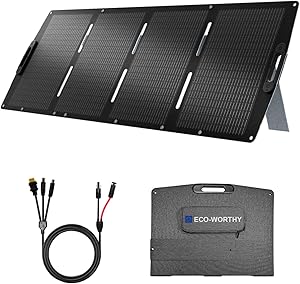
TL;DR: A portable solar panel 200w hits the sweet spot for vanlife — enough juice to run a 12V fridge, charge laptops, and keep lights on without a rooftop install. This guide covers wattage math, panel types, top picks, and what to buy for your specific rig.
Best Portable Solar Panel 200W for Vanlife: Buyer’s Guide 2026
You’re parked in the desert for a week. No hookups. Your phone, laptop, fridge, and fan are all pulling from the same battery bank. That bank needs to refill every day — and a portable solar panel 200w is exactly how you do it without running an engine or a generator.
As an Amazon Associate we earn from qualifying purchases at no extra cost to you.


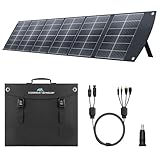

We’ve lived this. We’ve tested panels in monsoons, direct Arizona sun, and overcast Oregon coast. Here’s what actually matters when buying a 200W portable panel for van or RV life.
🛒 Best Price Today on Amazon
Prime members get fast, free shipping on everything above, plus member-only deals. New members get a 30-day free trial — cancel anytime.
Start 30-Day Prime Free Trial →See Today’s Amazon Deals- Why 200W Is the Vanlife Sweet Spot
- Panel Types: What the Labels Actually Mean
- Top Picks at a Glance
- How to Size Your Solar System
- Charge Controller: MPPT vs PWM
- Portable vs. Rooftop: When to Choose Portable
- Wiring Basics for a 200W Portable Panel
- Angle and Positioning: Free Watts You’re Leaving on the Table
- Real-World Output: What to Expect
- 5 Things to Check Before You Buy
- FAQ
- Bottom Line
- Frequently Asked Questions
- Related Articles
- Related Guides
Why 200W Is the Vanlife Sweet Spot
Under ideal conditions, a 200W panel generates roughly 800–1000Wh per day (4–5 peak sun hours). That covers:
- A 12V compressor fridge running 24 hours (~40–60Wh/day)
- Two full laptop charges (~90Wh each)
- LED lighting all evening (~20Wh)
- Phone, camera, and small device top-offs
Under 100W and you’re always chasing sun. Over 400W and portability disappears. Two 200W panels is the classic upgrade path — start with one, add a second when power needs grow.
Panel Types: What the Labels Actually Mean
See also: MaxxFan Deluxe vs Fantastic Fan for Vans: Which to Choose? • Can I Lay LVP in a Van? Van Flooring Guide
| Type | Efficiency | Best For | Durability |
|---|---|---|---|
| Monocrystalline | 20–23% | All-around vanlife use | High — tempered glass |
| Bifacial | 22–25% | Open sky, reflective ground | High — dual glass |
| Flexible/ETFE | 18–21% | Curved rooftops, ultralight | Medium — scratch-prone |
| Foldable Suitcase | 19–22% | Portable ground deploy | High — hinged aluminum |
For most vanlifers: monocrystalline foldable panels. They’re rigid enough to last years, fold flat for storage, and deploy in 30 seconds. Pair with a proper MPPT charge controller — not PWM — to get 20–30% more harvest.
Top Picks at a Glance


As an Amazon Associate we earn from qualifying purchases. Product prices and availability are accurate as of the date/time indicated.


As an Amazon Associate we earn from qualifying purchases. Product prices and availability are accurate as of the date/time indicated.

WAYSKA Diesel Heater 12V, 5L Tank, Diesel Heater 2KW, Muffler, Diesel Parking Heater with LCD Monitor & Remote Control for Trucks, Trailer, Boat and Motor-Home


As an Amazon Associate we earn from qualifying purchases. Product prices and availability are accurate as of the date/time indicated.
How to Size Your Solar System
Before buying, do a quick load calculation. Add up your daily watt-hours:
| Device | Watts | Hours/Day | Wh/Day |
|---|---|---|---|
| 12V Fridge | 45W avg | 24h | ~300Wh |
| Laptop | 65W | 2h | 130Wh |
| LED Lights | 20W | 4h | 80Wh |
| Phone/USB | 15W | 2h | 30Wh |
| Total | ~540Wh |
540Wh daily load. A 200W panel in 4–5 peak sun hours = 800–1000Wh. You have margin. Add a second panel for cloudy climates or if you work remotely on multiple screens.
Charge Controller: MPPT vs PWM
This choice matters more than most people realize. A PWM controller wastes 20–30% of your solar harvest. An MPPT controller maximizes output regardless of battery state — worth every extra dollar on a 200W setup. Minimum spec: 20A MPPT for a single 200W panel, 40A for two.
Portable vs. Rooftop: When to Choose Portable
- Choose portable if: you rent your van, park in shade frequently, stealth camp where rooftop gear draws attention, or want flexibility to angle toward the sun
- Choose rooftop if: you own the build, park in full sun consistently, and want a permanent set-and-forget system
- Best of both: rooftop 100W for base load + portable 200W for boondocking days
Wiring Basics for a 200W Portable Panel
Most portable 200W panels come with MC4 connectors. You need an MC4-to-SAE or MC4-to-Anderson adapter to connect to your charge controller. Use at minimum 10AWG wire for runs under 10 feet. Fuse within 18 inches of the battery — a 30A fuse covers a 200W panel safely.
Already have a our pick for 12v lifepo4 battery 100ah? LiFePO4 cells accept solar charge faster than AGM and don’t require float-stage babysitting — ideal pairing for portable solar.
Angle and Positioning: Free Watts You’re Leaving on the Table
A flat panel loses 25–30% output vs. an angled panel facing the sun directly. Most foldable panels have a kickstand — use it. In summer, tilt 15–25 degrees. In winter or high latitudes, 45–60 degrees. Track the sun manually every few hours for maximum harvest during multi-day boondocking.
Real-World Output: What to Expect
| Condition | Expected Output (200W panel) |
|---|---|
| Full sun, optimally angled | 180–200W peak, 900–1000Wh/day |
| Full sun, flat on ground | 140–160W peak, 600–700Wh/day |
| Partial cloud cover | 60–100W peak, 250–400Wh/day |
| Heavy overcast | 20–40W peak, 80–150Wh/day |
Heavy overcast is why you still need a see diesel heater 12v vanlife guide — solar can’t always cover thermal loads in winter. And it’s why battery bank sizing matters as much as panel wattage.
5 Things to Check Before You Buy
- Connector type: MC4 is universal; proprietary connectors lock you into one ecosystem
- Folded dimensions: Will it fit in your van’s storage space?
- IP rating: IP65+ for rain resistance; IP67+ for driving through puddles
- Warranty: 5-year product warranty minimum; 25-year power output warranty is the gold standard
- Weight: 200W panels range from 9 lbs (flexible) to 22 lbs (rigid foldable) — know what you can handle solo
FAQ
Can a 200W solar panel run a refrigerator in a van?
Yes. A quality 12V compressor fridge draws 30–60Wh per day. A 200W panel in 4+ peak sun hours generates 600–1000Wh — well above what a fridge needs. See our see best 12v portable fridge camping for efficient fridge options.
How many 200W panels do I need for full-time vanlife?
One 200W panel works for minimalist builds with low power draw. Remote workers running multiple screens, a fridge, and a heater typically run 400–600W (two or three 200W panels) plus a 100–200Ah LiFePO4 battery bank.
Do portable solar panels work while driving?
Not efficiently — they need to face the sun directly. Most vanlifers deploy portable panels at camp and use a DC-DC charger (like a Renogy or Victron) to top up the battery from the alternator while driving.
What charge controller do I need for a 200W panel?
A 20A MPPT charge controller handles a single 200W panel to a 12V battery. If you plan to add a second panel, buy a 40A MPPT now — it’s cheaper than upgrading later.
Are portable solar panels waterproof?
Quality portable panels are water-resistant (IP65–IP67) but not submersion-proof. They handle rain fine. Don’t store them in standing water or leave connectors submerged. Junction boxes are the most vulnerable point — keep them sealed when not in use.
Bottom Line
For vanlife, a portable solar panel 200w is the most flexible energy solution available. No roof penetrations, no permanent commitment, works in a parking lot as well as a national forest. Pair it with a quality MPPT controller, a best 12v lifepo4 battery 100ah, and an efficient see best 12v portable fridge camping and you have a complete off-grid power system that fits in a duffel bag. Check the more on rv accessories must have to round out your build.
Frequently Asked Questions
How much power will a 200W portable panel actually produce?
Expect 700-1,000Wh on a good summer day if you reposition it toward the sun, and 300-500Wh in winter or overcast conditions. Portable panels often outperform equivalent roof panels because you can park in shade and put the panel in full sun, and angle it directly at the sun.
Is a portable panel better than a roof-mounted array?
Portables win on flexibility and let you keep the van cool under trees, and they need no roof drilling. Roof panels win on convenience because they work while driving and cannot be stolen. Many vanlifers run a modest roof array plus one portable panel for shady sites and winter.
What controller and wiring does it need?
Most 200W folding panels include a PWM controller, which wastes 20-30 percent of the available energy. Bypass it and run the panel into a proper MPPT controller instead. Use 10 AWG extension cable with genuine MC4 connectors, and keep the run under about 25 feet to limit voltage drop.
Will it survive rain and being left out?
The panels themselves are IP65 or better and handle rain fine, but the included controllers and connector boxes on folding suitcase panels usually are not weather sealed. If you leave the panel out in rain, tuck the controller and cable junction under the panel or bring it inside.
How do I stop it being stolen at a trailhead?
Portable panels sitting unattended are an easy target. Run a coated steel cable through the frame handle and around a wheel or a tree, use a locking cable through both panel halves, and mark it with your details. Never leave a panel out at a busy trailhead overnight.