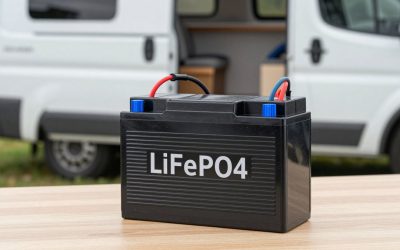
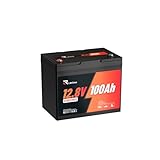
- Top Pick: Litime 12v 100Ah RV LiFePO4 Lithium Battery for Van, Marine, Off-Grid
- Best Value: 12V 100Ah LiFePO4 Battery, 1280Wh Lithium Battery Group 31 Smart 100A BMS, 15000+ Deep Cycles 10-Year Lifespan Low Temp Protection Lightweight Max 4P4S 1280Wh for Trolling Motor, RVs, Marine, Off-Grid
- Premium Choice: Litime 12v 100Ah RV LiFePO4 Lithium Battery for Marine, Off-Grid (4-Pack)
 Deep Cycle Battery” style=”max-width:100%;height:auto;margin-bottom:1rem” loading=”lazy”>
Lithium vs AGM Deep Cycle Battery for Van Life: Which Should You Buy in 2026?
TL;DR Quick Answer
Lithium (LiFePO4) wins for full-time vanlife: lighter, deeper discharge, 3–5x longer lifespan, and faster charging. AGM wins on upfront cost and cold-weather charging compatibility. A 100Ah LiFePO4 costs $250–400 and replaces two 100Ah AGM batteries in practical usable capacity. If you’re building a permanent van electrical system, go lithium. If you’re on a tight budget or parking in sub-freezing temps regularly, quality AGM is still a solid choice.
The lithium vs AGM battery debate is one of the most consequential decisions in a van build. Your battery bank powers your fridge, lights, fans, phone charging, laptop, and potentially your diesel heater controller — it’s the heart of your electrical system. Get this choice wrong and you either overspend for your actual needs or build a system that frustrates you daily.
As an Amazon Associate we earn from qualifying purchases at no extra cost to you.


This guide cuts through the marketing language and gives you the real numbers: usable capacity, actual lifespan, charge behavior, and cost-per-watt-hour over time. By the end you’ll know exactly which battery type is right for your specific build.
🛒 Best Price Today on Amazon
Prime members get fast, free shipping on everything above, plus member-only deals. New members get a 30-day free trial — cancel anytime.
Start 30-Day Prime Free Trial →See Today’s Amazon DealsTop Picks at a Glance
BEST LITHIUM: RENOGY 100AH LIFEPO4
Built-in BMS, 4000+ cycle rating, drop-in AGM replacement — best-selling van battery for good reason


As an Amazon Associate we earn from qualifying purchases. Product prices and availability are accurate as of the date/time indicated.
BEST VALUE LITHIUM: AMPERE TIME 100AH
Competitive specs at lower price, strong owner reviews, good warranty for budget builds

WAYSKA Diesel Heater 12V, 5L Tank, Diesel Heater 2KW, Muffler, Diesel Parking Heater with LCD Monitor & Remote Control for Trucks, Trailer, Boat and Motor-Home


As an Amazon Associate we earn from qualifying purchases. Product prices and availability are accurate as of the date/time indicated.
BEST AGM: VMAXTANKS 100AH
Military-grade plates, genuine 100Ah capacity, proven performer for budget van builds

Ivation Portable Camping Shower | Compact Handheld & Hands-Free Rechargeable Outdoor Shower Head & Cleaning System w/ 3.7V Pump, 6-Ft Hose, Bidet Head, Removable Filter, Multiuse Hook & USB Cable


As an Amazon Associate we earn from qualifying purchases. Product prices and availability are accurate as of the date/time indicated.
The Core Difference: Usable Capacity
See also: How Long Will a 100Ah Battery Last in a Van? Runtime Math Explained • Best Level 2 EV Chargers for Home
The most important number in this comparison isn’t the rated capacity — it’s the usable capacity. This is what you can actually draw before damaging the battery.
| Battery Type | Rated Capacity | Safe Discharge Depth | Usable Capacity | Typical Weight |
|---|---|---|---|---|
| AGM 100Ah | 100Ah | 50% (deeper = damage) | ~50Ah | 60–65 lbs |
| LiFePO4 100Ah | 100Ah | 80–100% (BMS protected) | ~80–100Ah | 24–28 lbs |
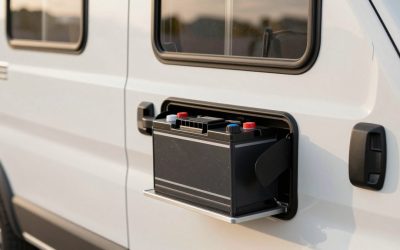
This means a single 100Ah LiFePO4 delivers 1.6–2x the practical energy of a 100Ah AGM. To get equivalent usable capacity from AGM, you need two batteries — doubling both cost and weight. This is why the lithium premium largely disappears when you calculate cost per usable amp-hour rather than cost per rated amp-hour.
See our detailed breakdown in the best LiFePO4 battery guide for specific model comparisons and capacity testing data.
Full Comparison: Lithium vs AGM
| Factor | LiFePO4 Lithium | AGM |
|---|---|---|
| Upfront cost (100Ah) | $250–400 | $130–220 |
| Usable capacity (100Ah) | 80–100Ah | 45–55Ah |
| Cycle life | 3,000–5,000 cycles | 400–600 cycles |
| Weight (100Ah) | 24–28 lbs | 60–65 lbs |
| Charge speed | Full in 1–2 hrs at high amps | Full in 8–16 hrs (must taper) |
| Self-discharge/month | 2–3% | 3–5% |
| Cold charging | Not safe below 32°F without heater | Works to 14°F (slower) |
| Flat discharge curve | Yes — steady voltage to ~10% SOC | No — voltage sags progressively |
| BMS required | Yes (usually built-in) | No |
| 10-year cost (2 replacements AGM) | ~$300–450 | ~$600–900 |
The Cold Weather Charging Problem
The one genuine advantage AGM holds over lithium is cold-weather charging. LiFePO4 chemistry cannot safely accept a charge below 32°F (0°C) — doing so causes lithium plating inside the cells that permanently degrades capacity and creates a fire risk. Premium lithium batteries include a built-in low-temperature cutoff that prevents charging until the battery warms up, but this means your solar panels and alternator produce zero charge on a cold morning until the battery heats.
Solutions for cold-climate vanlifers using lithium: batteries with built-in self-heating (Renogy Smart, Battle Born, EG4 LLv2 series), external battery blanket heaters, or locating your battery bank inside the van where ambient temps stay above freezing during use.
If you regularly camp in sub-freezing temperatures and can’t guarantee your battery stays warm, a quality AGM bank avoids this complication entirely — at the cost of weight and capacity efficiency.
Long-Term Cost Analysis
AGM appears cheaper upfront, but the lifecycle math almost always favors lithium for full-time vanlife:
- AGM 100Ah: $180 x 2 units (for equivalent usable capacity) = $360 upfront. Replace every 2–3 years of daily use = 3–4 replacements over 10 years = $1,080–1,440 total cost.
- LiFePO4 100Ah: $320 upfront. Rated 3,000–5,000 cycles = 8–14 years of daily cycling. Total 10-year cost: $320–640 (if one replacement needed).
Lithium pays for itself within 3–4 years for daily-use van builds. For weekend vanlifers cycling their battery 50–80 times per year, AGM may outlast you before needing replacement — making the math less decisive. Pair your battery bank decision with our MPPT charge controller guide and our comparison of portable power stations vs. house battery banks for a complete electrical system picture.
Sizing Your Battery Bank
A basic van electrical load calculation:
- 12V compressor fridge (Alpicool-tier): 30–45Ah/day
- Roof vent fan (Maxxair, 12V): 2–8Ah/day
- LED lighting: 1–3Ah/day
- Phone/laptop charging: 5–15Ah/day
- Diesel heater controller: 1–3Ah/day
- Total typical load: 40–75Ah/day
For LiFePO4 with 80% usable depth: a 100Ah battery gives you 80Ah — enough for 1–2 days without solar. For 3-day autonomy (bad weather, no sun), target 200–300Ah of lithium capacity. See our diesel heater guide for heater-specific power requirements that affect battery sizing calculations.
Related Vanlife Guides
- Best 12V LiFePO4 Battery 100Ah for 2026 — Full Review
- MPPT Solar Charge Controller Guide for Van Builds
- Portable Power Station vs. House Battery Bank
- 12V Diesel Heater Guide for Vanlife
- RV Accessories Must-Have 2026
Frequently Asked Questions
Is lithium worth it over AGM for van life?
For full-time vanlife, yes — the combination of lighter weight, higher usable capacity, faster charging, and longer lifespan makes lithium the better long-term investment despite higher upfront cost. The break-even point is typically 3–4 years of regular use. For occasional weekenders cycling the battery fewer than 100 times per year, quality AGM may serve its full useful life without replacement, making the upfront savings more meaningful.
How long does a LiFePO4 battery last in a van?
Quality LiFePO4 batteries are rated 3,000–5,000 full cycles to 80% capacity. For a full-time vanlifer cycling the battery daily, that’s 8–14 years. For a weekend vanlifer cycling it 100 times per year, that’s 30–50 years — effectively lifetime. Real-world failure modes are more often BMS faults, connection corrosion, or cell imbalance from improper charging than actual cell death. A battery with a good BMS and properly set charge parameters should outlast your van build.
Can I replace my AGM with lithium without changing anything else?
Almost — but not quite. A drop-in LiFePO4 replacement fits the same physical space and connects to the same terminals, but you should: (1) reprogram your solar charge controller to a lithium charge profile (most MPPT controllers have this setting), (2) verify your alternator charging setup — some vehicles with smart alternators need a DC-DC charger to prevent the lithium BMS from tripping, and (3) check that your low-voltage disconnect is set appropriately. These are 20-minute adjustments, not a full rewire.
What brand of LiFePO4 battery is most reliable?
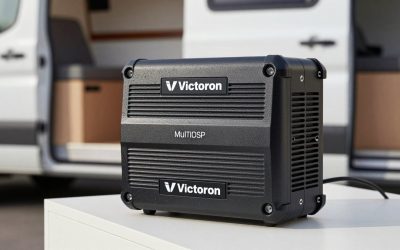
Renogy, Battle Born, and Victron are the consistently top-rated brands in the vanlife community for warranty support and cell quality. Battle Born is premium-priced but has the strongest US-based support. Renogy offers excellent value with widely available replacement cells. Budget brands like Ampere Time (now LiTime) and EG4 have strong review histories and are used by thousands of vanlifers successfully — they’re worth considering for builds where budget is the primary constraint.
How many 100Ah batteries do I need for a van build?
For a basic one-person van build with fridge, fan, lights, and device charging: one 100Ah LiFePO4 (80Ah usable) is the minimum, two gives comfortable 2–3 day autonomy. For two people or high-power loads (induction cooking, CPAP, larger fridge): 200–300Ah lithium is the standard recommendation. If you’re relying primarily on solar charging, match your battery bank to 2–3x your daily load to handle cloudy days without running dry.
Prices verified May 2026. Check Amazon links for current pricing.