Last updated: September 18, 2026
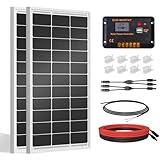
Quick answer: Our top pick in 2026 is the 100-watt rigid monocrystalline panel — our #1 rated choice. See the full ranked comparison, alternatives and buying advice below.
The Short Answer
Flexible solar panels are worth it for a van only when a low-profile, lightweight installation matters more to you than maximum lifespan and value. If your van roof is curved, you want to avoid drilling, or you need to keep the roofline discreet, flexible panels can be a practical choice. If you have a flat roof and want the lowest cost per watt, rigid framed panels are usually the better buy.
For most van conversions, a 100-watt flexible panel is best viewed as a helpful supplement rather than a complete power system. In favorable sun, it may produce enough energy for lights, phones, a laptop, a fan, or a small compressor refrigerator, but it will not reliably run high-draw appliances such as an electric heater, air conditioner, induction cooktop, or large inverter.
As an Amazon Associate we earn from qualifying purchases at no extra cost to you. Product prices and availability are accurate as of the date shown and are subject to change.


What You Actually Get
See also: How to Clean Solar Panels on Van (2026): Step-by-Step • How to Set Up Van Solar Panels (2026): Step-by-Step
A flexible solar panel uses thin solar cells laminated into a bendable surface instead of mounting those cells inside a rigid aluminum frame. A typical 100-watt panel designed for a 12-volt van system measures roughly 40 to 49 inches long and 20 to 22 inches wide. Many weigh about 4 to 6 pounds, although the exact size and weight vary by brand.
The panel connects to a solar charge controller, which regulates power before it reaches your leisure battery or portable power station. For a conventional 12-volt setup, a 100-watt panel commonly works with a 10-amp or 15-amp charge controller. You will also need appropriately sized solar cable, roof-entry hardware if the wiring passes through the roof, fuses, and a battery designed for repeated charging and discharging.
“100 watts” is the panel’s rated maximum under test conditions, not a guaranteed output on your van. Real-world production changes with season, latitude, shade, roof temperature, panel angle, dirt, and wiring losses. As a broad planning figure, a 100-watt panel might deliver around 200 to 500 watt-hours on a reasonably sunny day, with much less during cloudy winter weather or when part of the panel is shaded. Treat those figures as estimates, not a performance promise.
Two representative options illustrate the price range. The Renogy Flexible Solar Panel 100 Watt, 240° Ultra Flex Bendable, is listed at about $125.09. The DOKIO 100W Flexible Solar Panel, 18V ETFE, for 12V RV and marine systems, is listed at about $64.77. That difference is significant, but purchase price is only part of the calculation. Installation method, controller quality, warranty support, roof exposure, and expected service life matter just as much.
Pros
- Low weight: A flexible 100-watt panel can save several pounds compared with a framed glass panel and mounting brackets. That is useful on smaller vans where every added item affects payload and fuel economy.
- Fits curved roofs: A panel can follow a modest roof contour that would leave a rigid panel raised or difficult to mount. This is especially helpful on rounded high-top vans, teardrop-style campers, and small recreational vehicles.
- Low visual profile: Flexible panels sit close to the roof and are less conspicuous than a raised framed array. They can preserve a cleaner appearance and reduce concerns about roof clearance.
- Fewer protruding parts: Without separate rails, brackets, and corner mounts, there are fewer components to catch branches or create wind noise.
- Simple capacity upgrades: If your charge controller supports additional input, adding a second 100-watt panel can increase production without redesigning the entire system.
- Good fit for temporary or unusual builds: A flexible panel can make sense on a removable camper setup, a van with limited roof space, or a project where conventional mounting hardware is impractical.
Cons
- Usually shorter-lived: Flexible panels are exposed to repeated heat, vibration, foot traffic, and bending. Their laminated construction can develop surface wear, bubbling, or moisture-related problems sooner than a well-made rigid glass panel.
- Heat can reduce output: Flexible panels often sit directly against the roof with little airflow underneath. Dark van roofs can become extremely hot, and solar cells generally produce less electricity as their temperature rises.
- Harder to replace: A permanently bonded panel may require scraping adhesive, repairing roof sealant, and rerouting cable. A rigid panel mounted with brackets is usually easier to remove and swap.
- Adhesive installation is not foolproof: Roof surfaces must be clean, dry, compatible with the adhesive, and properly prepared. Poor bonding can allow lifting at the edges, especially with highway wind, temperature swings, and roof flex.
- Shading is costly: A vent, roof rack, antenna, or even a small branch can reduce production. Because the panel is one connected surface, partial shade may affect more of its output than a buyer expects.
- Lower value per watt: At roughly $65 to $125 for a 100-watt flexible panel, the panel alone may cost more per watt than a basic rigid panel. You may also spend extra on high-quality adhesive and roof-entry hardware.
- Limited walkability: Unless the manufacturer specifically says otherwise, do not stand on or regularly walk across the panel. A van roof that is safe to access may still damage the solar laminate.
Who Should Buy It
Buy a flexible panel if your van has a curved or crowded roof and you cannot install a rigid panel without major compromises. It is also a sensible choice when low weight, low profile, and minimal visual impact are higher priorities than achieving the longest possible service life.
Flexible solar is a good match for a modest 12-volt electrical system. For example, a traveler who uses LED lights, charges phones and cameras, runs a small water pump, and occasionally works on a laptop may find one 100-watt panel useful. A 200- to 400-watt array is more practical for full-time van living, particularly if you operate a refrigerator, vent fan, Starlink-style internet equipment, or other electronics every day.
Before buying, check that you have enough unobstructed roof area and that your charge controller matches the panel’s voltage and your battery chemistry. Confirm the panel’s cable exit location, connector type, maximum bend radius, warranty terms, and cleaning instructions. Plan the wiring before attaching anything permanently.
Who Should Skip It
Skip flexible panels if your van has a broad, flat roof where rigid mounting is easy. A rigid aluminum-framed panel generally offers better ventilation, stronger physical protection, easier maintenance, and a more straightforward replacement path. It can also be the better financial choice when you are building a system intended to last for many years.
You should also skip them if you expect solar to power an air conditioner, electric cooking equipment, a space heater, or other major loads. Those appliances require substantially more generation and battery capacity than one or two 100-watt panels can normally provide. In that situation, start with an energy audit and consider alternator charging, shore power, a larger roof array, or a portable generator where appropriate.
Cheaper Alternatives
| Option | Cost | Trade-off |
|---|---|---|
| 100-watt rigid monocrystalline panel | About $60–$110 | Lower cost per watt and better airflow, but heavier, thicker, and more visible on the roof. |
| Used or surplus rigid panel | About $30–$80 | Potentially excellent value, but condition, remaining output, connectors, and warranty may be uncertain. |
| Portable folding 100-watt solar blanket | About $100–$250 | No permanent roof work and easy to aim at the sun, but it requires setup, storage, and security whenever you leave the van. |
| Alternator-to-battery charger | About $150–$400, plus installation | Can charge faster while driving and works in poor weather, but it depends on driving and adds wiring complexity. |
| 100-watt flexible panel | About $65–$125 | Light and low-profile, but typically less durable and harder to replace than a rigid panel. |
The least expensive system is not always the one with the lowest total cost. A rigid panel may require roof rails and brackets, while a flexible panel may require specialized adhesive and more careful surface preparation. Compare the complete installed system rather than the panel price alone.
FAQ
Can a 100-watt flexible solar panel run a van refrigerator?
It may help run a small efficient compressor refrigerator, especially in sunny weather, but the battery must cover nighttime use and cloudy periods. A 100-watt panel should not be treated as a guaranteed refrigerator-only power source. Monitor actual battery consumption and solar production before expanding the system.
How many flexible solar panels do I need for van life?
Occasional campers may be comfortable with 100 to 200 watts. Regular travelers who use a refrigerator, lights, fans, computers, and camera equipment often benefit from 200 to 400 watts, assuming the roof has enough unshaded space. Your battery capacity and daily energy use should determine the array size.
Can you walk on flexible solar panels?
Usually, no. Unless the product documentation specifically identifies the panel as walkable, keep feet, knees, tools, and heavy objects off it. Even a panel that tolerates a little incidental pressure may not survive repeated roof traffic without damage.
Are flexible solar panels worth it in 2026?
Yes, when the van’s curved roof, weight limits, or appearance make rigid panels inconvenient. For a flat roof and a long-term build, rigid panels remain the safer default because they are generally easier to cool, service, and replace. Choose flexible solar for its installation advantages, not because it will produce more power or automatically last longer.
Ready to decide? Our #1 pick for 2026 is the 100-watt rigid monocrystalline panel.
Live price & availability on Amazon.