Last updated: November 13, 2026
Affiliate disclosure: Epic Van Life is reader-supported. When you buy through links on this page, we may earn a commission at no extra cost to you. Prices and availability change often — check the current price on Amazon before you buy.
Updated 2026 · Reviewed 11 November 2026 · Author: Jordan Hayes · Sources: manufacturer specifications and Amazon listings checked 11 November 2026.
Short answer: The best solar panels for home are the Renogy 400W Premium Kit.
Top picks at a glance:
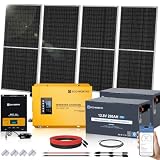
- Renogy 400W 12V Premium Solar Kit — Best Overall Kit
- Renogy 400W N-Type Solar Panel — Best Single Panel
- Renogy 100W 12V Solar Starter Kit — Best Starter Kit
- Renogy 2-Pack 320W Solar Panels — Best Large Panels
- Renogy 400W 12V Eclipse Premium Solar Kit — Best Premium Kit
- Renogy 100W 12V Monocrystalline Solar Panel — Best Single 100W Panel
- Renogy 200W 12V Portable Solar Suitcase Kit — Best 200W Kit
How we choose & verify: Our picks come from manufacturer specifications and Amazon listings, checked 11 November 2026, cross-checked against independent testing and owner reports where available. Each Amazon link was checked against that model’s listing data to confirm it points to the exact model. Prices are ranges observed in November 2026 research, not fixed prices — check the current price before you buy.
— Jordan Hayes, Epic Van Life
Key insight: For a home or cabin, the charge controller matters as much as the panels: an MPPT controller harvests 20–30% more power than a PWM controller in the same sun, especially in cold weather. The Premium Kit’s 40A MPPT Rover is the reason it costs more than the PWM kits — and the reason it pays for itself faster.
In this guide: What makes good solar panels for a home? · Which are the 7 best solar panels for home? · What are the 7 best solar panels for home? · What are the best solar panels for an off-grid cabin? · How many solar panels do I need to power a home? · Frequently asked questions
What makes good solar panels for a home?
Home solar panels are judged on watts, efficiency and the charge controller. A 400W panel at 25% efficiency produces more power per square foot than a 400W panel at 20%, which matters when roof space is limited. Monocrystalline panels beat polycrystalline on efficiency and last longer.
The charge controller is the heart of the system. A PWM controller is cheap and fine for a small 100W setup; an MPPT controller costs more but harvests 20–30% more energy, especially in cold and cloudy weather. For any system above 200W, buy MPPT.
For an off-grid cabin, size the system to your daily use: a 400W kit produces about 1.6–2 kWh per day in good sun, enough for lights, a laptop and a small fridge. A 100W kit produces about 400Wh per day — enough for lights and phones. Always add a battery and an inverter to the budget; panels alone do not power a home.
Which are the 7 best solar panels for home?
See also: Best Battery Backup Power Stations 2026: 7 Top Picks • Best Camping Generators for Quiet Campgrounds: 7 Picks
Prices below are ranges observed in November 2026 research, not fixed prices. Check the current price before buying.
| Pick | Best for | Key spec | Price range |
|---|---|---|---|
| Renogy 400W 12V Premium Solar Kit | Best Overall Kit | Panels: 4 x 100W monocrystalline | Check on Amazon |
| Renogy 400W N-Type Solar Panel | Best Single Panel | Power: 400W, 25% cell efficiency | Check on Amazon |
| Renogy 100W 12V Solar Starter Kit | Best Starter Kit | Panel: 100W monocrystalline | Check on Amazon |
| Renogy 2-Pack 320W Solar Panels | Best Large Panels | Power: 640W total (2 x 320W) | Check on Amazon |
| Renogy 400W 12V Eclipse Premium Solar Kit | Best Premium Kit | Panels: 4 x 100W Eclipse monocrystalline | Check on Amazon |
| Renogy 100W 12V Monocrystalline Solar Panel | Best Single 100W Panel | Power: 100W monocrystalline | Check on Amazon |
| Renogy 200W 12V Portable Solar Suitcase Kit | Best 200W Kit | Power: 200W (two 100W panels) | Check on Amazon |
What are the 7 best solar panels for home?
1. Renogy 400W 12V Premium Solar Kit — Best Overall Kit
It produces about 1.6–2 kWh per day in good sun — enough for lights, a laptop and a small fridge in a cabin. You still need a battery and an inverter.
- Panels: 4 x 100W monocrystalline
- Controller: 40A MPPT Rover with Bluetooth module
- Extras: Z-brackets, adaptor kit, tray cables, fuse
- Output: about 1.6–2 kWh per day in good sun
Strengths:
- MPPT controller harvests 20–30% more than PWM
- Bluetooth monitoring from your phone
- Everything included except battery and inverter
Watch out:
- Needs a battery and inverter to power a home
- Four panels take up roof space
2. Renogy 400W N-Type Solar Panel — Best Single Panel
The Renogy 400W N-Type is the best single panel for a home: 400W from one panel at 25% efficiency, with 16-busbar N-type cells that degrade slower than older P-type cells. Pair it with an MPPT controller.
- Power: 400W, 25% cell efficiency
- Cells: 16BB N-type monocrystalline
- Voltage: 24V
Strengths:
- Highest efficiency in this guide at 25%
- One panel instead of four — simpler wiring
- N-type cells degrade slower than P-type
Watch out:
- Needs an MPPT controller — not included
- Heavy for one person to lift onto a roof
3. Renogy 100W 12V Solar Starter Kit — Best Starter Kit
It produces about 400Wh per day — enough for lights, phones and a laptop in a small cabin or shed. It is the kit to buy first, then expand with more panels later.
- Panel: 100W monocrystalline
- Controller: 30A LCD PWM Wanderer
- Extras: adaptor kit, tray cables, Z-brackets
- Use: RV, camper and small off-grid systems
Strengths:
- Cheapest complete kit here
- Everything included to start charging
- Proven design, sold for years
Watch out:
- PWM controller, not MPPT
- 100W is small for a cabin with a fridge
4. Renogy 2-Pack 320W Solar Panels — Best Large Panels
The Renogy 2-pack of 320W panels gives you 640W from two panels instead of four or six, which means fewer mounts, fewer wires and less roof clutter. At 25% efficiency with 18-busbar N-type cells, they are among the most efficient panels in this guide. You need your own MPPT controller and mounting hardware.
- Power: 640W total (2 x 320W)
- Efficiency: 25% cell efficiency, 18BB N-type
- Voltage: 12/24V monocrystalline
- Use: homes, rooftops, RVs and boats
Strengths:
- 640W from two panels — fewer mounts than four 100W panels
- 25% efficiency with N-type cells
- Good value per watt
Watch out:
- No controller included
- Large panels are awkward to handle alone
5. Renogy 400W 12V Eclipse Premium Solar Kit — Best Premium Kit
The Eclipse Premium Kit is Renogy’s top 400W kit: four 100W Eclipse panels that weigh less than standard 100W panels, with a 40A MPPT controller. Eclipse cells are more efficient in low light, which helps on cloudy days.
- Panels: 4 x 100W Eclipse monocrystalline
- Controller: 40A MPPT (kit dependent)
- Design: Eclipse panels are lighter than standard 100W panels
- Model: RNG-KIT-PREMIUM400MB-CMD40
Strengths:
- Eclipse panels are lighter and more efficient
- MPPT controller included
- Premium build quality
Watch out:
- Most expensive kit here
- Eclipse panels cost more per watt
6. Renogy 100W 12V Monocrystalline Solar Panel — Best Single 100W Panel
It is a single 100W monocrystalline panel for 12V systems — buy one to start, then add more in parallel as your needs grow. It needs a separate charge controller and mounting brackets.
- Power: 100W monocrystalline
- Model: RNG-100D
- Voltage: 12V
- Use: RV, boat, trailer and off-grid
Strengths:
- Cheapest panel here
- Renogy’s most popular product
- Easy to expand — add more panels in parallel
Watch out:
- No controller or mounting hardware included
- 100W alone is small for a home
7. Renogy 200W 12V Portable Solar Suitcase Kit — Best 200W Kit
The Renogy 200W suitcase kit is the portable 200W option for a cabin or RV: two 100W panels that fold into a suitcase, a 20A Voyager controller included, and an IP65 rating. It produces about 800Wh–1 kWh per day in good sun. It is the pick if you want solar you can move between a cabin, an RV and a home backup setup.
- Power: 200W (two 100W panels)
- Controller: 20A Voyager waterproof included
- Design: foldable suitcase with kickstand, IP65
- Use: RV, camping, off-grid and emergency backup
Strengths:
- Portable — folds into a suitcase
- Controller included, nothing else to buy
- IP65 waterproof
Watch out:
- PWM controller, not MPPT
- Less power than a fixed 400W kit
What are the best solar panels for an off-grid cabin?
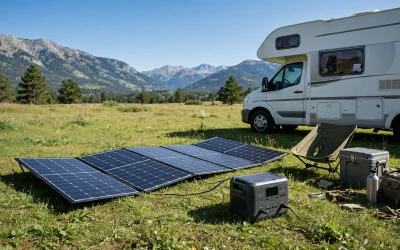
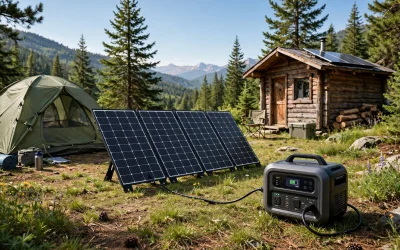
For an off-grid cabin, buy the Renogy 400W Premium Kit. Its four 100W panels and 40A MPPT controller produce about 1.6–2 kWh per day in good sun, enough for lights, a laptop and a small fridge, and the Bluetooth module lets you watch the system from your phone. For a tiny cabin or a shed, the 100W Starter Kit is enough for lights and phones at a third of the price.
How many solar panels do I need to power a home?
A full grid-tied home needs 5,000–10,000W of panels — far more than the kits in this guide, which are for off-grid cabins, RVs and backup power. A 400W kit covers lights, phones, a laptop and a small fridge. For a whole home, get a quote from a local installer: the panels are only part of the cost, and permitting, racking and an inverter dominate the budget.
Which solar panels for home should I buy?
If you only remember one rule: buy the right size and the right connector, not the biggest number on the box. Check the current price before you buy, and confirm the exact model number and ASIN on the listing.
Frequently asked questions
What is the best solar panel for a home?
The Renogy 400W Premium Kit is the best solar panel kit for a home or off-grid cabin. It produces about 1.6 to 2 kWh per day in good sun, enough for lights, a laptop and a small fridge.
How long do home solar panels last?
Home solar panels last 25 to 30 years, with most manufacturers warranting 80% of rated output after 25 years. Monocrystalline panels degrade about 0.5% per year. The charge controller and inverter wear out sooner — expect 10 to 15 years from a controller and 10 years from an inverter — so budget for replacements.
Can I install home solar panels myself?
Yes, for an off-grid kit: the panels bolt to Z-brackets on a roof or rack, and the wiring is low-voltage DC with color-coded connectors. A grid-tied system that feeds power back to the utility needs a licensed electrician and a permit in most places. If you are unsure, hire a professional for the electrical work.
What size solar panel do I need for a cabin?
A 100W panel suits a small cabin with lights and phones, producing about 400Wh per day. A 400W kit suits a cabin with a fridge and a laptop, producing about 1.6 to 2 kWh per day. Add up your daily watt-hours first, then divide by 4 to 5 hours of good sun to get the panel watts you need.
{
“@context”: “https://schema.org”,
“@graph”: [
{
“@context”: “https://schema.org”,
“@type”: “Article”,
“headline”: “Best Solar Panels for Home 2026: 7 Top Picks”,
“description”: “Best solar panels for home in 2026: 7 picks for off-grid cabins and home backup — 100W to 400W Renogy kits and panels, with prices, specs and wattage.”,
“author”: {
“@type”: “Person”,
“name”: “Jordan Hayes”
},
“datePublished”: “2026-11-11”,
“dateModified”: “2026-11-11”,
“mainEntityOfPage”: {
“@type”: “WebPage”,
“@id”: “https://epicvanlife.com/best-solar-panels-for-home/”
}
},
{
“@type”: “ItemList”,
“name”: “Best Solar Panels for Home 2026: 7 Top Picks”,
“itemListElement”: [
{
“@type”: “ListItem”,
“position”: 1,
“name”: “Renogy 400W 12V Premium Solar Kit”,
“url”: “https://www.amazon.com/dp/B07CTKT56Y?tag=epicvanlife05-20”
},
{
“@type”: “ListItem”,
“position”: 2,
“name”: “Renogy 400W N-Type Solar Panel”,
“url”: “https://www.amazon.com/dp/B0F4QHCFY3?tag=epicvanlife05-20”
},
{
“@type”: “ListItem”,
“position”: 3,
“name”: “Renogy 100W 12V Solar Starter Kit”,
“url”: “https://www.amazon.com/dp/B00BFCNFRM?tag=epicvanlife05-20”
},
{
“@type”: “ListItem”,
“position”: 4,
“name”: “Renogy 2-Pack 320W Solar Panels”,
“url”: “https://www.amazon.com/dp/B08D644VFN?tag=epicvanlife05-20”
},
{
“@type”: “ListItem”,
“position”: 5,
“name”: “Renogy 400W 12V Eclipse Premium Solar Kit”,
“url”: “https://www.amazon.com/dp/B00E0YBL0K?tag=epicvanlife05-20”
},
{
“@type”: “ListItem”,
“position”: 6,
“name”: “Renogy 100W 12V Monocrystalline Solar Panel”,
“url”: “https://www.amazon.com/dp/B009Z6CW7O?tag=epicvanlife05-20”
},
{
“@type”: “ListItem”,
“position”: 7,
“name”: “Renogy 200W 12V Portable Solar Suitcase Kit”,
“url”: “https://www.amazon.com/dp/B0FWCBL9M1?tag=epicvanlife05-20”
}
]
},
{
“@type”: “Product”,
“name”: “Renogy 400W 12V Premium Solar Kit”,
“brand”: {
“@type”: “Brand”,
“name”: “Renogy”
},
“offers”: {
“@type”: “AggregateOffer”,
“priceCurrency”: “USD”,
“lowPrice”: 600,
“highPrice”: 900,
“offerCount”: 1
}
},
{
“@type”: “Product”,
“name”: “Renogy 400W N-Type Solar Panel”,
“brand”: {
“@type”: “Brand”,
“name”: “Renogy”
},
“offers”: {
“@type”: “AggregateOffer”,
“priceCurrency”: “USD”,
“lowPrice”: 300,
“highPrice”: 353,
“offerCount”: 1
}
},
{
“@type”: “Product”,
“name”: “Renogy 100W 12V Solar Starter Kit”,
“brand”: {
“@type”: “Brand”,
“name”: “Renogy”
},
“offers”: {
“@type”: “AggregateOffer”,
“priceCurrency”: “USD”,
“lowPrice”: 150,
“highPrice”: 250,
“offerCount”: 1
}
},
{
“@type”: “Product”,
“name”: “Renogy 2-Pack 320W Solar Panels”,
“brand”: {
“@type”: “Brand”,
“name”: “Renogy”
},
“offers”: {
“@type”: “AggregateOffer”,
“priceCurrency”: “USD”,
“lowPrice”: 400,
“highPrice”: 600,
“offerCount”: 1
}
},
{
“@type”: “Product”,
“name”: “Renogy 400W 12V Eclipse Premium Solar Kit”,
“brand”: {
“@type”: “Brand”,
“name”: “Renogy”
},
“offers”: {
“@type”: “AggregateOffer”,
“priceCurrency”: “USD”,
“lowPrice”: 700,
“highPrice”: 1000,
“offerCount”: 1
}
},
{
“@type”: “Product”,
“name”: “Renogy 100W 12V Monocrystalline Solar Panel”,
“brand”: {
“@type”: “Brand”,
“name”: “Renogy”
},
“offers”: {
“@type”: “AggregateOffer”,
“priceCurrency”: “USD”,
“lowPrice”: 90,
“highPrice”: 150,
“offerCount”: 1
}
},
{
“@type”: “Product”,
“name”: “Renogy 200W 12V Portable Solar Suitcase Kit”,
“brand”: {
“@type”: “Brand”,
“name”: “Renogy”
},
“offers”: {
“@type”: “AggregateOffer”,
“priceCurrency”: “USD”,
“lowPrice”: 250,
“highPrice”: 400,
“offerCount”: 1
}
}
]
}
{
“@context”: “https://schema.org”,
“@type”: “FAQPage”,
“mainEntity”: [
{
“@type”: “Question”,
“name”: “What is the best solar panel for a home?”,
“acceptedAnswer”: {
“@type”: “Answer”,
“text”: “The Renogy 400W Premium Kit is the best solar panel kit for a home or off-grid cabin. It produces about 1.6 to 2 kWh per day in good sun, enough for lights, a laptop and a small fridge.”
}
},
{
“@type”: “Question”,
“name”: “How long do home solar panels last?”,
“acceptedAnswer”: {
“@type”: “Answer”,
“text”: “Home solar panels last 25 to 30 years, with most manufacturers warranting 80% of rated output after 25 years. Monocrystalline panels degrade about 0.5% per year. The charge controller and inverter wear out sooner — expect 10 to 15 years from a controller and 10 years from an inverter — so budget for replacements.”
}
},
{
“@type”: “Question”,
“name”: “Can I install home solar panels myself?”,
“acceptedAnswer”: {
“@type”: “Answer”,
“text”: “Yes, for an off-grid kit: the panels bolt to Z-brackets on a roof or rack, and the wiring is low-voltage DC with color-coded connectors. A grid-tied system that feeds power back to the utility needs a licensed electrician and a permit in most places. If you are unsure, hire a professional for the electrical work.”
}
},
{
“@type”: “Question”,
“name”: “What size solar panel do I need for a cabin?”,
“acceptedAnswer”: {
“@type”: “Answer”,
“text”: “A 100W panel suits a small cabin with lights and phones, producing about 400Wh per day. A 400W kit suits a cabin with a fridge and a laptop, producing about 1.6 to 2 kWh per day. Add up your daily watt-hours first, then divide by 4 to 5 hours of good sun to get the panel watts you need.”
}
}
]
}