TL;DR: Jackery and EcoFlow both make excellent portable power stations, but they target different vanlife use cases. EcoFlow charges faster and offers higher continuous output — better for van builds running power-hungry appliances. Jackery is simpler, lighter, and better for weekend van campers who want plug-and-play solar charging without complexity. Best pick: ASIN B08ZMPBL1H.
Jackery vs EcoFlow Power Station: Van Life 2026
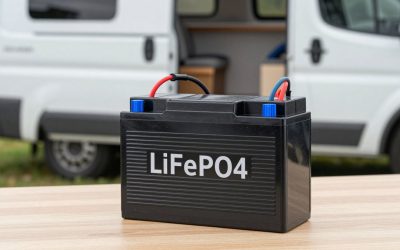
The Jackery vs EcoFlow portable power station debate is the most common vanlife electrical question on forums and Facebook groups — and for good reason. Both brands dominate the consumer solar generator market, both have built reputations for reliability, and both offer models that seem nearly identical on paper. The difference is in how they charge, how fast they recharge, and how they behave under high-load sustained draws. If you are sizing power for a van build, this comparison will help you match the right station to your actual daily load. Pair any portable power station with a portable solar panel for daytime recharging, review our portable station vs. house battery comparison if you are considering a hardwired system instead, and check the LiFePO4 battery guide for permanent build alternatives.
As an Amazon Associate we earn from qualifying purchases at no extra cost to you.


🛒 Best Price Today on Amazon
Prime members get fast, free shipping on everything above, plus member-only deals. New members get a 30-day free trial — cancel anytime.
Start 30-Day Prime Free Trial →See Today’s Amazon DealsTop Pick
Head-to-Head Comparison
See also: How Long Will a 100Ah Battery Last in a Van? Runtime Math Explained • Best Level 2 EV Chargers for Home
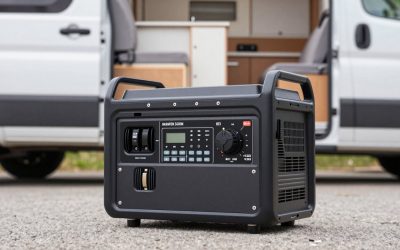
| Spec | EcoFlow RIVER 2 Pro | Jackery Explorer 1000 Pro |
|---|---|---|
| Capacity | 768Wh | 1002Wh |
| Continuous output | 800W (X-Boost to 1600W) | 1000W |
| AC ports | 3× AC outlets | 3× AC outlets |
| USB-C PD output | 100W | 100W |
| Solar input max | 220W | 200W |
| AC recharge time | ~70 min (full charge) | ~1.8 hours |
| Battery chemistry | LFP (LiFePO4) | LFP (LiFePO4) |
| Cycle life | 3000+ cycles to 80% | 1000+ cycles to 80% |
| Weight | 17.2 lbs | 25.4 lbs |
| App control | Yes (EcoFlow app) | Yes (Jackery app) |
EcoFlow’s Key Advantage: Charging Speed
EcoFlow’s defining feature across their entire product line is X-Stream fast charging — a proprietary AC charging protocol that fills their stations faster than any competitor in the same capacity class. The RIVER 2 Pro goes from 0 to 100% in approximately 70 minutes on AC wall power. Compare this to the Jackery 1000 Pro at around 1.8 hours for a full charge. For vanlifers who have reliable campground hook-ups a few times per week and want to charge the station fully in a short window, EcoFlow’s speed advantage is significant.
EcoFlow also leads on cycle life. The RIVER 2 Pro is rated for 3000+ charge cycles to 80% capacity — three times the Jackery 1000 Pro’s 1000-cycle rating. Over five years of daily van life use, this difference matters considerably for long-term ownership cost. A station that retains 80% capacity after 3000 cycles lasts roughly three times as long before needing replacement.
Jackery’s Key Advantage: Capacity and Simplicity
The Jackery Explorer 1000 Pro offers 1002Wh of capacity — 30% more than the EcoFlow RIVER 2 Pro’s 768Wh. For weekend vanlifers who camp without grid hook-ups for 2–3 nights at a stretch and need the capacity to bridge multiple nights on a single charge, Jackery’s larger battery gives more buffer before solar recharging is needed.
Jackery also has a longer track record of simple, reliable operation. Their interface is straightforward, their solar compatibility is broadly documented, and their product line changes less frequently than EcoFlow’s — meaning accessories, compatible panels, and community knowledge are more stable. For first-time vanlifers who want a portable power station that works predictably without firmware updates or app troubleshooting, Jackery is the less-complex choice.
Which Is Right for Van Life Specifically?
For full-time vanlifers with a 200W rooftop solar panel, a 12V fridge, and a laptop as their primary loads, either station works — but the EcoFlow’s faster AC recharge and longer cycle life make it the better long-term investment. For part-time vanlifers or weekend warriors who want portable power for lights, phone charging, and a small cooler, the Jackery 1000 Pro’s higher capacity means more days between charges.
Both stations are viable as supplemental power sources in a van with a permanent house battery system — positioned as a portable unit for off-van use (at the campfire, hiking, or powering devices outside the van) rather than the primary electrical source. In that role, Jackery’s simplicity and lower price point make it particularly attractive.
Frequently Asked Questions
Can either station run a 12V compressor fridge overnight?
Yes, though capacity math matters. A 12V compressor fridge draws 40–60W average in moderate ambient temperatures. Over 8 hours that is 320–480Wh. The Jackery 1000 Pro has 1002Wh usable; it can run the fridge overnight and have 500+ Wh remaining for other loads. The EcoFlow RIVER 2 Pro at 768Wh can also run the fridge overnight but leaves less reserve for other devices. In hot weather when the fridge cycles more frequently, the Jackery’s larger buffer is more comfortable.
Can I charge either station while driving via a 12V car outlet?
Yes. Both stations include a 12V car charging cable. Charge rate via 12V car outlet is typically 65–100W — slow compared to AC wall charging but useful for topping up during long driving days. At 100W input, the Jackery 1000 Pro takes approximately 10 hours to charge fully from 12V car power alone. Combining rooftop solar and driving hours is the most practical strategy for maintaining charge without grid hook-ups.
Which brand has better solar panel compatibility?
Both brands manufacture compatible solar panels (Jackery SolarSaga and EcoFlow solar panels), and both accept third-party panels within their input voltage and wattage limits. EcoFlow’s higher solar input cap (220W for RIVER 2 Pro) allows faster solar recharging on sunny days. Jackery’s panels are among the most widely reviewed and have a strong reputation for reliability in varied light conditions.
Are these stations safe to use inside a van while sleeping?
Both stations use LiFePO4 chemistry, which is significantly safer than NMC lithium — lower thermal runaway risk and better stability at high temperatures. Neither station should be covered or enclosed during operation. Position them in a ventilated area of the van — under the bed platform with adequate airflow is a common placement. Do not operate or store any lithium power station in direct sunlight or in enclosed spaces with ambient temperatures above 104°F (40°C).
Is a portable power station better than a permanent house battery for van life?
Portable stations offer flexibility — you can carry them out of the van, charge them via solar on a picnic table, or take them home to charge on AC. Permanent house battery systems offer higher capacity at lower cost per watt-hour and integrate cleanly with alternator charging and rooftop solar. For serious full-time van life, a permanent house battery system is more cost-effective at equivalent capacity. Portable stations are ideal for part-time vanlifers or as a secondary portable unit in a hardwired system.
Size your full van electrical system by reading our portable station vs. house battery guide, add charging input with a 200W portable solar panel, and review the LiFePO4 battery guide if a permanent build is your next step.