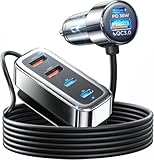
- Top Pick: AINOPE PD&QC 108W Multiple Ports Car Charger, Cigarette Lighter USB Charger
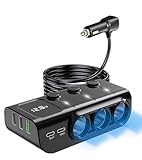
- Best Value: BESTEK Multi Ports USB Car Charger, Fast Charge 125W 14A Quick Charge 3.0 & USB-C PD Car Charger Adapter with Smart Identification for Cell Phones, Tablets and Other USB Devices
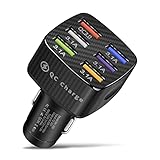
- Premium Choice: Wevdn Car Charger Adapter, 6 USB Multi Port Fast Charging Cigarette Lighter Charger Adapter, Car Fast Charger Include QC 3.0 and 5 Other Ports for Most Cell Phones, Car Accessories (Black)

Van USB Charging Multi Port: Best Solutions for Your Mobile Power Setup
TL;DR Quick Answer
A dedicated van USB charging multi port hub wired directly to your 12V house bank keeps phones, tablets, laptops, and cameras charged without killing your inverter. The best setups combine a 6-port USB-A/C hub at the bedside, a dash-mounted dual USB-C PD charger, and a countertop power strip with surge protection. Budget $30–$80 total. The payoff: no more dead devices at 2 AM and no wasted watts running a 300W inverter for a 20W phone charge.
Every vanlifer eventually hits the same frustration: a tangle of adapters, one overloaded cigarette lighter socket, and a dead laptop right when you need it. Van USB charging multi port solutions solve this cleanly — dedicated 12V-to-USB hubs wired straight to your house battery mean reliable, fast charging at every spot you actually use your devices.
As an Amazon Associate we earn from qualifying purchases.




This guide covers every charging zone in a van build, what USB-C Power Delivery (PD) actually means for your gear, wiring best practices, and the specific products worth buying in 2026.
🛒 Best Price Today on Amazon
Prime members get fast, free shipping on everything above, plus member-only deals. New members get a 30-day free trial — cancel anytime.
Start 30-Day Prime Free Trial →See Today’s Amazon Deals- Top Picks: Van USB Charging Multi Port Hubs
- Why Your Van Needs Dedicated USB Charging Zones
- USB Standards Explained: USB-A vs USB-C vs PD vs QC
- Wiring Your Van USB Charging Hub: What Actually Matters
- Best Van USB Charging Multi Port Products: 2026 Picks
- How Many USB Ports Do You Actually Need?
- FAQ: Van USB Charging Multi Port
- Frequently Asked Questions
- Related Articles
Top Picks: Van USB Charging Multi Port Hubs
BEST OVERALL — BEDSIDE HUB
65W USB-C PD Multi Port Charging Station

WAYSKA Diesel Heater 12V, 5L Tank, Diesel Heater 2KW, Muffler, Diesel Parking Heater with LCD Monitor & Remote Control for Trucks, Trailer, Boat and Motor-Home


As an Amazon Associate we earn from qualifying purchases. Product prices and availability are accurate as of the date/time indicated.
BEST FOR DASH
Dual USB-C PD 36W Car Charger


As an Amazon Associate we earn from qualifying purchases. Product prices and availability are accurate as of the date/time indicated.
BEST COUNTERTOP STRIP
6-Outlet Surge Protector w/ USB Ports

Ivation Portable Camping Shower | Compact Handheld & Hands-Free Rechargeable Outdoor Shower Head & Cleaning System w/ 3.7V Pump, 6-Ft Hose, Bidet Head, Removable Filter, Multiuse Hook & USB Cable


As an Amazon Associate we earn from qualifying purchases. Product prices and availability are accurate as of the date/time indicated.
Why Your Van Needs Dedicated USB Charging Zones
See also: How Long Will a 100Ah Battery Last in a Van? Runtime Math Explained • Best Level 2 EV Chargers for Home
Most van builders wire one inverter and call it done. Problem: a 300W pure sine inverter draws 25–30W just sitting idle. Run it all night for two phone chargers and you’ve wasted 150Wh — that’s 10–15% of a 100Ah LiFePO4 battery doing nothing useful.
A 12V USB hub converts power at 90–95% efficiency. A 5V/3A phone charge (15W) draws about 16W from the battery instead of 46W through an inverter. Over a year of vanlife, that efficiency difference adds up to real solar panel savings and longer battery life.
There are three charging zones in most van builds, each with different requirements:
- Dash zone: cigarette lighter / OBD2 port area — navigation, dashcam, quick phone top-ups while driving
- Bedside zone: sleeping area — phones, e-readers, earbuds, camera batteries overnight
- Work zone: countertop or desk — laptops, tablets, external monitors, hotspot devices
USB Standards Explained: USB-A vs USB-C vs PD vs QC
Choosing the right hub means understanding what each standard actually delivers to your devices:
| Standard | Max Watts | Best For | Cable Required |
|---|---|---|---|
| USB-A 5V/2.4A | 12W | older phones, earbuds | any USB-A |
| USB-A Quick Charge 3.0 | 18W | Android phones | QC-compatible USB-A |
| USB-C 5V/3A | 15W | most modern phones | USB-C to USB-C |
| USB-C PD 45W | 45W | iPad Pro, small laptops | USB-C to USB-C rated 5A |
| USB-C PD 65W | 65W | MacBook Air, ThinkPad | USB-C to USB-C rated 5A |
| USB-C PD 100W | 100W | MacBook Pro, gaming laptops | USB-C to USB-C 5A E-Marker |
For vanlife in 2026, prioritize hubs with at least one USB-C PD 65W port. That covers 90% of modern laptops and fast-charges iPhones and Android flagships. USB-A ports are still useful for legacy cables and accessories.
Wiring Your Van USB Charging Hub: What Actually Matters
A multi-port USB hub drawing 65W pulls about 5.5A at 12V. That’s manageable on 16 AWG wire up to 5 feet from your fuse block. Here’s the correct wiring approach:
- Wire to the fuse block, not the cigarette lighter socket. Cigarette lighters are rated 10–15A and share circuits with other loads. A dedicated 10A fused circuit from your house battery fuse block is cleaner and safer.
- Use 16 AWG for runs under 5 feet, 14 AWG for 5–10 feet. Voltage drop on undersized wire causes slow charging and heat.
- Add an inline fuse within 12 inches of the battery terminal. This protects the wire run, not just the device.
- Mount hubs with Velcro or screws, not adhesive tape alone. Vibration on rough roads will eventually shake adhesive-only mounts loose.
- Label every circuit at the fuse block. Future-you troubleshooting at midnight will appreciate it.
If your van build already has a proper MPPT solar charge controller and a LiFePO4 battery bank, adding 3–4 dedicated USB charging circuits adds minimal load. A 65W hub at full draw represents just 5% of a 100Ah battery’s capacity per hour — negligible.
Best Van USB Charging Multi Port Products: 2026 Picks
Bedside Charging Hub: 65W USB-C PD Station
For the sleeping area, you want a compact hub that handles overnight charging quietly. The ideal bedside hub has 1–2 USB-C PD ports (45W minimum) plus 2–3 USB-A ports for accessories. Look for a unit that operates from 12V DC directly or via a compact 12V-to-AC adapter.
WAYSKA Diesel Heater 12V, 5L Tank, Diesel Heater 2KW, Muffler, Diesel Parking Heater with LCD Monitor & Remote Control for Trucks, Trailer, Boat and Motor-Home
As an Amazon Associate we earn from qualifying purchases. Product prices and availability are accurate as of the date/time indicated.
Key specs to verify: input voltage range (9–16V covers most 12V systems), operating temperature (0°C to 40°C minimum), and whether the GaN (Gallium Nitride) chip technology keeps it cool under load. GaN chargers run significantly cooler than older silicon designs — important in a van where ambient temps can spike.
Dash Charging: Dual USB-C PD Car Charger
The dash charger lives in your cigarette lighter or 12V accessory socket. Priorities here: compact form factor, dual outputs, and at least one USB-C PD 36W port for the phone you’re using for navigation. Avoid cheap single-port adapters — they’re a $0.50 component in a $3 housing and fail fast.
As an Amazon Associate we earn from qualifying purchases. Product prices and availability are accurate as of the date/time indicated.
Note: dash chargers only receive power when the ignition is on (on most vans) unless you tap a constant-power fused circuit. For navigation charging while driving, ignition-switched power is fine. For charging gear while parked with the engine off, you need a hardwired solution from the house bank.
Work Zone: Surge Protector Strip with USB Ports
The work countertop benefits from a compact surge protector with built-in USB ports. This handles laptop AC adapters, monitors, and USB devices simultaneously. Choose a strip rated at 1200+ joules surge protection and ensure it works on modified or pure sine wave inverter output.
Ivation Portable Camping Shower | Compact Handheld & Hands-Free Rechargeable Outdoor Shower Head & Cleaning System w/ 3.7V Pump, 6-Ft Hose, Bidet Head, Removable Filter, Multiuse Hook & USB Cable
As an Amazon Associate we earn from qualifying purchases. Product prices and availability are accurate as of the date/time indicated.
If you’re running a work zone, you already have a pure sine wave inverter — make sure your power strip connects to that, not a modified sine wave unit, especially for laptops and monitors with switching power supplies.
How Many USB Ports Do You Actually Need?
Inventory your devices before buying. A realistic solo vanlifer kit in 2026:
- Smartphone: 1x USB-C PD 25W
- Laptop: 1x USB-C PD 65W
- Wireless earbuds: 1x USB-A 5W
- Camera batteries (2): 2x USB-A 10W
- Headlamp / small light: 1x USB-A 5W
- Hotspot device: 1x USB-A 10W
Total simultaneous charge ports needed: 6. A couple-build doubles that. Plan accordingly — it’s cheaper to install one 8-port hub at the start than to add ports piecemeal later.
For van builds with complex electrical systems, coordinate your USB charging load with your overall van 12V circuit breaker panel to keep circuits balanced and fused correctly.
FAQ: Van USB Charging Multi Port
Can I run a USB hub directly from my van’s 12V battery?
Yes — most 12V USB hubs accept 9–16V input, which covers typical van battery voltage (12.0V discharged to 14.6V charging). Wire it directly to your house battery fuse block with an appropriately rated inline fuse. Avoid the cigarette lighter socket for permanent installations; it’s an intermittent connection and often shares circuits with other accessories.
What wire gauge do I need for a 65W USB charging hub?
A 65W hub draws about 5.5A at 12V. For runs under 5 feet, 16 AWG is sufficient. For 5–10 foot runs, use 14 AWG to keep voltage drop under 3%. Always add a 10A inline fuse within 12 inches of the positive battery terminal. Undersized wire causes slow charging, heat buildup, and potential fire risk.
Will USB-C PD chargers work on my van’s electrical system?
Yes, as long as you’re using a 12V-input USB-C PD hub (not a wall-plug unit requiring 120V AC). These convert 12V DC directly to the 5–20V DC that USB-C PD negotiates with your device. No inverter needed. GaN-based hubs are most efficient and run cooler — worth the slight premium for a van environment.
How do I prevent my USB hub from draining the battery overnight?
Wire your USB hub to a switched circuit controlled by your van’s 12V control panel or a simple toggle switch. Alternatively, buy a hub with automatic shutoff when input voltage drops below 11.5V — this low-voltage cutoff protects your battery from deep discharge. Many quality 12V USB hubs include this feature. Confirm in the specs before purchasing.
Is a multi-port USB hub better than multiple individual chargers?
Almost always yes. A single multi-port hub uses one 12V circuit, one fuse, and distributes power intelligently between ports using a shared PD controller. Multiple individual chargers require multiple circuits, multiple fuses, and often conflict on shared sockets. The exception: if you need a dedicated 100W PD port for a power-hungry laptop, a single high-watt charger on its own circuit makes sense alongside a general multi-port hub for smaller devices.
Frequently Asked Questions
How many amps does a multi-port USB outlet draw from my battery?
A 65W USB-C PD port pulls about 6 amps at 12V once conversion losses are counted, and a four-port panel delivering 100W total draws roughly 9-10 amps. Wire each outlet on a circuit sized for the full rating, not the trickle you expect, and fuse it accordingly.
Can I charge a laptop from 12V USB-C without an inverter?
Yes, and it is more efficient. A 12V to USB-C PD converter rated 60-100W charges most laptops directly, skipping the inverter conversion loss of 10-15 percent. Check your laptop needs 20V PD at the wattage the port supplies; some 16-inch machines want 140W and will charge slowly.
Where should I mount USB ports in a van?
By the bed for phone charging, at the galley or desk for laptops, and one near the driver seat. Flush panel-mount units need about 1.5 inches of clearance behind the panel for the body and wire loom, so check cabinet depth before you cut the hole.
Are these outlets waterproof?
Most bare panel mounts are not. Ports near the sink, in the shower wall or in an exterior gear locker need an IP65 or better unit with a hinged rubber cap, because moisture in a USB-C port corrodes the contacts and can trigger the phone moisture warning permanently.
Is installing one difficult?
It is one of the easiest van electrical jobs: cut a hole with a hole saw or step bit, run positive from a fused circuit and negative to the bus bar, crimp two ring or spade terminals and clip it in. Budget thirty minutes per outlet once the wire run exists.