Last updated: September 18, 2026
For van owners, choosing between rigid and flexible solar panels is less about which technology is universally “better” and more about what your roof can support. A rigid panel generally delivers stronger long-term value and better airflow underneath, while a flexible panel can follow a curved roof and add less weight. The real decision is whether you want the lowest upfront cost, the longest service life, the cleanest appearance, or the easiest installation.
That choice matters because a van roof has limited room. A typical 100-watt panel may occupy roughly 8 to 10 square feet, while a practical campervan system may need 200 to 400 watts to run lights, phones, a refrigerator, fans, and occasional laptop use. Before buying, measure the roof around vents, roof racks, air conditioners, and skylights. Also account for the charge controller, wiring, fuse protection, and battery bank.
As an Amazon Associate we earn from qualifying purchases at no extra cost to you. Product prices and availability are accurate as of the date shown and are subject to change.



Quick Verdict
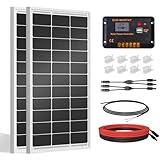
Choose rigid solar panels if you have a reasonably flat roof, want the best durability per dollar, and expect to keep your van for several years. Their aluminum frames protect the cells, provide a small air gap for cooling, and make panels easier to remove or replace.
Choose flexible solar panels if your roof is curved, your van has strict payload limits, or you want a low-profile installation with minimal wind resistance. They are particularly convenient when a framed panel would not sit flat. However, flexible panels can be more vulnerable to heat, abrasion, foot traffic, and installation mistakes.
For many full-time van homes, a mixed system is also sensible: rigid panels on the broadest flat section and flexible panels where curves or roof hardware make framed panels impractical.
Side by Side
See also: How to Clean Solar Panels on Van (2026): Step-by-Step • How to Set Up Van Solar Panels (2026): Step-by-Step
| Factor | Rigid panels | Flexible panels |
|---|---|---|
| Comfort | Usually cooler and more consistent when mounted above the roof | Low profile, but heat buildup can reduce output in hot weather |
| Durability | Glass and aluminum frames handle weather and cleaning well | Less resistant to scuffs, sharp objects, repeated bending, and prolonged heat |
| Price range | About $0.70 to $1.50 per watt for many consumer panels | About $1.00 to $2.25 per watt; premium designs may cost more |
| Maintenance | Simple to wash and inspect; hardware remains accessible | Adhesive edges and cable entry points need careful inspection |
| Space needed | A 100-watt panel is often around 42 by 20 inches | A 100-watt panel is often around 48 by 21 inches |
| Weight | Commonly about 14 to 20 pounds for 100 watts | Commonly about 4 to 8 pounds for 100 watts |
| Look | Raised and visibly framed | Nearly flush with the roof |
| Resale | Easy for a future owner to understand, remove, or upgrade | Clean appearance, but removal may leave adhesive or roof marks |
| Best for | Flat roofs, long-term ownership, maximum value, and larger systems | Curved roofs, low-clearance builds, limited payload, and discreet installs |
Where Rigid Wins
Rigid panels are usually the safer long-term investment. Their tempered glass surface and aluminum frame create a protective shell around the solar cells. That matters on a van exposed to tree branches, road debris, hail, roof washing, and changing temperatures. A rigid panel is not indestructible, but it generally tolerates routine cleaning and inspection better than a thin laminated panel.
They also tend to offer better value at higher wattages. If you need 300 watts, three 100-watt rigid panels may be less expensive than three flexible panels with the same nominal capacity. The frames provide clear mounting points for brackets, and raised mounting can allow air to move underneath the panel. Solar output falls as panels get hot, so ventilation is useful, particularly on a dark metal roof in direct summer sun.
Rigid panels are easier to service, too. A cracked panel can usually be unbolted and replaced without scraping adhesive from the roof. That is helpful for do-it-yourself repairs and for resale. Buyers can also see the panel specifications and hardware rather than guessing how a bonded installation was completed.
The disadvantages are practical rather than technological. A framed panel adds height, which can affect clearance under garages, branches, and low parking structures. Brackets require more planning and may increase wind noise. On a highly curved roof, forcing a rigid panel to conform can create stress or leave unusable gaps.
Where Flexible Solar Panels for Vans Wins
Flexible solar panels are the better fit when the roof is curved from side to side or front to back. They can follow moderate contours without the brackets and stand-offs required by rigid modules. Their low profile also keeps the van’s silhouette cleaner and reduces the chance of catching on branches or striking a low ceiling.
Weight is another significant advantage. A 200-watt flexible array may weigh roughly 8 to 16 pounds, while an equivalent rigid setup can weigh 30 to 45 pounds after adding mounting hardware. That difference does not transform every build, but it can help when a van is already close to its payload limit. Less roof hardware can also simplify an installation where drilling is undesirable.
For a price reference, a Renogy Flexible Solar Panel 100 Watt, 240° Ultra Flex Bendable is listed at $125.09, while the Renogy Flexible Solar Panel 200 Watt, 240° Ultra Flex Bendable is listed at $269.99. Those prices illustrate the usual tradeoff: flexible panels can be convenient and lightweight, but the cost per watt is often higher than a basic rigid alternative.
Installation quality is crucial. Do not assume that a panel described as bendable should be folded sharply or walked on. Follow the manufacturer’s bend radius, leave room for thermal expansion, protect the cable entry point, and use an adhesive system compatible with the roof material. A fully bonded panel can be difficult to cool and difficult to remove, so the roof surface should be clean, smooth, and ready for a permanent commitment.
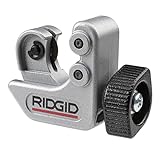
For roof work, ordinary hand tools can be useful during the broader build. A Ridgid CC247 RIDGID 40617 Model 101 Close Quarters Tubing Cutter, priced at $27.98, is intended for cutting small tubing rather than solar wiring, while the RIDGID 57003 EZ Change Plumbing Wrench Faucet Installation and Removal Tool is listed at $33.79 and is designed for faucet work. Neither is a solar-panel tool, but both may appear in a van conversion tool kit for unrelated plumbing jobs.
Cost Over 5 Years
A realistic five-year comparison should include more than the panel sticker price. For a 200-watt system, two rigid panels might cost approximately $160 to $350, while flexible panels could cost about $220 to $450 or more. Add roughly $100 to $250 for a charge controller, cable, fuses, connectors, and mounting or bonding supplies, depending on system size and component quality. Batteries are separate and can cost more than the solar array itself.
Rigid panels usually have the advantage over five years because their mounting is serviceable and their frames reduce the chance that a small surface injury ends the panel’s useful life. Flexible panels can still be economical if they avoid a costly roof modification or fit a space that rigid panels cannot use. But if a bonded panel fails and must be removed, labor and adhesive cleanup may add substantially to replacement cost.
Use a conservative budget: assume rigid hardware can be inspected and repaired, while flexible-panel adhesive and replacement work may be more involved. Also remember that rated wattage is not daily energy production. Shade, roof direction, season, controller efficiency, and battery limits all affect how much usable power reaches your appliances.
Which One for Your Home
Small apartment
If your “home” is a compact van used for weekend trips or occasional overnight stays, start with 100 to 200 watts. A flexible panel makes sense if you value a discreet roof and have a curved high-top. Choose rigid if the roof is flat and you want the lowest purchase cost. Either setup can handle lights, device charging, and a small compressor refrigerator when paired with an appropriately sized battery.
Family with kids or pets
Families typically use more energy for refrigeration, fans, tablets, laptops, and longer stays. Plan on roughly 300 to 500 watts if the roof allows it, then confirm the estimate against your battery capacity and daily habits. Rigid panels are usually the stronger choice because they are easier to clean, inspect, and replace. Their raised profile may also make it easier to keep gear from rubbing directly against the solar surface.
Rental
For a rented van or a conversion where drilling and permanent bonding are prohibited, avoid an installation that cannot be reversed. A portable or removable rigid panel may be more appropriate than a permanently bonded flexible panel. If rooftop mounting is allowed, obtain written permission and use a system that can be removed without damaging the roof.
Long-term home
For full-time van living, rigid panels are the default recommendation when roof shape and clearance permit them. Their serviceability, cooling potential, and lower cost per watt matter over years of travel. Flexible panels win for unusual roof contours or weight-sensitive builds. Before committing, inspect the roof, map shade from vents and racks, and leave access for future wiring repairs.
FAQ
Are flexible solar panels better for curved van roofs?
Yes. They are designed to follow moderate curves that would make a framed panel unstable or leave large gaps. Check the manufacturer’s maximum bend and never exceed it simply to match a sharper roof contour.
Do rigid panels make a van too tall?
They can add about 2 to 5 inches, depending on brackets and roof hardware. Measure the complete installed height, including vents and roof racks, before relying on a parking garage or building clearance.
How many watts do I need for a van?
About 100 to 200 watts can suit light weekend use. Many couples living part time in a van choose 200 to 400 watts, while families or full-time users may need 300 to 600 watts. Calculate actual appliance watt-hours rather than choosing by panel wattage alone.
Can I mix rigid and flexible panels?
Yes, but use compatible electrical specifications and design the array carefully. Panels with different voltage characteristics may need separate charge-controller inputs or separate controllers. A qualified installer can verify the series and parallel configuration before you connect the system.
Ready to decide? Our #1 pick for 2026 is the Comfort.
Live price & availability on Amazon.