Last updated: October 4, 2026
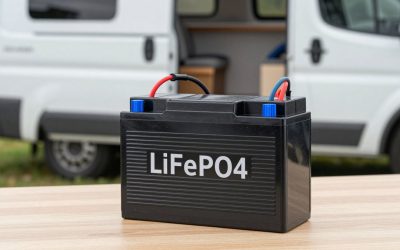
The best lithium batteries for camper vans are LiFePO4 (lithium iron phosphate) batteries with a built-in BMS rated for at least 100 A continuous, low-temperature charge protection, and ideally self-heating if you camp below freezing. Battle Born, Victron, SOK, Renogy and LiTime all make real, widely used options, but the right choice depends less on brand and more on three questions: how cold your nights get, how much inverter load you run, and how much space sits under your bed or seat base.
What Actually Separates One LiFePO4 Battery for Van Use From Another
Almost every 12 V lithium battery uses similar prismatic or cylindrical LFP cells. The meaningful differences are in the battery management system (BMS), cold-weather handling, physical format, and support.

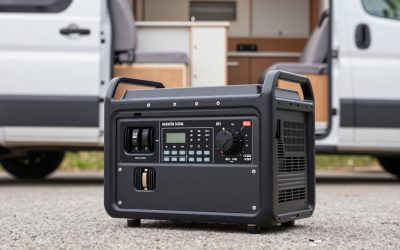
ECO-WORTHY EnergyRock 12V 280Ah Metal Case LiFePO4 Lithium Battery
Included for 'Best Lithium Batteries for Camper Vans: Cold-Weather Charging, BMS Limits and Cost per kWh' as a relevant option in this category; details come from the product listing.
View on Amazon
Dyness 12V 100Ah LiFePO4 Lithium Battery (2 Pack) BCI Group 31 with Low-Temp Protection, A+ Grade Cell Built-in 100A BMS, 12 Volt Lithium Battery Perfect for RV, Solar System, Off-Grid, Home Energy
Included for 'Best Lithium Batteries for Camper Vans: Cold-Weather Charging, BMS Limits and Cost per kWh' because the listing specifies A+ Grade Cell Built-in 100A BMS and 12 Volt Lithium Battery Perfect for RV, details this guide uses to compare options.
View on Amazon- BMS current rating: a 100 A continuous BMS supports about 1,200 W of inverter load per battery. Two in parallel roughly doubles that.
- Low-temperature charge cutoff: LiFePO4 cells should not be charged below about 0°C (32°F). A good BMS blocks charging below that point.
- Self-heating: some models warm the cells before allowing a charge, which matters if your solar starts producing on a frosty morning.
- Bluetooth monitoring: handy for checking cell balance and state of charge, but a shunt-based battery monitor is still more accurate for the whole system.
- Format: under-seat and slim formats fit vans much better than tall group-31 boxes in some builds.
Spec Comparison: Lithium vs Other Deep Cycle Batteries for Camper Use
See also: How Long Will a 100Ah Battery Last in a Van? Runtime Math Explained • Best Level 2 EV Chargers for Home
| Battery type (12 V, 100 Ah class) | Usable capacity | Weight | Rated cycle life | Typical price range |
|---|---|---|---|---|
| Flooded lead-acid deep cycle | about 50 Ah (50% DoD) | about 55 – 65 lb | 300 – 500 cycles | $100 – $180 |
| AGM deep cycle | about 50 Ah (50% DoD) | about 60 – 70 lb | 400 – 800 cycles | $180 – $300 |
| Budget LiFePO4 100Ah lithium battery | about 90 – 100 Ah | about 22 – 26 lb | 3,000 – 4,000 cycles at 80% DoD | $180 – $350 |
| Self-heating LiFePO4 100Ah | about 90 – 100 Ah | about 24 – 28 lb | 3,000 – 5,000 cycles | $300 – $550 |
| Premium LiFePO4 100Ah (e.g., Battle Born BB10012) | about 100 Ah | about 29 – 31 lb | 3,000 – 5,000 cycles | $600 – $900 |
| Large single LiFePO4, 200 – 300 Ah | about 200 – 300 Ah | about 45 – 70 lb | 3,000 – 5,000 cycles | $500 – $1,800 |
A 100 Ah lithium battery gives roughly double the usable energy of a 100 Ah AGM at less than half the weight. That is the main reason vans have largely moved away from lead-acid.
Cost Per Usable Kilowatt-Hour: A Worked Calculation
Compare a budget LiFePO4 at about $250 with an AGM at about $230.
- AGM: 50 Ah usable x 12 V = 0.6 kWh per cycle. At 600 cycles, that is 360 kWh lifetime. $230 / 360 kWh = about $0.64 per kWh.
- LiFePO4: 90 Ah usable x 12.8 V = about 1.15 kWh per cycle. At 3,000 cycles, that is about 3,450 kWh. $250 / 3,450 kWh = about $0.07 per kWh.
Even if a lithium battery only reaches half its rated cycles, it remains several times cheaper per unit of energy delivered. The math only favors AGM if you rarely camp off-grid.
Picks by Situation
Cold-weather campers: self-heating LiFePO4
If your van sits below freezing, look for a model with integrated heating, such as Renogy’s self-heating 12 V 100 Ah line or LiTime’s low-temperature protection models. The alternative is installing the battery inside the heated living space, which many builders do anyway.
Premium, warranty-first buyers: Battle Born or Victron
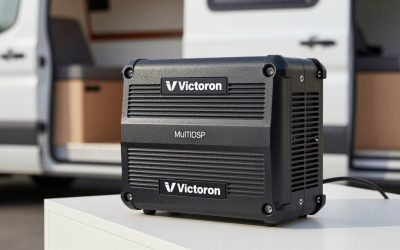
Battle Born batteries are US-assembled with a long warranty and a strong reputation for support. Victron’s Lithium Smart batteries pair with Victron’s external BMS and integrate tightly with their inverters, chargers and monitoring, which suits a full Victron system. Note that Victron’s Smart batteries need that external BMS rather than relying on an internal one.
Best value per amp-hour: SOK, LiTime, Redodo
These brands offer solid LiFePO4 batteries at lower prices. SOK is known for serviceable cases with replaceable components. For weekend vans that rarely see sub-zero temperatures, these deliver most of the benefit for a fraction of the premium price.
High inverter loads: one large battery or matched parallel pair
If you run induction cooking, a microwave, or a hair dryer, you need BMS headroom. Two 100 Ah batteries in parallel (each with a 100 A BMS) or a single 200 to 300 Ah battery rated for 150 to 200 A continuous handles a 2,000 W inverter more comfortably than one 100 Ah battery.
Sizing Your Bank
| Usage profile | Typical daily use | Suggested lithium capacity |
|---|---|---|
| Weekend: lights, phone, fan | 300 – 500 Wh | 100 Ah |
| Remote work: laptop, 12 V fridge, fan | 800 – 1,200 Wh | 200 Ah |
| Full-time with induction or espresso | 1,500 – 2,500 Wh | 300 – 400 Ah |
Plan for about two days of autonomy without solar if you camp in cloudy regions. A 12 V compressor fridge alone typically uses 300 to 600 Wh per day depending on ambient temperature.
Safety and Installation Notes
- Fuse at the battery. Install a Class-T fuse or a fuse rated by the battery maker within a short distance of the positive terminal. Lithium batteries can deliver very high short-circuit current.
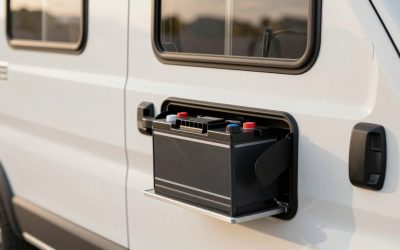
- Secure mounting. A 30 to 70 lb battery becomes a projectile in a crash. Use a proper tray and strap or bracket bolted to the structure.
- Correct charge profiles. Set your DC-DC charger, solar controller and inverter-charger to a LiFePO4 profile per the battery manufacturer, typically around 14.2 to 14.6 V absorption.
- Heat and ventilation. LiFePO4 does not vent gas in normal use like flooded lead-acid, but keep it away from heaters and engine heat to protect cell life.
- Parallel batteries should match. Use the same model and similar state of charge, and wire them so cable lengths are equal.
If you are not comfortable sizing cables and fuses, have a qualified electrician or experienced van electrical installer review your plan.
What Wears and What Fails
LiFePO4 cells degrade slowly, but BMS failures, loose terminal bolts, and charging in freezing temperatures cause most problems. Torque terminals to the manufacturer’s spec, check them after the first few hundred miles, and store the battery at around 50 to 60 percent charge if the van will sit for months.