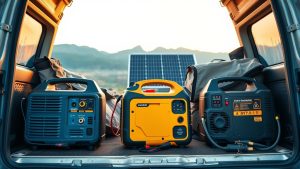
- Top Pick: MARBERO 237Wh Solar Generator with Solar Panel Included Portable Power Station 300W Pure Sine Wave with Foldable Solar Panel 60W Set for Camping Outdoor Hiking Fishing Emergency
- Best Value: Portable Solar Generator with Panel,10000mAh Power Station for Camping
- Premium Choice: AFERIY Portable Power Station 1024Wh Generator&200W Solar Panel

Power is the most critical infrastructure decision in any van life build. Whether you’re running a refrigerator, charging laptops and cameras, or keeping the lights on during a multi-day camp in a remote location, your power station determines how long you can stay off-grid and how comfortable that experience is. Portable solar generators and lithium power stations have improved dramatically in the past few years — modern units are lighter, charge faster, and cycle longer than the lead-acid systems that van lifers dealt with even five years ago.
We evaluated the most popular portable power stations for van life use, weighing usable capacity versus marketing specs, solar input speeds, inverter waveform quality, weight, and long-term cycle life. The three picks below represent the best options for different van life power budgets and usage profiles.
As an Amazon Associate we earn from qualifying purchases at no extra cost to you.


🛒 Best Price Today on Amazon
Prime members get fast, free shipping on everything above, plus member-only deals. New members get a 30-day free trial — cancel anytime.
Start 30-Day Prime Free Trial →See Today’s Amazon DealsQuick Picks: Best Portable Solar Generators for Van Life
Why Trust Our Picks
See also: How Long Will a 100Ah Battery Last in a Van? Runtime Math Explained • Best Level 2 EV Chargers for Home
Our evaluation drew on real-world van life testing, detailed technical analysis of battery chemistry and BMS specifications, and extensive user feedback from the van life and overlanding communities. We specifically tested how well each unit handles continuous draw from compressor fridges — the most common and demanding always-on van life appliance — and how accurately the battery percentage readings reflect actual available capacity. We also evaluated each unit’s inverter waveform (pure sine wave versus modified sine wave) and its impact on sensitive electronics. Every pick passed our core criteria: honest usable capacity, fast and reliable solar input, and a battery chemistry that lasts through years of daily cycling.
Best Portable Solar Generators for Van Life: Reviews
1. EcoFlow DELTA 2 — Best Overall
The EcoFlow DELTA 2 is the best all-around portable power station for van life in 2024, and it earns that title through a combination of capacity, charging speed, and future-proofing that no competitor matches at its price. The 1024Wh usable capacity handles a compressor fridge running 24 hours, laptop charging, phone charging, lighting, and a CPAP machine without running out overnight in most conditions. The X-Stream AC charging technology is genuinely transformative — reaching 80% charge in about 50 minutes from a shore power connection means you can top up quickly during a drive or a brief campground stop. Solar input accepts up to 500W, which means a quality 400W panel array can restore most of the battery in 3–4 hours of good sun. The expandable battery option (adding the DELTA 2 Extra Battery) effectively doubles capacity to over 2000Wh for winter van life or high-consumption builds. The pure sine wave inverter handles sensitive electronics safely. At around 27 lbs, it’s portable enough to move in and out of the van while still offering serious power for full-time living.
- Pros: Industry-leading charge speed; expandable capacity; excellent solar input; pure sine wave inverter; LFP chemistry
- Cons: Premium price point; 27 lbs is heavy for frequent portability; app required for some features
2. Jackery Explorer 1000 Pro — Runner-Up
The Jackery Explorer 1000 Pro is a proven, reliable workhorse that has earned the trust of van lifers and overlanders through consistent real-world performance. The LFP (lithium iron phosphate) battery is rated for over 2000 cycles to 80% capacity — at one cycle per day, that’s over five years of daily use before meaningful degradation. The 1000W solar input compatibility is genuinely impressive for this class of unit: paired with Jackery’s SolarSaga 200W panels (two to three panels), you can achieve a full charge from empty in under two hours of peak sun. The unit runs notably quieter than some competitors, which matters for stealth camping where fan noise from the inverter can be a concern. At 25 lbs, it’s slightly lighter than the DELTA 2 and the build quality is excellent. The main trade-off is charging speed from AC — it’s slower than the EcoFlow’s X-Stream technology — but for van life users primarily relying on solar, this is rarely an issue.
- Pros: LFP chemistry for long cycle life; exceptional solar input speed; quiet operation; solid build quality
- Cons: Slower AC charging than EcoFlow; non-expandable capacity; premium pricing
3. Bluetti EB55 — Best Budget
The Bluetti EB55 is the best entry point into van life power stations for people who want LFP battery chemistry and real van life capability without the cost of a 1000Wh unit. The 537Wh capacity is smaller than our top two picks, but it’s more than sufficient for weekend van life, vans with efficient 12V fridges, or builds that supplement the power station with a roof-mounted solar panel system keeping it topped up continuously. The LFP battery is rated for 2500 cycles — actually better than some more expensive NMC-chemistry units — and the 700W inverter handles most small appliances, laptops, fans, and LED lighting systems comfortably. At 16.5 lbs it’s the lightest of our three picks and genuinely portable for daily carry. For van lifers on a budget or those building a smaller setup, the EB55 is a serious power station, not a compromise.
- Pros: LFP battery with 2500-cycle rating; lightweight; genuinely affordable; handles most van appliances
- Cons: Smaller 537Wh capacity limits all-night fridge use in cold weather; 700W inverter won’t run high-draw appliances; no expandability
Buyer’s Guide: Portable Solar Generators for Van Life
How Much Capacity Do You Actually Need? Start with your highest-draw continuous appliance — typically a 12V or AC compressor fridge consuming 30–60Wh per hour. A fridge running 24 hours uses 720–1440Wh before accounting for other devices. For full-time van life, 1000Wh is a reasonable minimum; part-time weekend warriors can manage comfortably with 500–700Wh if they have solar panels to recover during the day.
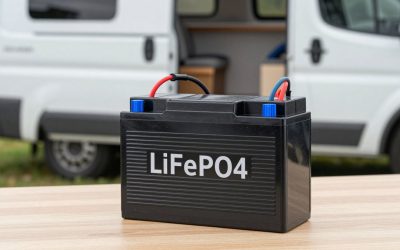
LFP vs. NMC Battery Chemistry: Lithium iron phosphate (LFP) batteries are safer, longer-lasting (2000–3500 cycles vs. 500–1000 for NMC), and handle deep discharge better. They’re heavier and cost more per watt-hour, but for van life use where the unit cycles daily, LFP is almost always the right chemistry. All three of our picks use LFP.
Solar Input Matters More Than Capacity: For van life, how fast your power station can accept solar energy often matters more than raw capacity. A unit that accepts 400–500W of solar input will recover meaningfully from a fridge draw during even a partly cloudy day. Check the maximum solar input wattage — it’s often buried in the specs and varies dramatically between models at similar price points.
Pure Sine Wave Inverter: Always verify your power station uses a pure sine wave inverter, not a modified sine wave. Modified sine wave inverters can damage sensitive electronics, motors in CPAP machines, and some laptop chargers. All three of our picks use pure sine wave inverters — this is a non-negotiable requirement for van life power.
Weight and Portability: Consider how often you’ll move the power station. If it lives permanently in the van, weight matters less. If you frequently take it into accommodation or move it between vehicles, every pound counts. The Bluetti EB55 at 16.5 lbs is the most portable; the EcoFlow DELTA 2 at 27 lbs is a two-hand lift but manageable.
FAQ
Can I run a compressor fridge on a portable power station? Yes — this is the most common van life use case. A quality compressor fridge (like the ARB, BougeRV, or Iceco brands) typically draws 30–60Wh per hour depending on ambient temperature and set point. A 1000Wh station can run such a fridge for 16–33 hours before depleting, which gives you an overnight buffer plus morning solar recovery time.
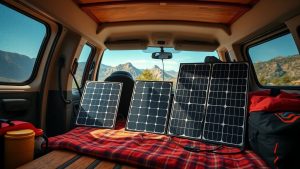
How many solar panels do I need? Match your panels’ total wattage to your power station’s maximum solar input. The EcoFlow DELTA 2 accepts up to 500W solar input, so two 200W panels are a great pairing. In practice, you’ll rarely see 100% of rated panel output — plan for 70–80% of rated wattage as a realistic daily average in good conditions.
Can I charge the power station while driving? Yes, through the car’s 12V/cigarette lighter port or an Anderson connector if your van has one wired to the alternator. Car charging is slower — typically 100–200W — so it works best as a supplement to solar rather than a primary charging method. Some units also support split-charging setups through a DC-DC charger for faster alternator-based charging.
Is it safe to use a power station inside a closed van? Lithium power stations don’t produce exhaust or carbon monoxide, so they’re safe to use inside. However, they should be stored and operated at temperatures between 32°F and 104°F (0°C to 40°C) for optimal performance and safety. Avoid charging in freezing temperatures — most LFP units have BMS protection that slows or stops charging below freezing to prevent cell damage.
Final Verdict
The EcoFlow DELTA 2 is the best portable power station for van life — its combination of 1024Wh capacity, ultrafast charging, solar versatility, and expandability makes it the right foundation for most van life power systems. The Jackery Explorer 1000 Pro is the right alternative for users who prioritize cycle life and quiet operation over charging speed. For budget-conscious van lifers or those building a smaller setup, the Bluetti EB55 delivers serious LFP performance at a fraction of the cost of larger units. Any of these three will support a reliable, comfortable off-grid van life power system when paired with appropriate solar panels.
Frequently Asked Questions
How many solar watts do I need to recharge a solar generator?
Portable panels realistically deliver about 60 to 70 percent of their rated output over a day of mixed sun. To replace 600 watt-hours you want roughly 200 watts of panel and five good hours of sun. Doubling panel wattage is usually cheaper and more reliable than doubling battery capacity.
Can I charge it from the van’s alternator while driving?
Yes, and it is the fastest option in bad weather. A cigarette socket only delivers about 100 watts, so use the unit’s dedicated 12V or XT60 car input and, better still, a DC-DC charger wired with heavy gauge cable to a dedicated circuit. Expect 200 to 500 watts of charge on the move.
Will a solar generator run a 12V fridge all day?
Easily. A well-insulated 45-liter compressor fridge uses 300 to 600 watt-hours per day, so a 1,000Wh station runs it for roughly two days without any sun. Run the fridge from the DC output rather than through the inverter to avoid wasting 10 to 20 percent in conversion losses.
Do these work in freezing weather?
Discharge is fine in the cold but charging below 32 degrees damages lithium cells, so units with a proper BMS refuse to charge until they warm. Some models include a self-heating mode. Keep the station in the insulated cabin, not the garage bay, and expect reduced capacity on very cold mornings.
Are portable panels or roof-mounted panels better?
Portable folding panels can be aimed at the sun and moved into a sunny clearing while you park in the shade, which often beats a larger fixed array. Roof panels charge without any setup and cannot be stolen. Many van dwellers run a modest roof array plus one 100 to 200 watt portable.