Last updated: October 9, 2026
🛒 Best Price Today on Amazon
Prime members get fast, free shipping on everything above, plus member-only deals. New members get a 30-day free trial — cancel anytime.
Choosing the Right Solar Panel for Your Van Build
Solar power is the cornerstone of true off-grid van life. The right solar panel for your van keeps your batteries charged, your fridge running, and your devices powered — entirely for free, wherever the sun shines. But not all solar panels are created equal: rigid vs. flexible, monocrystalline vs. polycrystalline, mounting style — all of these choices affect how well your system performs on the road. A well-designed array can be the difference between chasing campground hookups every other night and parking anywhere for a week with a full battery bank. This guide walks through the best solar panels for van conversions, how to size an array to your actual power draw, and the wiring and mounting details that quietly make or break real-world output.
As an Amazon Associate we earn from qualifying purchases at no extra cost to you.



1. Renogy 200W Monocrystalline Solar Panel
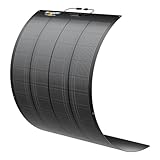
Renogy is the most trusted name in van solar, and their 200W monocrystalline panel is the workhorse of thousands of van builds. Rigid aluminum frame construction is durable and easy to mount on a roof rack, and the tempered-glass surface shrugs off hail, tree debris, and years of highway grit. Monocrystalline cells deliver up to 21% efficiency, among the best in the class, which means more watts squeezed out of every square foot of precious roof space. At 200W, a single panel can meaningfully charge a 100Ah battery on a sunny day — realistically returning 60-100Ah over 5-6 peak-sun hours depending on latitude and season. Pair two or three for a robust 400-600W system capable of running a 12V compressor fridge around the clock, charging laptops, powering a roof fan, and topping off a sizable lithium bank even on partly cloudy days. Because Renogy panels are so widely used, brackets, Z-mounts, and MC4-compatible accessories are easy to source, and the community support for wiring diagrams is unmatched.
2. SunPower Flexible Solar Panel 100W
When roof real estate is limited or a rigid panel won't fit your van's curved roof, flexible solar panels are the answer. SunPower's flexible panels use their premium Maxeon cells — the most efficient solar cells commercially available. At under 4mm thick and incredibly lightweight, they adhere directly to curved surfaces with VHB tape or screws through grommets, adding almost no height to your profile and no wind drag on the highway. Output stays strong even in partial shade thanks to Maxeon cell bypass diodes, and the low profile keeps your van stealthy for urban overnighting. The trade-off is heat: flexible panels bonded directly to a metal roof run hotter than framed rigid panels with an air gap, and heat lowers efficiency, so leaving a small ventilation channel or mounting to a spacer helps. They also typically carry shorter warranties than framed glass panels. Still, for high-roof vans, fiberglass campers, or anyone counting every pound, these are the best flexible panels money can buy for van applications.
3. Jackery SolarSaga 200W Portable Solar Panel
Not every van lifer wants permanently mounted panels. The Jackery SolarSaga 200W folds like a suitcase, deploys in seconds, and can be angled toward the sun wherever you park. It connects directly to Jackery power stations via a proprietary connector, making it the plug-and-play choice for anyone running a Jackery Explorer as their electrical hub. The big advantage of a portable panel is aiming: a fixed rooftop panel lies flat and loses a surprising amount of output when the sun is low, but a tilted portable panel pointed straight at the sun can outperform a larger flat array in winter. Park in the shade for a cool night's sleep and set the panel out in a sunny clearing 20 feet away. Ideal for van lifers who move the panel around camp to chase optimal sun angle or who want solar charging without a permanent roof install. The kickstand holds any position and the carrying handle makes it easy to transport, though you'll need to bring it in at night and when leaving camp.
Rigid vs. Flexible Solar Panels: Which Is Right for Your Van?
See also: Best Ways to Keep a Van Tidy on the Road • Best Cyber Monday Cologne Deals
This is the first fork in the road for most builders. Rigid panels win on efficiency, durability, and lifespan — the aluminum frame and glass face last 20-25 years, and the air gap under a roof-rack mount keeps cells cooler and more productive. Their downsides are weight, height (which affects garage clearance and stealth), and the need for solid mounting hardware. Flexible panels win on weight, aerodynamics, and the ability to conform to curved roofs, but they run hotter, generally last fewer years, and cost more per watt. A practical rule: if your van has a flat or racked roof and clearance isn't a concern, choose rigid. If you have a curved fiberglass roof, an ultra-low-profile stealth build, or a strict weight budget, choose flexible. Many builders run a hybrid setup — rigid on the main roof, a portable panel for tilting in shoulder seasons.
Buying Guide: How to Size Solar Panels for Your Van
- Calculate your daily needs: Add up watt-hours consumed daily by all devices to size your panel array correctly. A fridge (~30-60Ah/day), lights, a fan, and device charging typically total 40-100Ah/day for a modest build.
- Panel efficiency: Monocrystalline cells (19-22%) outperform polycrystalline (15-17%) in the same footprint — on a size-limited van roof, always favor mono.
- Rigid vs. flexible: Rigid panels are more durable and efficient; flexible panels suit curved roofs and low-profile builds.
- Roof space: Measure carefully — most full-size vans can fit 400-600W of rigid panels without modifications, leaving room for a fan and roof vent.
- Wiring: Use appropriately sized wire and connectors (MC4 is industry standard) to minimize resistance losses; 10 AWG is a safe default for most van runs.
- Shading: Even partial shading significantly reduces output — position panels to maximize unobstructed sun exposure and avoid mounting directly beside tall roof vents or AC units.
- Charge controller pairing: Always pair solar with an MPPT (not PWM) charge controller for 15-30% more harvest, especially in cold weather.
Installation and Wiring Tips for Reliable Output
The panels themselves are only half the system. To get the rated output year after year, focus on three often-overlooked details. First, use an MPPT charge controller sized to your array — a 30A controller comfortably handles 400W at 12V. MPPT converts excess panel voltage into usable charging current, which matters most in cold, bright conditions when panel voltage spikes. Second, size your wiring for the run length; long thin wires drop voltage and waste power, so err toward thicker gauge (10 AWG or 8 AWG for long roof-to-battery runs) and keep MC4 crimps clean and weatherproof. Third, mount for airflow and waterproofing: rigid panels perform better with a 1-2 inch air gap, and every roof penetration should be sealed with self-leveling lap sealant and reinforced with VHB tape or L-brackets rated for highway wind loads. Finally, consider wiring two panels in series rather than parallel to raise voltage and reduce current loss over long runs — just confirm your controller's maximum input voltage first.
Frequently Asked Questions
How many solar panels do I need for van life?
Most full-time van lifers land between 200W and 600W of solar. A single 200W panel keeps a modest build with a fridge and phone charging topped up in sunny climates, while 400-600W is the sweet spot for running a compressor fridge, laptops, a roof fan, and an induction burner without anxiety. Size it by calculating your daily watt-hour consumption, then matching panels to replace that draw within 5-6 peak-sun hours, adding a margin for cloudy days.
Are flexible or rigid solar panels better for a van?
Rigid panels are more efficient, more durable, and longer-lasting, making them the default for flat or racked van roofs where clearance and weight are not critical concerns. Flexible panels are the better pick only when your roof is curved, you need an ultra-low stealth profile, or weight is tightly budgeted. Because flexible panels run hotter and generally carry shorter warranties, most builders choose rigid unless their roof or build style rules it out.
Do solar panels work on cloudy days?
Yes, but at reduced output. On an overcast day, panels typically produce 10-25% of their rated wattage, and heavy storms can drop that further. This is exactly why you size a battery bank to hold 2-3 days of consumption and pair panels with an efficient MPPT charge controller. In persistently cloudy regions, add extra panel capacity or plan to top off with a DC-to-DC charger from your alternator while driving.
What size charge controller do I need for my solar panels?
Divide your total panel wattage by your battery voltage to estimate charging current, then choose an MPPT controller rated above that figure. For a 400W array on a 12V system, current can approach 30A, so a 30A or 40A MPPT controller like a Victron or Renogy Rover is appropriate. Always match the controller's maximum PV input voltage to your array's wiring configuration, particularly if you wire panels in series to reduce line losses.
Can I add more solar panels later?
Absolutely, and many builders start small and expand. The key is to plan ahead: buy a charge controller sized for your eventual array rather than your starting one, run slightly heavier gauge wire than you currently need, and choose panels of the same type and voltage so future additions integrate cleanly. Mixing panels of very different specifications on one controller can reduce overall efficiency, so keep expansion in mind from day one.
Final Thoughts
For a full van build with a roof rack, start with two Renogy 200W panels for a solid 400W foundation. If your roof has curves or limited space, SunPower flexible panels give you the best efficiency in a thin profile. And if you want the simplest setup with zero permanent installation, the Jackery SolarSaga is the most user-friendly option available. Combine your panels with a quality MPPT charge controller and properly sized batteries for a solar system that keeps your van running for years.