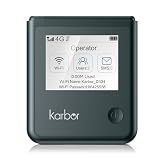
- Top Pick: RoamWiFi Mobile Hotspot Pocket WiFi, Portable WiFi No SIM Card Needed, MiFi
- Best Value: GL.iNet GL-E5800 NA MUDI 7 5G Tri-Band Wi-Fi 7 Travel Router with eSIM
- Premium Choice: TravlFi JourneyGo LTE RV WiFi Hotspot | RV Internet with Multiple Networks, Pay As You Go and No Contracts | Portable Internet for Travel, Motorhomes and Campers
Last updated: October 9, 2026
As an Amazon Associate we earn from qualifying purchases at no extra cost to you.


🛒 Best Price Today on Amazon
Prime members get fast, free shipping on everything above, plus member-only deals. New members get a 30-day free trial — cancel anytime.
Introduction
For digital nomads and remote workers living in a van, reliable internet is as critical as power and water. The van life internet landscape has evolved rapidly — between carrier hotspots, dedicated mobile routers, and signal boosters, it's now possible to maintain a productive work setup from almost anywhere with cell coverage. This guide covers the best mobile internet solutions for van lifers who need connectivity on the road.
What to Look For
See also: Best Ways to Keep a Van Tidy on the Road • Best Cyber Monday Cologne Deals
- Multi-Carrier Coverage: No single carrier covers every corner of the country. Van lifers who travel broadly benefit from a solution that aggregates multiple carriers — either through a dual-SIM router or maintaining multiple plan subscriptions to ensure coverage across different regions.
- Data Plan vs. Throttling: Most "unlimited" hotspot plans throttle speeds after 30-100GB of high-speed data. For full-time remote workers doing video calls and large file transfers, identify exactly when throttling kicks in and at what speeds — it matters enormously for work productivity.
- Signal Amplification: A weak cell signal is the root cause of most van life internet frustrations. A quality cellular signal booster like WeBoost can turn a marginal -100 dBm signal into a usable connection — often more impactful than any plan upgrade.
Top Picks
Pepwave MAX BR1 Mini Mobile Router
The Pepwave MAX BR1 Mini is the serious van life internet solution — a commercial-grade LTE router with dual SIM slots that can failover between carriers automatically when signal drops on one. SpeedFusion technology bonds multiple connections for higher throughput, and the device is designed for vehicle use with a wide 9-32V input range. For remote workers who can't afford internet downtime, the Pepwave's reliability and dual-carrier capability justify the premium price.
WeBoost Drive Reach RV Cell Signal Booster
The WeBoost Drive Reach is the top-rated vehicle cellular signal booster and a game-changer for van lifers in rural areas. It captures weak cell signals on an external antenna, amplifies them up to 50x, and rebroadcasts inside the van — improving both upload and download speeds significantly in marginal coverage areas. Compatible with all US carriers simultaneously, it works with any phone or hotspot device without any additional configuration.
GL.iNet GL-E750 Mudi 4G LTE Router
The GL.iNet GL-E750 Mudi is the van life internet sweet spot of capability and price — a compact 4G LTE router with a built-in 7,000mAh battery, OpenWrt firmware for advanced configuration, and an e-ink display showing connection status. Insert any standard SIM card and it creates a private WiFi network inside your van. For van lifers who want a dedicated router separate from their phone hotspot, the Mudi's combination of portability, battery power, and configurability is hard to beat.
Final Thoughts
The best van life internet setup combines a quality router or hotspot device with the right data plan and a signal booster for difficult coverage areas. Start with a WeBoost signal booster and a carrier hotspot plan, then upgrade to a dedicated dual-SIM router when your connectivity needs grow. Remote work from a van is entirely achievable with the right setup — many van lifers work full-time jobs completely location-independent.
Frequently Asked Questions
How much power does a mobile hotspot draw?
A pocket hotspot uses only 5-10W over USB, around 60-100Wh across a full workday. A dedicated cellular router with an external antenna runs 15-25W, and a satellite dish like Starlink averages 45-75W with peaks near 100W. Satellite is the load that actually forces you to size your battery bank and solar up.
Should I run it on 12V or through the inverter?
Run it on 12V whenever the device supports it. Going 12V to 110V and back down to 12V wastes 10-20 percent in conversion and forces you to keep the inverter awake all day, which alone can add 200-400Wh. Many routers accept 9-16V DC input directly, and USB-C hotspots run off a simple 12V socket.
Will one carrier be enough for full-time work?
No. Coverage gaps are the rule, not the exception, once you leave interstates. Most full-time remote workers carry two carriers on different networks, typically one major and one regional or prepaid line, and switch as needed. A dual-SIM router or a hotspot plus a phone plan with tethering achieves the same redundancy for less money.
Does an external antenna really help?
Substantially, in weak-signal areas. A roof-mounted MIMO antenna commonly gains 10-20 dB, which can turn an unusable single bar into a workable connection. It matters most when you are far from a tower or parked inside a metal van body, since the van shell itself blocks a meaningful amount of signal.
How weatherproof are roof-mounted units?
Buy antennas rated IP66 or better and seal the cable entry with a proper gland plus butyl tape. The failure point is almost never the antenna, it is the roof penetration. Route cable with a drip loop so water runs off before reaching the gland, and inspect the sealant every spring after freeze-thaw cycles.