Last updated: October 9, 2026
🛒 Best Price Today on Amazon
Prime members get fast, free shipping on everything above, plus member-only deals. New members get a 30-day free trial — cancel anytime.
Introduction
Your battery bank is the energy storage foundation of your van life electrical system — everything else depends on it. Choosing between lithium LiFePO4 and AGM lead-acid, sizing the bank correctly, and selecting the right battery management components are decisions that affect your van life comfort every single day. Get it right and you barely think about power again; get it wrong and you spend every cloudy afternoon rationing your fridge and worrying about waking up to a dead bank. This guide breaks down the best battery options and management systems for van conversions, how to size your bank to your real-world usage, and how the charging components fit together into a system that just works.
As an Amazon Associate we earn from qualifying purchases at no extra cost to you.




What to Look For
See also: Best Ways to Keep a Van Tidy on the Road • Best Cyber Monday Cologne Deals
- Lithium vs. AGM: Lithium LiFePO4 batteries have 4-5x the usable capacity of AGM at the same amp-hour rating (AGM should only be discharged to 50%; lithium to 80-90%), last 10x longer, charge faster, and weigh about half as much. The higher upfront cost is offset by superior long-term value for full-time van lifers.
- Usable Capacity & Daily Consumption: Calculate your daily power consumption in watt-hours, then size your battery bank to hold 2-3 days of consumption. This buffer handles cloudy days and prevents over-discharging. For a van with a refrigerator and electronics, 200Ah lithium is a reasonable starting point.
- Battery Management System (BMS): Every lithium battery bank needs a BMS to prevent overcharge, over-discharge, and temperature damage. Many drop-in lithium batteries include a built-in BMS. Standalone BMS units like those from Victron offer more monitoring and control options for DIY builders.
- Charging Sources: A complete system usually pulls from three inputs — solar via an MPPT controller, the vehicle alternator via a DC-to-DC charger, and shore power via an AC charger. The more sources you support, the less you depend on any single one.
- Cold-Weather Behavior: LiFePO4 batteries must not be charged below freezing without internal heating; if you winter camp, choose a self-heating model or plan to keep the bank above 32°F.
Top Picks
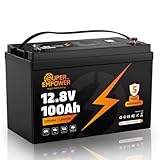
Battle Born 100Ah LiFePO4 Deep Cycle Battery
Battle Born is the most widely trusted lithium battery brand in the van life community — their 100Ah LiFePO4 batteries have powered thousands of builds across every climate. Each battery includes a built-in BMS with temperature protection, delivers 100Ah of usable capacity (vs. 50Ah for an equivalent AGM), and is warranted for 10 years. Two Battle Born batteries wired in parallel give 200Ah — an excellent starting point for a full-time van setup with refrigerator and electronics. They also handle high discharge currents cleanly, so running a 2000W inverter for an induction cooktop or coffee maker won't trip the BMS the way undersized budget cells often do. The made-in-USA support and proven track record are worth the premium for anyone who lives in their van year-round.
Victron SmartSolar MPPT 100/30 Charge Controller
Victron Energy is the European power electronics brand that serious van life builders trust for charge controllers, inverter-chargers, and battery monitors. The SmartSolar MPPT 100/30 handles up to 400W of solar input and charges at up to 30A with maximum power point tracking efficiency. Bluetooth monitoring via the VictronConnect app lets you see real-time solar input, battery state, and charge history from your phone — invaluable for understanding and optimizing your electrical system. Its programmable charge profiles let you dial in exact voltages for LiFePO4 chemistry, and if you later add a Victron shunt or DC-to-DC charger, the whole ecosystem talks together over Bluetooth for a single, coherent view of your power system.
Renogy 200Ah AGM Deep Cycle Battery
For van lifers building on a budget who aren't ready for lithium, Renogy's 200Ah AGM battery is a solid, proven option. AGM batteries handle vibration well (critical in a moving vehicle), require no maintenance, and can be mounted in any orientation. At 200Ah rated capacity with a 50% recommended depth of discharge, this battery provides 100Ah of reliable daily use — enough for lights, device charging, and a fan, though not adequate for a compressor refrigerator without significant solar input. AGM is also tolerant of freezing temperatures during charging, which makes it a reasonable choice for cold-climate weekend builds where lithium's charging restrictions would be a hassle. The trade-off is weight and lifespan: expect roughly 3-5 years versus a decade or more from quality lithium.
Lithium vs. AGM: Which Battery Chemistry Wins for Van Life?
The choice comes down to how you use your van. Lithium LiFePO4 is the clear winner for full-time and extended travel: you get double the usable capacity per amp-hour, five to ten times the cycle life, half the weight, and far faster charging that captures every minute of solar. The catch is a higher purchase price and the need to keep the bank above freezing while charging. AGM lead-acid makes sense for tight budgets, occasional weekend use, and cold climates where its freeze tolerance during charging simplifies things. Over a five-year horizon, lithium often costs less per usable amp-hour because you replace AGM banks two or three times in the same span. If you plan to live in the van, buy lithium once and be done; if you camp a few weekends a season, generously sized AGM will serve you well at lower upfront cost.
How to Size Your Van Battery Bank
Sizing starts with an honest energy audit. List every 12V and AC device, multiply its wattage by the hours you run it daily, and total the watt-hours. A typical build with a compressor fridge (~400-600Wh/day), LED lights, a roof fan, a laptop, and phone charging often lands around 500-900Wh per day. Convert to amp-hours by dividing by 12 (so 720Wh ÷ 12 = 60Ah/day). Then multiply by 2-3 days of autonomy to survive cloudy stretches: 60Ah × 2.5 = 150Ah. Because lithium delivers 80-90% usable capacity, a 200Ah lithium bank comfortably covers that example, while you'd need roughly 300-400Ah of AGM to reach the same usable figure. Always round up — the cost of a slightly larger bank is far less painful than a dead battery on a rainy morning, and undersized banks that get deeply discharged wear out fastest.
Putting the System Together: Charging and Monitoring
Batteries are the storage; the rest of the system keeps them full and healthy. Three charging sources make a van electrically self-sufficient: solar through an MPPT controller like the Victron above, an alternator DC-to-DC charger that safely tops the bank while you drive (essential in winter and cloudy weather), and an AC shore-power charger for campgrounds and garages. Tie it together with a quality battery monitor or shunt that reads true state of charge in percent rather than guessing from voltage — this single upgrade removes most of the anxiety from off-grid living. Finally, protect everything with correctly sized fuses at the battery terminals and a main disconnect switch, and use appropriately gauged cable for the high-current runs between battery, inverter, and bus bars.
Frequently Asked Questions
How many batteries do I need for van life?
Most full-time van builds run 200-400Ah of lithium or the AGM equivalent. Start by auditing your daily watt-hour consumption, convert to amp-hours, and multiply by 2-3 days of autonomy for cloudy weather. A van with a compressor fridge and typical electronics usually needs around 200Ah of lithium, which two 100Ah Battle Born batteries provide. Heavy users running induction cooking or air conditioning should plan for 300Ah or more.
Is lithium really worth the extra cost over AGM?
For full-time and extended van life, yes. Lithium delivers roughly double the usable capacity per amp-hour, lasts five to ten times as many cycles, charges faster, and weighs about half as much. Because you may replace an AGM bank two or three times over the life of one lithium bank, lithium frequently costs less per usable amp-hour across five years. AGM only wins for tight budgets, occasional weekend use, or cold climates where charging below freezing is a concern.
Can I charge my van batteries while driving?
Yes, and you should. A DC-to-DC charger draws from your alternator and safely charges the house bank while you drive, isolating it from the starter battery and applying the correct charge profile for lithium or AGM. This is one of the most reliable charging sources because it works regardless of weather, making it especially valuable in winter or during long cloudy stretches when solar alone falls short. Size the charger to your alternator's capacity, commonly 20-50A.
Do lithium batteries work in cold weather?
LiFePO4 batteries discharge fine in the cold but must not be charged below 32°F without damage. If you winter camp, choose a self-heating model that warms its cells before accepting a charge, keep the bank inside the insulated living space, or add a battery heating pad. Discharging to run lights and a fan in freezing temperatures is not a problem — the restriction applies only to charging. Planning for this is essential for anyone who travels through cold climates.
What is a BMS and do I need one?
A Battery Management System monitors and protects a lithium bank against overcharge, over-discharge, excessive current, and temperature extremes. Every lithium battery bank needs one. Quality drop-in batteries like Battle Born include a built-in BMS, so most van builders are covered automatically. DIY builders assembling their own cells must add a standalone BMS. AGM batteries do not require a BMS, though they still benefit from a proper charge controller to avoid overcharging.
Final Thoughts
If you're building a van for full-time or extended use, lithium batteries are worth the investment — the improvement in usable capacity, charging speed, and longevity is dramatic. Battle Born and Victron components work together exceptionally well and represent the premium end of a van life electrical system. For weekend and occasional use, quality AGM batteries sized generously will serve you reliably at lower upfront cost. Whichever chemistry you choose, size the bank to your real consumption, feed it from multiple charging sources, and add a proper monitor so you always know exactly where your power stands.