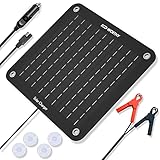
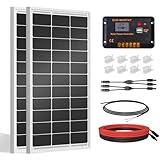
- Top Pick: SOLPERK Solar Panel Kit 20W 12V Solar Battery Charger Maintainer+Controller
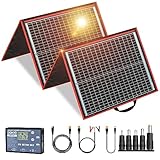
- Best Value: ECO-WORTHY 10W 12V Solar Battery Charger Trickle Maintainer Kit for Car
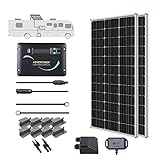
- Premium Choice: ECO-WORTHY 200 Watts 12 Volt/24 Volt Solar Panel Kit with High Efficiency Monocrystalline Solar Panel and 30A PWM Charge Controller for RV, Camper, Vehicle, Caravan and Other Off Grid Applications
Last updated: September 7, 2026
🛒 Best Price Today on Amazon
Prime members get fast, free shipping on everything above, plus member-only deals. New members get a 30-day free trial — cancel anytime.
Introduction
Solar power is the backbone of off-grid van life — it's what lets you run a refrigerator, charge devices, power lights, and stay comfortable without plugging into shore power. The solar panel market has matured dramatically, with monocrystalline efficiency now exceeding 22% in top panels and flexible options making roof installation cleaner than ever. This guide covers the best solar panels for van life across every budget and roof configuration, plus the sizing and installation knowledge that turns a pile of panels into a dependable power system.
As an Amazon Associate we earn from qualifying purchases at no extra cost to you.




What to Look For in Van Life Solar Panels
See also: Best Ways to Keep a Van Tidy on the Road • Best Cyber Monday Cologne Deals
- Wattage vs. Roof Space: Most van roofs can accommodate 200-600 watts of solar depending on panel size and roof obstacles. Calculate your daily power consumption first (in watt-hours), then size your solar array to produce 1.5-2x that amount to account for cloudy days and inefficiency.
- Panel Type: Monocrystalline panels offer the highest efficiency (19-22%) and best performance in partial shade. Flexible panels install flush to the roof with adhesive and have no mounting hardware, but typically have lower efficiency (15-18%) and shorter lifespans due to heat buildup.
- MPPT vs. PWM Charge Controller: Your solar panel efficiency is only as good as your charge controller. MPPT (Maximum Power Point Tracking) controllers extract 15-30% more energy from the same panels compared to PWM controllers, especially in suboptimal sun conditions — always pair a quality panel with an MPPT controller.
- Rigid vs. Portable: Roof-mounted panels charge automatically whenever the sun is up; portable folding panels let you park in the shade and set the panel in the sun. Many van lifers run both.
- Warranty and Build Quality: Quality panels carry 20–25 year power output warranties. Cheap panels degrade faster and underdeliver — for a long-term investment, buy reputable brands.
Top Picks for Van Life Solar Panels
Renogy 200W Monocrystalline Solar Panel (2-Pack)
Renogy is the most trusted brand in the van life solar community, and their 200W monocrystalline panels deliver 21% efficiency with pre-drilled holes for easy roof mounting. A 2-pack of 200W panels provides 400W of input — enough to maintain a 200Ah lithium battery bank in full sun. Renogy's panels come with a 25-year power output warranty and pair perfectly with their Rover MPPT charge controllers for a complete, matched system. For most permanent van installs, this rigid mono setup is the reliable, high-output backbone.
Goal Zero Nomad 100W Portable Solar Panel
Goal Zero's Nomad 100W is the premium portable solar panel for van lifers who need to park in the shade but generate power in the sun. It folds to the size of a briefcase and sets up in seconds, connecting directly to a Goal Zero Yeti power station or any battery with the right connector. The Nomad's rugged, weather-resistant construction survives the rough handling of travel without any of the fragility concerns of rigid glass panels. It's the perfect complement to a roof array — deploy it to chase the sun while the van stays cool in the shade.
Renogy 100W Flexible Solar Panel
Renogy's flexible solar panels are the clean-roof installation choice for van lifers who don't want the visual profile or mounting hardware of rigid panels. The ultra-thin ETFE laminate surface is lightweight (4 lbs), corrosion-resistant, and can conform to slightly curved van roofs. Install with VHB tape or 3M 4945 for a permanent, rattle-free mount. Efficiency is slightly lower than rigid mono panels, and heat buildup against the roof can shorten lifespan, but the clean look and simple installation appeal to many van builders — especially those wanting a stealthy, low-profile setup.
How to Size Your Van Solar Array
Sizing solar starts with your loads, not the roof. Add up the watt-hours you consume daily — a 12V fridge might use 400–600Wh, a roof fan 100–300Wh, plus laptop, phone, lights, and water pump. A typical full-timer lands around 600–1,200Wh per day. Because a solar panel only produces its rated wattage in ideal conditions for a few peak hours, a rough rule of thumb is that each 100W of panel yields roughly 300–400Wh on a good day. So a 400W array realistically delivers around 1,200–1,600Wh in strong summer sun, and considerably less on cloudy winter days.
Always oversize. It's far cheaper and easier to add a little extra panel now than to discover mid-trip that you can't keep the battery topped up. Aim for an array that produces 1.5–2x your daily consumption so you stay charged through imperfect weather and shorter winter days.
Rigid vs. Flexible vs. Portable Panels
Each panel type suits a different priority. Rigid monocrystalline panels are the most efficient, most durable, and longest-lasting — the default for a permanent roof install where output and longevity matter most. Flexible panels win on weight, low profile, and stealth, at the cost of some efficiency and lifespan due to heat buildup against the roof. Portable folding panels solve the shade problem entirely: park the van in cool shade and set the panel out in the sun on a cord. The strongest setups often combine a fixed rooftop array for hands-off daily charging with a portable panel for shady campsites and extra winter capacity.
Frequently Asked Questions
How many watts of solar do I need for van life?
Most full-time van lifers land between 200 and 600 watts. The right number depends on your daily consumption: light users running just lights, a fan, and device charging may be happy with 200W, while those powering a 12V fridge, laptop, and more typically want 400W or more. Calculate your daily watt-hours first, then size your array to produce 1.5–2x that amount to cover cloudy days and seasonal changes. When in doubt, install more — you'll rarely regret extra capacity.
Are flexible solar panels worth it, or should I get rigid?
It's a trade-off. Flexible panels are lightweight, low-profile, stealthy, and conform to curved roofs, making them attractive for clean or discreet installs. However, they're typically less efficient than rigid monocrystalline panels and tend to have shorter lifespans because heat builds up between the panel and the roof with no air gap to cool them. If maximum output and longevity are your priorities, rigid mono panels on standoff mounts are the better long-term value. Choose flexible mainly when weight or a stealth profile outweighs those concerns.
Can solar panels charge my van battery on a cloudy day?
Yes, but at reduced output. Solar panels still generate power in overcast conditions, typically producing 10–25% of their rated output depending on cloud thickness. Monocrystalline panels and MPPT charge controllers both perform better than their cheaper alternatives in low light, which is one reason they're recommended for van life. This reduced cloudy-day output is exactly why you should oversize your array — a system sized for perfect sun will leave you short whenever the weather turns.
Do I need an MPPT charge controller with my solar panels?
For any real van build, yes. An MPPT controller harvests 15–30% more energy from the same panels than a cheaper PWM controller, and the advantage grows in partial shade and low-light conditions common on the road. Since van roof space is limited, squeezing maximum output from every panel matters. The modest extra cost of MPPT pays for itself quickly in usable power. Pair your panels with a controller rated to handle your total array wattage and matched to your battery chemistry.
Should I mount panels on the roof or use portable panels?
Both approaches have merit, and many van lifers combine them. Roof-mounted panels charge automatically whenever the sun is up, requiring zero effort — ideal for daily hands-off charging. Portable folding panels let you park the van in cool shade while setting the panel out in the sun, which is invaluable in hot climates and for topping up in winter. A common winning setup is a fixed rooftop array for baseline charging plus a portable panel you deploy when you need extra power or want to keep the van shaded.
Final Thoughts
Solar panels are a long-term investment that pays back in energy independence every day. Size your array generously — it's easy to add a panel, but undersizing your solar and running out of power at the wrong time is frustrating. Pair any solar setup with a quality MPPT charge controller and properly sized battery bank. The combination of solar and lithium batteries is what makes truly off-grid van life possible across all seasons.