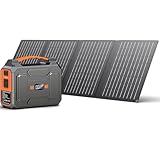
- Top Pick: Portable Solar Generator 300W Portable Power Station with 60W Solar Panel
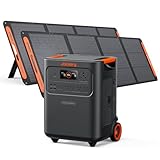
- Best Value: Jackery HomePower 3600 Plus Portable Power Station with 2X 200W Solar Panels, 3600W AC Output, 3584Wh LFP Solar Generator, Expandable up to 21kWh, Essential Home Backup for Home Use, Emergencies, RV
- Premium Choice: Solar Powered Generator 100W, Portable Power Station with Solar Panels 40W
Last updated: October 9, 2026
Van life runs on power management. Whether you’re charging laptops for remote work, keeping a 12V fridge cold through a heat wave, or running a CPAP overnight, your rig’s electrical system is as important as its tires. For decades, gas generators were the default answer. In 2026, solar generators have closed the performance gap enough that most van dwellers should default to solar first and only reach for combustion power as a backup.
The tradeoffs are real, though. Gas generators still win on raw runtime and upfront cost per watt, but they bring fuel logistics, exhaust fumes, noise complaints at campgrounds, and maintenance schedules. Solar generators trade some of that flexibility for silence, zero emissions, and free fuel from the sun. Below we break down what to look for and review five solar power stations that actually make sense for a van build, from compact weekend units to whole-rig backup systems.
As an Amazon Associate we earn from qualifying purchases at no extra cost to you.



⚡ Save on Your Next PC — Amazon Prime
Prime members get fast free shipping on the systems above, plus early access to Prime Day & Black Friday PC deals. New members get a 30-day free trial.
Watch: Solar Generators vs. Traditional Generators for Van Life — Video Review
How to Choose
See also: Best Van Awning for Campers: Rack-Mount, Portable and Freestanding Options Sorted • In-Depth Review: Goal Zero Yeti 1500X Portable Power Station
- Battery capacity (Wh): Match watt-hours to your actual daily draw. A fridge plus laptop plus phone charging typically needs 500-1000Wh per day; full-time off-grid work with power tools or AC pushes you toward 3000Wh+.
- Continuous AC output (W): This determines what you can run simultaneously. 300W handles small electronics and charging, but a microwave, induction cooktop, or space heater needs 1500W or more.
- Battery chemistry: LiFePO4 (LFP) cells last 2,000-4,000 charge cycles versus 500-1,000 for standard lithium-ion, which matters if you’re living in the van full-time and cycling the battery daily.
- Solar input and recharge time: Check the panel wattage and how many hours of direct sun it takes for a full recharge. A 300W unit with a 60W panel can take 5-6 hours in good sun; pairing with additional panels cuts that time significantly.
- Weight and footprint: Van storage is finite. Compact 100-300W units run 3-7 lbs, while 3000Wh+ systems can weigh 60+ lbs, so plan a permanent mounting spot rather than treating it as loose cargo.
The Best Picks Reviewed
Jackery HomePower 3600 Plus Portable Power Station
This is the system for full-time van dwellers who want to stop thinking about power entirely. With 3584Wh of LFP capacity and 3600W continuous AC output, it runs an induction cooktop, a 12V compressor fridge, and a laptop simultaneously without blinking. The two included 200W solar panels can bring it from empty to full in a single strong sun day, and the expandability up to 21kWh means you can scale the system as your build grows. It’s heavy and it’s an investment, but for anyone treating the van as a permanent home rather than a weekend rig, it’s the clearest upgrade path available.
Portable Solar Generator 300W Portable Power Station with 60W Solar Panel
A solid all-rounder for weekend and part-time van life. 300W of continuous output covers laptops, lighting, a CPAP, and phone charging with room to spare, and the included 60W foldable panel is compact enough to strap to a roof rack or prop against a window. It won’t run a microwave, but for anyone who isn’t cooking with high-draw appliances, this is the sweet spot between capability and portability.
Solar Powered Generator 100W, Portable Power Station with Solar Panels 40W
The smallest unit in this lineup, and intentionally so. At 100W output it’s built for phones, tablets, small LED setups, and topping off a power bank, not for running your rig’s core systems. Its value is as a backup or a dedicated unit for a secondary vehicle occupant, and the 40W panel keeps it self-sufficient on shorter trips without needing a bigger charging setup.
ZeroKor Solar Generator with Panel, 300W Portable Power Station
The pure sine wave output here is the standout feature, meaning it’s safe for sensitive electronics like CPAP machines and camera batteries without the voltage noise cheaper inverters introduce. At 300W with a 40W panel, recharge times run longer than comparable units, so this one suits van dwellers who have steady access to shore power or a vehicle alternator charger and use solar as a supplement rather than a primary source.
MARBERO 237Wh Solar Generator with Solar Panel Included
A budget-friendly entry point for anyone testing out solar power before committing to a bigger system. The 237Wh capacity and 300W pure sine wave output are enough for a night or two of lights, phone charging, and a fan, and the included 60W panel means you’re not buying accessories separately. It’s best suited to occasional van trips rather than full-time living, where its smaller capacity would mean recharging daily.
Frequently Asked Questions
Can a solar generator fully replace a gas generator in a van?
For most daily van life needs, yes. Lighting, device charging, fridges, and even induction cooking are well within reach of a mid-size solar generator like the Jackery HomePower 3600 Plus. Gas generators still make sense as a backup for extended cloudy stretches or high-draw tools like power saws.
How much solar capacity does a van actually need?
Track your daily watt-hour usage for a week using your appliance labels, then size your battery to cover at least 1.5 days without sun. Most full-time van dwellers land between 1000Wh and 3600Wh depending on whether they cook electrically.
Do solar generators work well in cloudy or winter conditions?
Output drops significantly, often 50-80%, under overcast skies. This is where a larger battery bank or a secondary charging method, like an alternator connection while driving, becomes important for shoulder-season and winter travel.
Is pure sine wave output necessary for van electronics?
It’s not strictly required, but it matters for sensitive gear like CPAP machines, camera equipment, and some laptop chargers. Modified sine wave units can cause humming, reduced efficiency, or in rare cases damage to sensitive electronics.
Final Thoughts
For full-time van life, the Jackery HomePower 3600 Plus is the system that lets you stop rationing power altogether. If you’re after a lighter, more portable setup for weekend trips or part-time living, the Portable Solar Generator 300W with its 60W panel hits the right balance of capability and size. And if you’re just dipping a toe into solar before a bigger investment, the MARBERO 237Wh unit gets you there without overspending.