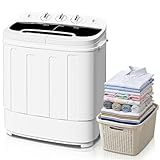
- Top Pick: SUPER DEAL Compact Mini Twin Tub Washing Machine 13lbs Capacity Portable Washer Wash and Spin Cycle Combo, Built-in Gravity Drain for Camping, Apartments, Dorms, College, RV’s and Small Spaces
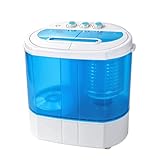
- Best Value: SUPER DEAL Small Portable Washing Machine 9.9lb Mini Compact Washer Twin Tub Laundry Machine Top Load Spinning and Washing Combo 6.57 FT Inlet Gravity Drain Hose
- Premium Choice: COMFEE' Portable Washing Machine 0.9 cu.ft Compact Washer with LED Display
Last updated: September 9, 2026
Doing laundry on the road is one of the most underrated challenges of van life. Laundromats eat up time and money, and hauling bags of dirty clothes across state lines gets old fast. A portable washing machine solves this by giving you clean clothes wherever you’re parked, using a fraction of the water and power a full-size machine needs.
In 2026, compact twin tub washers have become the go-to choice for vanlifers because they don’t require a dedicated water line or drain hookup like built-in RV washers do. Below we break down what actually matters when choosing one, from capacity to drainage style, so you can pick a machine that fits your rig and your routine.
As an Amazon Associate we earn from qualifying purchases at no extra cost to you.




⚡ Save on Your Next PC — Amazon Prime
Prime members get fast free shipping on the systems above, plus early access to Prime Day & Black Friday PC deals. New members get a 30-day free trial.
- Watch: Buying Guide: Compact Van Life Washing Machines — Video Review
- Capacity: How Much Laundry Can You Actually Wash?
- Twin Tub vs. Single Tub Design
- Drainage: Gravity vs. Upward Drain
- Power Draw and Running It Off-Grid
- Space and Storage Considerations
- Tips for Washing Laundry on the Road
- Frequently Asked Questions
- Conclusion
- Related Articles
- Related Guides
Watch: Buying Guide: Compact Van Life Washing Machines — Video Review
Capacity: How Much Laundry Can You Actually Wash?
See also: Best Van Awning for Campers: Rack-Mount, Portable and Freestanding Options Sorted • In-Depth Review: Goal Zero Yeti 1500X Portable Power Station
Portable washers are sized in pounds of dry laundry per load, and that number matters more in a van than in a house. Most vanlifers do smaller, more frequent loads rather than saving up a week’s worth of clothes.
- 9.9 lbs (like the SUPER DEAL 9.9lb model) suits solo travelers or couples doing quick washes of shirts, socks, and underwear.
- 13 lbs (SUPER DEAL Compact Mini Twin Tub) handles a few days of clothes plus a light jacket or towel.
- 17.6 to 20 lbs (Pataku, Giantex) works better for two people or anyone who wants to wash bedding, jeans, or a small load of towels without doing two rounds.
Twin Tub vs. Single Tub Design
Most compact machines built for vans use a twin tub layout: one side washes, the other spins. This design is more manual than a single-tub unit, but it’s also simpler to fix, uses less power, and finishes faster.
- Twin tub machines (SUPER DEAL, Pataku, Erivess, Giantex) let you wash one load while spinning another, cutting total laundry time almost in half.
- Single tub machines with automatic cycles, like the COMFEE’ 0.9 cu.ft with LED display, are more hands-off but pull more power and run longer per cycle.
- If you’re running on solar and batteries, twin tub models are generally the safer bet for power draw.
Drainage: Gravity vs. Upward Drain
How a washer drains determines where you can actually put it in your van. This is one of the most overlooked specs and it affects your daily setup.
- Gravity drain machines (both SUPER DEAL models) need to sit above your drain point, like on a platform or shelf, so water flows downhill through the hose.
- Upward drainage machines, like the Pataku, use a built-in pump so you can drain into a sink or bucket that’s higher than the washer itself, which gives you more flexibility on placement.
- Check hose length before buying. The SUPER DEAL 9.9lb model ships with a 6.57 ft inlet hose, which is enough to reach an outdoor spigot or a jug on the ground.
Power Draw and Running It Off-Grid
Compact washers typically draw 150 to 300 watts during the wash cycle and more during spin, so pair your machine to your electrical setup before you buy.
- A 12V-to-120V inverter rated at least 500W with a moderate battery bank (100Ah lithium or more) can run most twin tub units for a full cycle.
- Twin tub models with manual timers, like the Erivess 19lb combo with its 12lb wash and 7lb spin sections, tend to sip less power per minute than automatic single-tub machines.
- Run wash and spin cycles separately rather than back-to-back if you’re tight on battery capacity, giving your system a short recovery window.
Space and Storage Considerations
Every pound of capacity adds footprint, so measure your van’s storage space before choosing a model.
- Smaller units like the COMFEE’ 0.9 cu.ft are easier to tuck into a cabinet or slide under a bed platform when not in use.
- Larger 17 to 20 lb machines (Pataku, Giantex) usually need a dedicated spot near an exterior door for easy hose access and water disposal.
- Look for built-in casters or a lightweight shell, since you’ll likely be moving the unit in and out of storage regularly.
Tips for Washing Laundry on the Road
- Pretreat stains before loading. Twin tub machines don’t agitate as aggressively as full-size washers, so stubborn spots need a head start.
- Use low-sudsing, biodegradable detergent to make gray water disposal easier and gentler on the environment.
- Run spin cycles outdoors or with a towel underneath the unit. Even balanced loads can vibrate on uneven van flooring.
- Do laundry during daylight hours if you’re relying on solar, so your battery bank recovers what the wash cycle draws.
Frequently Asked Questions
Do I need a water hookup to use a portable washer in my van?
No. Most compact twin tub machines are designed to fill manually with a hose from a jug, tank, or outdoor spigot, so a fixed plumbing line isn’t required.
How long does a wash and spin cycle take?
Twin tub machines typically need 8 to 15 minutes for washing and 3 to 5 minutes for spinning per load, making a full cycle roughly 15 to 20 minutes depending on load size and fabric.
Can these machines handle bedding or towels?
Larger capacity models, generally 17 lbs and up, can handle a single sheet set or a couple of towels, but they’ll struggle with bulky comforters. Split heavier items into smaller loads for better results.
Where does the wastewater go?
Gravity drain models empty through a hose into a bucket, sink, or approved gray water tank, while upward-drain models pump water out and can direct it into a raised container. Always dispose of gray water responsibly and follow local regulations, especially on public land.
Conclusion
A portable washing machine turns laundry from a weekly logistics problem into a simple task you handle on your own schedule. Match capacity and drainage style to your van’s layout and power setup, and you’ll get reliable, clean results without ever needing to track down a laundromat.