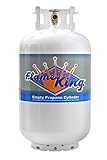
- Top Pick: Flame King YSN293 29.3 Gallon RV, Van Or Trailer Horizontal ASME RV Propane Tank Cylinder, 14.9" x 48"
- Best Value: Flame King YSN122 12.2 Gallon RV, Van Or Trailer Horizontal ASME RV Propane Tank Cylinder, 12" x 28"
- Premium Choice: Flame King YSN293 29.3 Gallon RV, Van Or Trailer Horizontal Under Mounted ASME Propane Tank Cylinder
Last updated: October 9, 2026
Choosing the right propane tank for your van build isn’t just about how much fuel you can carry. It’s about matching tank geometry, mounting style, and capacity to your rig’s available space, your cooking and heating habits, and your comfort level with DIY installation versus a bolt-on solution. Get it wrong and you’re either constantly refilling a tank that’s too small or fighting to squeeze an oversized cylinder into a cabinet that was never designed for it.
In 2026, most van lifers are choosing between permanently mounted ASME horizontal tanks (the “RV style” tanks you see under trailers or bolted to a bumper) and portable DOT cylinders (the upright tanks you’d normally see on a grill). Both have a place in a van build, and this guide breaks down exactly when to use each, how to size your tank correctly, and what to check before you buy.
As an Amazon Associate we earn from qualifying purchases at no extra cost to you.




⚡ Save on Your Next PC — Amazon Prime
Prime members get fast free shipping on the systems above, plus early access to Prime Day & Black Friday PC deals. New members get a 30-day free trial.
- Watch: Ultimate Guide to Choosing a Van Life Propane Tank — Video Review
- ASME vs. DOT Tanks: Know the Difference
- Sizing Your Tank to Your Van
- Mounting Style: Under-Slung vs. Cabinet-Mounted
- Safety Features That Actually Matter
- Installation and Refilling Realities
- Tips
- Frequently Asked Questions
- Conclusion
- Related Articles
- Related Guides
Watch: Ultimate Guide to Choosing a Van Life Propane Tank — Video Review
ASME vs. DOT Tanks: Know the Difference
See also: Best Van Awning for Campers: Rack-Mount, Portable and Freestanding Options Sorted • In-Depth Review: Goal Zero Yeti 1500X Portable Power Station
This is the single most important distinction in propane tank shopping, and it determines everything else about your setup.
- ASME tanks (like the Flame King YSN293 or YSN16) are permanently plumbed into your van’s gas system. They’re refilled in place at a propane station, never removed, and typically mounted horizontally under the vehicle or in a dedicated exterior compartment.
- DOT cylinders (like the Flame King YSN-301 or YSN330) are portable, upright tanks you disconnect and swap or refill yourself, often at a hardware store exchange or refill station.
- ASME tanks suit permanent, full-time builds with dedicated plumbing. DOT cylinders suit simpler setups, backup fuel, or anyone who wants the flexibility to grab a spare tank on the way out the door.
Sizing Your Tank to Your Van
Capacity should be driven by how you use propane, not just how much room you have. A tank running a two-burner stove sips fuel; one also running a furnace or on-demand water heater drinks it.
- Stove-only use: A 12.2-gallon tank like the Flame King YSN122 (12″ x 28″) can comfortably run a small cooktop for 3-4 weeks of regular use.
- Stove + heater or water heater: Step up to a 16-gallon tank like the Flame King YSN16, which balances runtime with a still-manageable footprint for mid-size vans.
- Full-time or off-grid living: A 29.3-gallon tank such as the Flame King YSN293 (14.9″ x 48″) can stretch 6-8 weeks for a couple running stove, furnace, and hot water, cutting way down on refill stops.
- Always leave room for the standard 20% air space required in propane tanks — the rated gallon capacity accounts for this, so don’t try to overfill.
Mounting Style: Under-Slung vs. Cabinet-Mounted
Where the tank lives affects both your build layout and your legroom inside the van.
- An under-mounted ASME tank, like the Flame King YSN293 under-mount version, bolts to the frame rails and frees up all your interior cabinetry space. It’s the go-to choice for Sprinter and Transit builds where every inch of cabin storage matters.
- Interior or exterior cabinet mounting keeps the tank accessible without crawling under the van, but it eats into storage you could otherwise use for gear or water tanks.
- Portable DOT cylinders like the YSN-301 or YSN330 typically live in a vented exterior locker or a dedicated propane compartment, since they can’t be stored inside a sealed living space.
Safety Features That Actually Matter
Not all tanks are built the same, and a few features are worth checking for regardless of size.
- OPD valve (Overflow Protection Device): Required on all DOT cylinders sold today, including the YSN-301 and YSN330. It prevents overfilling and won’t let a filling station connect without it.
- DOT and TC compliance: Look for tanks certified to both U.S. DOT and Canadian TC standards if you plan to travel across the border.
- Built-in gauge: A tank with an integrated gauge, like the YSN330, saves you from guessing how much fuel is left before a long boondocking stretch.
- Rust-resistant coating: Steel tanks exposed to road salt and weather need a durable powder coat; check reviews for corrosion complaints before buying.
Installation and Refilling Realities
Budget for more than just the tank price when planning your propane setup.
- ASME tanks require professional plumbing (copper or approved gas line, regulator, shutoff valve) and, in many states, a licensed installer to sign off on the system.
- DOT cylinders need no plumbing but require you to physically transport them to a refill station or swap location, which isn’t always convenient in rural areas.
- Factor in a two-stage regulator for ASME systems if you’re running multiple appliances, since a single-stage regulator can struggle to keep pressure steady under load.
Tips
- Weigh your tank empty and full before final placement — a full 29.3-gallon tank adds roughly 100+ lbs, which matters for GVWR and weight distribution.
- Never mount a horizontal ASME tank vertically or vice versa; the internal float gauge and relief valve positioning depend on correct orientation.
- Keep a spare portable DOT cylinder even if you have a permanent ASME tank installed, as a backup for furnace failures or extended off-grid stretches.
- Recertify or replace DOT cylinders before their stamped expiration date (12 years from manufacture for standard steel tanks) — refill stations will refuse expired tanks.
Frequently Asked Questions
Can I install an ASME propane tank myself?
You can mount the tank yourself, but running and connecting the gas line typically requires someone familiar with propane plumbing codes. Many states also require a certified inspection before the system can be filled, so check local regulations before doing a full DIY install.
How long does a 29.3-gallon tank last in a van?
For a couple running a stove, furnace, and on-demand water heater, expect roughly 6-8 weeks between fills under normal use. Stove-only use can stretch that to several months.
Do I need a regulator with a portable DOT cylinder?
Yes. Even portable tanks like the YSN-301 or YSN330 need an appropriate regulator matched to your appliance’s BTU rating and connection type before hooking up to a stove, heater, or grill.
Are horizontal and vertical tanks interchangeable?
No. Horizontal ASME tanks like the YSN293 and YSN16 are designed with internal components positioned for that orientation. Using one vertically can compromise the relief valve and fuel gauge accuracy.
Conclusion
The right propane tank comes down to matching capacity and mounting style to how you actually live in your van. Full-time travelers running multiple appliances should lean toward a larger permanently mounted ASME tank like the Flame King YSN293, while weekend warriors or stove-only setups will do fine with a compact 12.2 or 16-gallon option. Whatever you choose, prioritize proper certification, correct orientation, and a regulator sized for your appliances — those details matter more for safety than gallon count ever will.