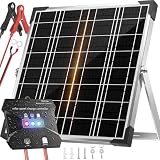
- Top Pick: Voltset 20W 12V Solar Panel Battery Charger Trickle Maintainer Kit
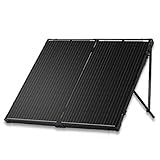
- Best Value: Renogy 200W 12V Portable Solar Panels Suitcase with Waterproof 20A Charge Controller, Foldable 200 Watt Solar Panel W/Adjustable Kickstand, Solar Charger for Power Station, RV, Camping, SUV, Off Grid
- Premium Choice: DOKIO 200W Portable Foldable Solar Panel Kit for 12V Battery Charging
Last updated: September 1, 2026
Keeping your RV’s battery bank topped off without idling the engine or hunting for shore power is the whole point of van life freedom. Portable solar panels have gotten smaller, more efficient, and considerably smarter about charge management since the early folding-suitcase days, and 2026’s lineup reflects that. Whether you’re maintaining a single starter battery on a stored travel trailer or running a 200W panel to keep a 100Ah lithium bank fed at a boondocking site, the right panel comes down to wattage, controller quality, and how much setup hassle you’re willing to tolerate.
Below we break down six panels that consistently show up in RV and overlanding kits, from 12W trickle maintainers for rigs sitting in storage to full 200W folding arrays that can push 10-12 amps in good sun. We’ll cover what separates a real MPPT controller from a marketing label, how to size a panel to your battery bank, and which of these six are worth your money.
As an Amazon Associate we earn from qualifying purchases at no extra cost to you.


⚡ Save on Your Next PC — Amazon Prime
Prime members get fast free shipping on the systems above, plus early access to Prime Day & Black Friday PC deals. New members get a 30-day free trial.
Watch: Best Portable Solar Panels for Charging RV Batteries in 2026 — Video Review
How to Choose
See also: Best Van Awning for Campers: Rack-Mount, Portable and Freestanding Options Sorted • In-Depth Review: Goal Zero Yeti 1500X Portable Power Station
- Wattage vs. daily draw: A 20W panel maintains a resting battery against parasitic drain, but it won’t recover a bank you actually cycled overnight. For daily camping use, budget at least 100W per 50Ah of lithium capacity you plan to replace each day.
- MPPT vs. PWM controllers: MPPT controllers extract 10-30% more usable power from the same panel, especially in cool or overcast conditions. Any panel above 30W should have MPPT; below that, PWM is fine and cheaper.
- Connector compatibility: Check whether the panel ships with SAE, Anderson, or bare ring terminals. RVs with existing solar ports usually expect SAE; power stations typically need an 8mm barrel or MC4 adapter.
- Portability and setup time: Foldable suitcase panels with kickstands set up in under two minutes and pack down to a briefcase, while flat maintainer panels are meant to live permanently on a dash or roof rack.
- Weather sealing: Look for IP65 or better on the panel and controller housing if it’s going to live outdoors through rain and snow rather than get packed away after each use.
The Best Picks Reviewed
Renogy 200W Portable Solar Panel Suitcase
This is the panel most van-lifers land on for a reason. The 23% efficient monocrystalline cells fold into a briefcase with a built-in handle, and the included waterproof 20A charge controller means you can wire straight to a 12V battery without buying anything else. The adjustable kickstand lets you angle it toward the sun, which matters more than people expect, a 15-20 degree tilt can add a meaningful amp or two on a clear day. In full sun it realistically delivers 140-160W to the battery once you account for angle and temperature losses, enough to recover a 100Ah lithium bank from 50% in about four to five hours.
DOKIO 200W Portable Foldable Solar Panel Kit
DOKIO’s kit undercuts Renogy on price while keeping the same basic formula: folding monocrystalline panels, a kickstand, and a bundled controller. The tradeoff is a bulkier fold and a controller display that’s less refined, but the actual charging performance is close enough that budget-conscious buyers won’t feel shortchanged. It’s a solid choice if you want 200W of capacity without spending 200W money.
Renogy 200W Portable Solar Panel, 25% Efficiency
This is Renogy’s higher-efficiency variant, using upgraded cells that squeeze more output out of the same panel footprint. If your roof or ground space is limited but you still want 200W, the higher efficiency rating translates to slightly better performance in marginal light, early morning, late afternoon, light cloud cover, than the standard suitcase model. Worth the upgrade if you frequently camp in shaded or high-latitude spots.
SUNER POWER 12W Waterproof Solar Battery Maintainer
Built for the RV or trailer that sits in storage between trips. The built-in UltraSmart MPPT controller prevents overcharging automatically, so you can leave it connected indefinitely without monitoring it. At 12W it won’t power appliances or recover a drained deep-cycle battery, but for offsetting parasitic draw from alarms, propane detectors, and slide-out controllers, it does exactly what it promises. Fully weatherproof housing means it can live on the dashboard or windshield year-round.
Voltset 20W 12V Solar Panel Trickle Maintainer Kit
A step up from the SUNER POWER in raw wattage, the Voltset kit is a good middle ground for anyone who wants more than pure maintenance charging but doesn’t need a full folding array. It handles battery upkeep on stored rigs and can slowly recover a lightly discharged starter battery over a weekend. Simple ring-terminal or alligator-clip hookup makes it approachable for first-time solar users.
Frequently Asked Questions
Can a portable solar panel fully replace shore power for an RV?
For most travelers, no. A single 200W panel in good sun produces roughly 1-1.2kWh per day, enough for lighting, device charging, and a small fridge, but not for air conditioning or an electric water heater. Pair it with a healthy lithium bank and it can cover the essentials indefinitely off-grid.
Do I need a separate charge controller if the panel doesn’t include one?
Yes, always. Connecting a panel over roughly 5W directly to a battery without a controller risks overcharging and damaging the battery. All six panels here include a controller, but if you ever buy a bare panel, budget for an MPPT controller sized to at least 1.25 times the panel’s rated current.
How much sun do these panels actually need to work?
Rated wattage assumes direct, unobstructed sunlight at midday. Expect 60-80% of rated output under light haze, and as low as 20-30% under heavy cloud cover. Tilting the panel toward the sun and keeping it free of shade matters more than most other factors combined.
Are trickle maintainers like the SUNER POWER or Voltset safe to leave connected all winter?
Yes, as long as the unit has a genuine MPPT or smart controller that stops charging once the battery reaches full voltage, both of these do. That’s the entire point of a maintainer versus a raw panel, it prevents overcharge without you needing to disconnect it.
Final Thoughts
For most RVers who want real charging capacity while parked off-grid, the Renogy 200W Suitcase remains the safest bet thanks to its balance of efficiency, included controller, and easy setup. If storage battery upkeep is the actual goal rather than daily power generation, the SUNER POWER 12W Maintainer is the simplest set-and-forget option. Budget-focused buyers who still want serious wattage should look at the DOKIO 200W kit, which delivers comparable performance to pricier suitcases for noticeably less money.