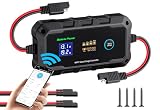
- Top Pick: 20A 12V/24V MPPT Wireless Solar Charge Controller, Bateria Power Intelligent Solar Panel Regulator 20 Amp BT App Function for 12/24 Volt LiFePO4, Gel, AGM, FLD, SLD, Li Battery (Sunrock 20Pro)
- Best Value: PWM Solar Charge Controller 12V 20A for LiFePO4, AGM, Gel Battery
- Premium Choice: SOLPERK MPPT 10A 12V Solar Charge Controller for Gel AGM Lithium LiFePO4
Last updated: October 9, 2026
Swap a cheap PWM controller for a proper MPPT unit and most van builds see a genuine 20-30% bump in usable solar harvest, especially on cloudy days or when panels aren’t perfectly angled. For a 2026 van-life electrical system, the charge controller is the piece that decides whether your lithium bank actually reaches full charge and stays healthy for years instead of degrading in a season.
Below we’ve rounded up six controllers that cover the range vanlifers actually need: small single-panel PWM setups, mid-size MPPT units for a couple of 200W panels, and higher-amperage options for roof arrays pushing 800W or more. All of them play nice with LiFePO4, which matters since most new builds skip lead-acid entirely.
As an Amazon Associate we earn from qualifying purchases at no extra cost to you.




⚡ Save on Your Next PC — Amazon Prime
Prime members get fast free shipping on the systems above, plus early access to Prime Day & Black Friday PC deals. New members get a 30-day free trial.
Watch: Van Life Solar Charge Controllers: MPPT vs. PWM Explained — Video Review
How to Choose
See also: Best Van Awning for Campers: Rack-Mount, Portable and Freestanding Options Sorted • In-Depth Review: Goal Zero Yeti 1500X Portable Power Station
- MPPT vs PWM: MPPT tracks the panel’s optimal voltage point and converts excess voltage into extra amperage, making it worth the higher price for arrays over 200W or panels wired above battery voltage. PWM is fine for small, simple 100-150W single-panel setups on a tight budget.
- Amperage headroom: Divide your total panel wattage by your battery voltage, then add 20-25% headroom for temperature and irradiance spikes. A 400W array on 12V needs roughly 33A minimum, so size up rather than running a controller at its ceiling.
- Battery chemistry profile: Confirm the controller has a dedicated LiFePO4 charge curve, not just a generic “lithium” setting. Wrong absorption or float voltages will undercharge lithium banks or trip the BMS repeatedly.
- Bluetooth/app monitoring: Wireless monitoring lets you check charge current and battery voltage from your phone without climbing to the electrical panel, and most apps log daily harvest data that’s useful for diagnosing shading or wiring issues.
- Input voltage limits: Check the controller’s max PV open-circuit voltage against your panel specs, especially in cold weather when Voc rises. Series-wired panel strings can exceed 100V, which rules out lower-rated controllers entirely.
The Best Picks Reviewed
Sunrock 20Pro 20A MPPT Wireless Solar Charge Controller
This is the pick for a mid-size single or dual-panel setup up to roughly 260W on 12V. The BT app support gives real-time voltage, current, and daily amp-hour totals, and the dedicated LiFePO4 profile handles absorption and float correctly without manual DIP-switch guessing. Good middle ground between price and features for a first-time MPPT buyer.
PWM Solar Charge Controller 12V 20A
The budget entry point here, and a reasonable one if your roof only carries a single 100-150W panel. It won’t squeeze extra harvest out of higher-voltage panel strings the way MPPT does, but for LiFePO4, AGM, or Gel banks under 100Ah, the simplicity and low failure-point count make it a dependable backup or small-rig choice.
40A MPPT Solar Charge Controller for RV/Boat/Cabin
Built for the common two-panel, 300-400W roof array on a 12V or 24V system. The 40A ceiling gives enough headroom that you’re not maxing out the controller on peak summer sun, which matters for long-term reliability. A solid all-arounder for the typical converted cargo van.
Power Queen 30A MPPT with Bluetooth
Power Queen ships this defaulted to LiFePO4, which removes a setup step a lot of first-time builders get wrong. Remote monitoring through the app is genuinely useful for tracking harvest trends over weeks, and the 30A rating comfortably covers a 350-400W array on 12V with room to spare.
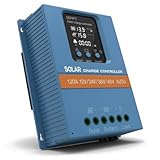
SA120A 120A Intelligent Solar Charge Controller
This is the controller for bigger builds: skoolies, box trucks, or multi-panel roof arrays pushing 800W-1500W depending on system voltage. The 100V max input and 12V/24V/36V/48V auto-recognition make it flexible for larger battery banks, and the built-in dual USB ports are a nice touch for quick device charging without tapping the main bus.
Frequently Asked Questions
Do I really need MPPT, or is PWM good enough?
If you’re running one small panel under 150W and don’t plan to expand, PWM will work and costs less. Anything larger, or any setup with panels wired in series, benefits enough from MPPT’s efficiency gain that it pays for itself in harvested power within a season or two.
Can these controllers handle LiFePO4 batteries safely?
All six controllers listed here support LiFePO4, but the charge profile matters more than the label. Look for a controller with a specific LiFePO4 voltage curve (typically absorption around 14.2-14.6V and float around 13.6V for 12V systems) rather than a generic lithium mode, and confirm it matches your battery manufacturer’s spec sheet.
How do I size a controller for my panel wattage?
Divide total panel wattage by nominal battery voltage, then add 20-25% for temperature and irradiance variance. A 300W panel on a 12V bank draws roughly 25A at peak, so a 30A or 40A controller gives safer headroom than running right at the rated limit.
Is Bluetooth monitoring worth the extra cost?
For anyone living in the van full-time, yes. Being able to check state of charge, current draw, and daily solar yield from a phone app saves you from crawling to the electrical bay, and the historical logs make it much easier to spot a failing panel or loose connection before it becomes a dead battery at a bad time.
Final Thoughts
For most builds, the Power Queen 30A MPPT hits the best balance of price, LiFePO4-ready defaults, and app monitoring. If your roof carries a bigger array, step up to the 40A MPPT or the SA120A for large multi-panel systems. Keeping it simple with a single small panel, the 20A PWM controller remains a dependable, low-cost choice.