Last updated: September 9, 2026
Choosing the right refrigerator is one of the most consequential decisions you’ll make when building out a van, truck camper, or overlanding rig. Unlike a residential kitchen, your rolling home has to juggle limited battery capacity, tight cabinetry dimensions, and temperature swings that can range from freezing mornings to 100°F afternoons parked in direct sun.
The good news is that 2026’s compressor fridges are dramatically more power-efficient than models from even five years ago, and options now span everything from 23-quart portable units to near-residential 7-cubic-foot fridges for skoolies and larger builds. This guide breaks down the real tradeoffs so you can match a fridge to your rig, your power system, and how you actually cook and shop on the road.
As an Amazon Associate we earn from qualifying purchases at no extra cost to you.




⚡ Save on Your Next PC — Amazon Prime
Prime members get fast free shipping on the systems above, plus early access to Prime Day & Black Friday PC deals. New members get a 30-day free trial.
- Watch: How to Choose a Van Life Refrigerator: Top Freezer vs. Top Fridge — Video Review
- Compressor vs. Thermoelectric: Why It Matters
- Sizing Your Fridge to Your Rig
- Power Draw and Battery Sizing
- Fridge-Only, Freezer-Only, or Dual-Zone
- Installation, Orientation, and Ventilation
- Tips for Choosing the Right Fridge
- Frequently Asked Questions
- Conclusion
- Related Articles
- Related Guides
Watch: How to Choose a Van Life Refrigerator: Top Freezer vs. Top Fridge — Video Review
Compressor vs. Thermoelectric: Why It Matters
See also: Best Van Awning for Campers: Rack-Mount, Portable and Freestanding Options Sorted • In-Depth Review: Goal Zero Yeti 1500X Portable Power Station
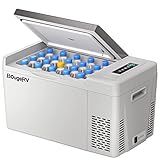
Almost every serious van life fridge today uses a compressor (the same technology in your home fridge), and for good reason. Compressor units like the BougeRV 12v refrigerator models cool efficiently even when ambient temps climb into the 90s, hold a steady internal temperature down to -8℉, and only cycle on when needed, which saves battery. Thermoelectric coolers are cheaper but struggle in hot weather and run constantly, draining your battery bank far faster.
- Compressor fridges: better efficiency, true freezing capability, quieter at idle
- Thermoelectric coolers: lower upfront cost, but poor performance above 85°F ambient
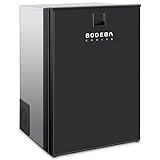
- Look for a variable-speed compressor (common in BougeRV and BODEGACOOLER units) for lower startup power draw
Sizing Your Fridge to Your Rig
Capacity should match both your cabinetry space and how often you resupply. A solo traveler doing frequent town stops can get by with 20-30 quarts, while a couple or family living aboard full-time will want 60+ liters (roughly 2 cubic feet) or more.
- Under 30 quarts (like the BougeRV 23 Quart or 30 Quart models): ideal for weekend trips, truck beds, or as a secondary freezer
- 2-3 cubic feet (BODEGACOOLER 2.3cu.ft, Midea 3.1 Cu.ft): solid daily-driver size for one or two people living full-time
- Nearly 4 cubic feet (BODEGACOOLER 3.88Cu.Ft with dual-mode fridge/freezer): great for couples who meal prep or stock up less often
- 7+ cubic feet (BANGSON 7.1 Cu.Ft with bottom freezer): best suited to skoolies, box trucks, or stationary cabin setups with residential-style storage needs
Power Draw and Battery Sizing
A 12V compressor fridge typically draws 40-60 watts while running and cycles on roughly 30-40% of the time in moderate weather, averaging out to around 0.5-1 kWh per day. That means a 100Ah lithium battery paired with 200W of solar can comfortably run a fridge in the 2-4 cubic foot range indefinitely in sunny conditions. Larger residential-style fridges like the BANGSON 7.1 Cu.Ft typically run on 120V AC, which usually means running through an inverter and demands a larger battery bank (400Ah+) or a shore power connection.
- 12V DC units (BougeRV, BODEGACOOLER) wire directly into your battery system, no inverter losses
- 120V AC units (Midea, BANGSON) need an inverter, adding 5-10% conversion loss
- Budget at least 20% battery headroom beyond your fridge’s rated daily use for cloudy days
Fridge-Only, Freezer-Only, or Dual-Zone
Decide early whether you need pure refrigeration, a freezer, or both. Dual-zone units, like the BODEGACOOLER 3.88Cu.Ft dual-mode fridge, let you split the interior between fresh food and frozen goods, or switch the whole unit to freezer mode when you’re stocking up on meat before a remote stretch. Single-zone portable units, like the BougeRV models, typically let you set one target temperature from -8℉ to 50℉ across the whole box, which works well if you mostly need either cold storage or freezing, not both simultaneously.
- Dual-zone: best for full-timers who want fresh and frozen food at once
- Single-zone portable: simplest, most efficient, and easiest to relocate between vehicle and campsite
- Residential bottom-freezer layouts (BANGSON): most familiar organization, best for stationary or heavier rigs
Installation, Orientation, and Ventilation
Compressor fridges generate heat and need airflow around the condenser coils, typically 2 inches of clearance on the sides and back. Check the manufacturer’s tilt tolerance too; most 12V compressor units can handle up to a 30-degree tilt while running, which matters on steep grades or uneven campsites. Slide-out or front-opening designs, common in the BougeRV and BODEGACOOLER lineups, make loading easier in tight galley cabinets compared to top-loading chest coolers.
- Confirm cabinet cutout dimensions against the fridge’s exact width, depth, and door swing
- Plan for a dedicated 12V fused circuit if hardwiring a DC fridge
- Leave rear ventilation space; blocked airflow shortens compressor lifespan
Tips for Choosing the Right Fridge
- Measure your cabinet space before shopping, including door clearance for opening fully
- Prioritize a low-voltage cutoff feature to protect your house battery from over-discharge
- If you’ll boondock in hot climates, choose a compressor unit rated for high ambient temperatures rather than a thermoelectric cooler
- Consider a model with app or Bluetooth monitoring, like the BODEGACOOLER APP Control fridge, so you can check temps without opening the door and losing cold air
Frequently Asked Questions
How much battery capacity do I need for a van fridge?
For a 2-4 cubic foot 12V compressor fridge, plan on 0.5-1 kWh of daily use. A 100Ah lithium battery bank paired with at least 100-200W of solar is generally enough for continuous off-grid operation in moderate weather, with more solar recommended for consistently hot or cloudy climates.
Can I run a residential fridge like the BANGSON 7.1 Cu.Ft off-grid?
Yes, but it requires an inverter and a larger battery bank, typically 400Ah or more of lithium, since AC compressor fridges draw more power through the conversion process than a native 12V unit. It’s a better fit for rigs with substantial solar arrays or frequent shore power access.
Do 12V portable fridges work well as both a fridge and freezer?
Single-zone units like the BougeRV 23 Quart and 30 Quart models let you set one temperature anywhere from -8℉ to 50℉, so they can function as either, but not both at the same time. If you need simultaneous fresh and frozen storage, look at a dual-zone model instead.
How long do 12V compressor fridges last in a van?
Well-ventilated compressor fridges from established brands typically last 5-8 years of regular van life use. Lifespan depends heavily on airflow around the compressor, how often the fridge is jostled on rough roads, and whether it’s protected from voltage spikes with a proper fused DC circuit.
Conclusion
There’s no single best van life fridge, only the best fit for your rig’s size, your power budget, and how you eat on the road. Weekend warriors and solo travelers will do well with a compact 12V unit like the BougeRV 23 or 30 Quart, full-timers usually land in the 2-4 cubic foot range with the BODEGACOOLER or Midea lines, and anyone building out a larger rig with real electrical capacity can consider a residential-style option like the BANGSON 7.1 Cu.Ft. Measure twice, size your battery bank honestly, and you’ll end up with a fridge that just quietly works for years.