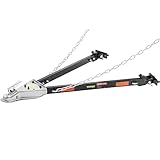
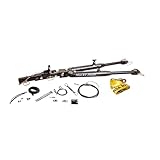
- Top Pick: Blue Ox BX7421 Class IV Avail Tow Bar with 2" Receiver | 10,000 lb Tow Rating | Patented Non-Binding Latches | Safety Cables Included | Metamorphic Rock
- Best Value: Blue Ox BX7420 Avail Tow Bar 2" Receiver | Tows Up to 10,000 lbs | Self-Aligning Tow Bar Steel Construction | Easy Fold and Store in RV | Safety Cables Included | Cinnamon Coffee Metallic Color
- Premium Choice: NSA RV – Ready Brute II Tow Bar – 8,000 lb Towing Capacity – Heavy Duty Aircraft Grade Aluminum Body – Perfect for Flat Towing

TL;DR: Flat towing (four wheels down) behind an RV requires a tow bar, base plate kit, supplemental braking system, and wiring harness. Choose the right setup for your toad vehicle and you get a reliable second vehicle at your destination without breaking camp. This guide covers every component.
RV Tow Bar Flat Towing Setup: Complete Guide to Four-Down Towing
Flat towing — also called dinghy towing or four-down towing — is the preferred method for RV travelers who want a smaller vehicle at their destination without hauling a car dolly. When the system is set up correctly, it works seamlessly for hundreds of thousands of miles. When it’s set up wrong, it destroys transmissions, wears brake pads prematurely, and can cause serious accidents. This guide covers every component of a proper RV tow bar flat towing setup.
As an Amazon Associate we earn from qualifying purchases.


🛒 Best Price Today on Amazon
Prime members get fast, free shipping on everything above, plus member-only deals. New members get a 30-day free trial — cancel anytime.
Start 30-Day Prime Free Trial →See Today’s Amazon Deals- Essential Flat Towing Equipment
- The Four Components of a Complete Flat Towing System
- Choosing the Right Tow Bar
- Base Plate Installation
- Supplemental Braking Systems
- Wiring and Safety Cable Requirements
- Pre-Tow Checklist
- RV Tow Bar Flat Towing: FAQ
- Set Up Your Towing System Once, Rely on It Everywhere
- Related Guides
- Frequently Asked Questions
- Related Articles
Essential Flat Towing Equipment
A complete flat towing system requires all four of these components working together:


As an Amazon Associate we earn from qualifying purchases. Product prices and availability are accurate as of the date/time indicated.

WAYSKA Diesel Heater 12V, 5L Tank, Diesel Heater 2KW, Muffler, Diesel Parking Heater with LCD Monitor & Remote Control for Trucks, Trailer, Boat and Motor-Home


As an Amazon Associate we earn from qualifying purchases. Product prices and availability are accurate as of the date/time indicated.

Ivation Portable Camping Shower | Compact Handheld & Hands-Free Rechargeable Outdoor Shower Head & Cleaning System w/ 3.7V Pump, 6-Ft Hose, Bidet Head, Removable Filter, Multiuse Hook & USB Cable


As an Amazon Associate we earn from qualifying purchases. Product prices and availability are accurate as of the date/time indicated.
The Four Components of a Complete Flat Towing System
See also: Best Ways to Keep a Van Tidy on the Road • Best Cyber Monday Cologne Deals
| Component | Function | Approximate Cost | Notes |
|---|---|---|---|
| Tow bar | Connects toad to RV hitch receiver | $400–$1,200 | Self-aligning bars easiest to connect solo |
| Base plate kit | Vehicle-specific mounting on toad front | $300–$600 + install | Must be vehicle-specific; not universal |
| Supplemental braking | Applies toad brakes proportionally | $300–$900 | Required by law in most states over 1,500 lbs |
| Wiring harness | Transfers brake/turn/running lights | $50–$200 | Toad-specific diode wiring recommended |
Choosing the Right Tow Bar
Tow bars mount to the RV’s hitch receiver (standard 2-inch) and connect to the base plate on the toad. Two main styles:
- Self-aligning tow bars: Arms fold out and lock independently, then connect to the base plate without requiring perfect alignment. Blue Ox and Roadmaster dominate this category. These are worth the premium for solo travelers who connect and disconnect frequently.
- Fixed A-frame tow bars: Less expensive, require the toad to be perfectly aligned before connecting. Work fine if you have a helper or always park on flat ground.
Weight capacity matters. Your tow bar must be rated at or above your toad’s gross vehicle weight. Most quality tow bars handle 5,000–8,000 lbs, which covers the majority of flat-towable vehicles (Jeep Wrangler at ~4,200 lbs, Chevy Equinox at ~3,800 lbs).
Base Plate Installation
The base plate is a vehicle-specific bracket system that bolts to the toad’s frame behind the front bumper and provides the connection points for the tow bar. This is not a DIY job unless you have fabrication experience — improper installation puts enormous stress on the vehicle frame at highway speed. Most RV dealers and towing specialty shops install base plates for $150-250 in labor.
Verify your toad is approved for flat towing before buying a base plate. Not all vehicles can be flat towed — many automatics require a drive shaft disconnect kit or auxiliary transmission lubrication pump to prevent transmission damage. Consult the vehicle owner’s manual first. Common flat-towable vehicles include the Jeep Wrangler/Gladiator, Ford F-150 (manual transfer case), and most Chevrolet/GMC trucks with manual 4WD.
Supplemental Braking Systems
Most states legally require a supplemental braking system for towed vehicles over 1,500 lbs — and all towed vehicles benefit from one regardless of weight. When your RV brakes, a properly set up supplemental system applies the toad’s brakes proportionally, reducing stopping distance and eliminating the push-forward force the toad exerts on the motorhome.
Three main types:
- Portable brake units: Sit on the driver’s seat floor, connect via vacuum or pressure to the brake pedal. Easy to transfer between vehicles. Roadmaster Even Brake and Brake Buddy are the most popular. Installation takes 15 minutes.
- Permanently installed systems: Mount under the dash, connect to the brake master cylinder. More elegant install, not transferable. Blue Ox Patriot is the benchmark here.
- Air-over-hydraulic systems: Used on heavier toads, uncommon for passenger vehicles.
Wiring and Safety Cable Requirements
Your toad needs to display all the same lights as the rear of your RV — brake lights, turn signals, and running lights — so following drivers know what the combined unit is doing. Two wiring approaches:
- Diode wiring kit: Installed permanently in the toad, taps into existing tail light circuits without affecting the toad’s own lighting. Connect via a 4-flat or 6-flat plug at the base plate. This is the clean, correct approach.
- Magnetic tow lights: Stick-on lights that connect to the RV’s 4-flat plug. No installation required but less reliable and can fall off. Acceptable for occasional use, not for full-time RVing.
Safety cables are mandatory. Two crossed safety cables connect the toad to the RV independent of the tow bar — if the tow bar fails, the cables keep the toad attached long enough to stop. Use cables rated for the toad’s GVWR.
Pre-Tow Checklist
Run through this every time before pulling out of camp:
- Tow bar arms locked in both toad connection points — verify by tugging
- Safety cables crossed and secured to both vehicles
- Breakaway cable connected (pulls toad’s parking brake if separation occurs)
- Wiring harness plugged in — test brake lights and turn signals
- Supplemental braking system armed and tested
- Toad transmission in correct tow position (neutral or park per vehicle manual)
- Toad ignition in accessory position (for power steering/steering unlock)
- Toad parking brake released
A consistent pre-tow checklist prevents the two most common flat towing disasters: driving away with the parking brake set (destroys brake pads and drums in under a mile) and forgetting the ignition position (locks steering on most vehicles).
RV Tow Bar Flat Towing: FAQ
What vehicles can be flat towed behind an RV?
Vehicles that can be flat towed typically have a manual transmission, a manual transfer case (4WD trucks/SUVs), or a specific automatic transmission design that allows the output shaft to spin freely in neutral without pump lubrication. Always check your specific vehicle’s owner manual — the “recreational towing” section. Common flat-towable vehicles: Jeep Wrangler and Gladiator, Chevrolet Colorado/Canyon (4WD), Ford Ranger (4WD), Jeep Grand Cherokee (select years), and most rear-wheel-drive manual transmission vehicles.
Do I need a supplemental braking system for flat towing?
Legally required in most U.S. states for vehicles over 1,500 lbs — which covers virtually every flat-towable vehicle. Beyond legality, it’s a genuine safety requirement. A 4,000-lb toad with no brakes extends your stopping distance significantly and pushes the motorhome during hard stops. Supplemental braking is not optional for safe flat towing.
How fast can you drive while flat towing?
Most tow bar manufacturers rate their equipment to 65 mph. Some premium bars are rated to 70 mph. Many RVers self-limit to 60 mph with a toad regardless of equipment ratings — the combined length and weight increase stopping distance, and at highway speeds you want margin. Check your specific tow bar’s speed rating and stay within it.
Can I flat tow a front-wheel-drive car?
Some FWD vehicles can be flat towed, but many cannot because the transmission requires active lubrication from the running engine. When you tow them with the engine off, the output shaft spins (driven by the road through the front wheels) while the pump isn’t running, causing transmission failure. Check the owner’s manual specifically — some FWD vehicles have a “neutral tow” position in the transmission that allows flat towing. When in doubt, use a car dolly (front wheels up) for FWD vehicles.
What is the weight limit for flat towing behind a Class A motorhome?
The limit is set by your motorhome’s towing capacity rating — typically found in the chassis manual and coach documentation. Most Class A motorhomes on Freightliner or Ford chassis have towing capacities of 5,000–10,000 lbs. Never exceed this rating. Factor in the toad’s actual weight, not just its listed curb weight — add fuel, cargo, and any gear stored in the toad.
Set Up Your Towing System Once, Rely on It Everywhere
A properly installed RV tow bar flat towing system is remarkably reliable once the initial setup is done right. The upfront investment in quality components — self-aligning tow bar, professional base plate installation, and a proportional braking system — pays off in years of trouble-free travel with a car at every destination. Take your time on the pre-tow checklist every single time, and this system will outlast your RV. For more on full-time RV and van travel setups, see our guides on van solar systems and 12V battery banks that keep all your systems running.
Related Guides
- Off Road Tire Repair Plug Kit
- Quick Picks: Best Multi-Tools for Van Life
- One-Pot Van Cooking: Best Cookware and Meals for Van Life
- Van Life Organization Hacks: Maximize Your Small Space
- Bear Canister for Camping: Best Picks for Food Safety
Frequently Asked Questions
What do I need for a complete flat towing setup?
Five things: a tow bar rated above the towed vehicle weight, a baseplate bolted to the toad frame, safety cables, a lighting connection, and a supplemental braking system. Most states legally require auxiliary braking above 3,000 pounds towed. Budget for all five, as the bar alone is only a third of the cost.
Can every car be flat towed?
No. Only vehicles the manufacturer approves for four-down towing, usually manual transmissions and certain 4WD models with a neutral transfer case. Towing an unapproved automatic destroys the transmission because the pump stops circulating fluid. Check the owner manual towing section before buying anything else.
How much does a tow bar system weigh and where does it mount?
A tow bar is typically 35-60 pounds and stows folded against the RV hitch receiver. The baseplate adds 30-50 pounds to the toad and bolts to the frame rails behind the bumper, which usually means removing the fascia. Professional baseplate installation takes three to six hours.
Do tow bars work in rain, salt and cold?
Aluminium bars resist corrosion well, but the inner slide tubes and latch pins seize when road salt gets in. Rinse after winter travel, lubricate the arms with dry silicone rather than grease, and cover the bar when parked. A seized arm that will not extend is the most common roadside problem.
How hard is the daily hookup once it is installed?
About five minutes with practice: line up within a few inches, latch the arms, connect safety cables in a cross, plug in the lighting umbilical, arm the brake unit, then set the toad transmission per the manual. Never back up more than a few feet while connected, as it can bend the arms.