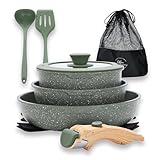
- Top Pick: DishDelight Detachable Handle Camping Pots and Pans Set Non Stick
- Best Value: Redchef Truly Non Toxic Pots and Pans Set Non Stick, Upgraded Ceramic Pan and Pot Set, PFAS PTFE PFOA PFOS Free, Kitchen Cookware Set with Detachable Handle, RV Camping with Frying Pans Set
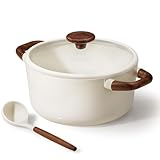
- Premium Choice: CAROTE 5QT Nonstick Stock Pot with Lid, 5 Quart Casserole with Ladle, Even Heating Stockpot, Fits All Stoves, Non Stick Big Cooking Pots PFOA Free, White
Last updated: September 7, 2026
🛒 Best Price Today on Amazon
Prime members get fast, free shipping on everything above, plus member-only deals. New members get a 30-day free trial — cancel anytime.
Introduction
One-pot cooking is the cornerstone of van life cuisine — minimal dishes, maximum flavor, and efficient use of your limited cooktop space. With the right pot and a handful of reliable recipes, you can eat incredibly well on the road without spending hours cleaning up or wasting water. The magic of one-pot cooking isn't just convenience; it's that it forces flavor concentration — everything cooks together, so the fond, spices, and juices build into a single deeply flavored dish rather than getting spread across multiple pans and rinsed down the drain. Here are the best one-pot cooking tools for van lifers, along with the techniques that make them shine in a tiny galley.
As an Amazon Associate we earn from qualifying purchases at no extra cost to you.



What to Look For in Van Cookware
See also: Best Ways to Keep a Van Tidy on the Road • Best Cyber Monday Cologne Deals
- Multi-function design: The best van life cookware does double duty — a pot that also works as a bowl, a pan with a lid that doubles as a plate, or a Dutch oven that handles everything from soups to bread baking. Fewer, more versatile pieces beat a full cabinet of single-use pans.
- Heat distribution: Uneven van stove burners (especially single-burner propane) demand cookware with excellent heat distribution to prevent hot spots and scorching. Cast iron and heavy-gauge stainless excel here, spreading heat evenly across the base even on a small, concentrated flame.
- Easy cleaning: Water is precious in a van. Non-stick or well-seasoned cast iron surfaces that wipe clean with minimal water are significantly more practical than stainless steel on the road, where scrubbing stuck-on food wastes both water and patience.
- Storage footprint: Cookware that nests or stores flat frees up cabinet space for food and gear, so weigh a piece's capability against how much room it claims when stowed.
Top Picks for One-Pot Van Cooking
Lodge 6-Quart Enameled Cast Iron Dutch Oven
The Lodge enameled cast iron Dutch oven is arguably the most versatile piece of cooking equipment you can carry in a van. Use it for soups, stews, pasta, chili, braised meats, and even no-knead bread baked over a camp stove. The enamel surface is non-stick when properly managed, easy to clean, and doesn't require seasoning. At 14 lbs it's heavy, but van lifers who love food consider it non-negotiable. Available in multiple colors to match your van aesthetic. Its thick walls hold heat beautifully, so you can bring a stew to a boil, then kill the flame and let residual heat finish the cooking — a genuine fuel-saver when you're running off a small propane tank. The tight-fitting lid also traps moisture, meaning you can braise tough, cheap cuts of meat into tender meals.
MSR Ceramic 2-Pot Cookset
For van lifers who prioritize lightweight and compact over cast iron heft, the MSR ceramic nonstick cookset delivers excellent non-stick performance in a package that nests completely flat. The ceramic coating is PFOA-free and handles van stove temperatures without issue. The set includes a 1.5L and 2.5L pot, both with strainer lids, and the handles fold flat. Excellent for solo or couple van lifers who want to keep their kitchen kit minimal and light. The strainer lids are a small but meaningful feature — you can drain pasta or rinse grains without a separate colander, saving both space and water. Because the pots nest, the entire set stores in the footprint of the larger pot alone.
Brendan Leonard's "The Van Life Cookbook"
Written specifically for van and outdoor cooking, this recipe collection focuses on one-pot and minimal-cleanup meals that actually taste great on a camp stove. Recipes are organized by ingredient type (pantry staples, fresh ingredients, etc.) so you can cook from what you have on board. Van lifers consistently rave about how practical and well-tested the recipes are for real on-the-road conditions — not glamping kitchen setups. The ingredient-based organization is especially useful when you're miles from a grocery store and need to build a meal around whatever is left in the pantry, turning a "there's nothing to eat" moment into a real dinner.
How to Choose the Right Pot for Your Cooking Style
The decision usually comes down to weight versus capability. If you love cooking and travel with a solid battery and payload budget, the Dutch oven unlocks braising, baking, and slow-simmered meals that no lightweight pot can match — it's a mini oven you can use over a single burner. If you value simplicity, pack light, or mostly cook quick pasta-and-sauce meals, the nesting ceramic set is faster to heat, easier to clean, and far kinder to your storage space. Many couples carry both: the Dutch oven for weekend feasts and the light set for weekday efficiency. Whatever you choose, size it to your stove — an oversized pot on a small burner heats unevenly and wastes fuel.
One-Pot Techniques That Save Water and Fuel
Great one-pot cooking is as much technique as gear. Build meals in a single sequence — sauté aromatics, add proteins, then liquids and grains — so nothing needs a second pan. Use the "boil then rest" method for pasta and grains: bring to a boil, cover, kill the flame, and let residual heat finish cooking, which can halve your fuel use. Wipe cookware with a paper towel before rinsing to conserve water, and deglaze stuck-on bits with a splash of water or wine to turn them into sauce instead of scrubbing them away. Stock versatile pantry staples — rice, pasta, canned beans, olive oil, and a few reliable spices — so you can always assemble a meal without a grocery run.
Final Thoughts
One-pot cooking in a van is a genuinely enjoyable and creative constraint — it forces you to develop a repertoire of efficient, flavorful meals that you'll cook for years after van life ends. Start with a quality Dutch oven or nonstick pot, stock your pantry with versatile staples, and you'll be making meals that other van lifers ask you to cook for them at the campfire. Match your cookware to your stove and travel style, lean on water- and fuel-saving techniques, and your tiny galley will outperform kitchens ten times its size.
Frequently Asked Questions
Is a cast iron Dutch oven too heavy for van life?
It depends on your priorities. At around 14 pounds, an enameled Dutch oven is heavy and claims cabinet space, but food-focused van lifers consider it worth every ounce because it braises, bakes bread, and slow-cooks in ways no lightweight pot can. If you pack minimal or rarely cook elaborate meals, a nesting ceramic set is the lighter, more practical choice.
Can you really bake bread in a van?
Yes. A cast iron Dutch oven acts as a miniature oven — its thick walls and tight lid trap heat and steam, letting you bake no-knead bread over a camp stove or in a small van oven. The technique takes practice, but many van lifers regularly bake fresh bread on the road, which is far cheaper and more satisfying than buying loaves at every grocery stop.
How do I cook one-pot meals with minimal water for cleanup?
Use non-stick or well-seasoned cookware and wipe it with a paper towel before rinsing, cook meals in a single sequence so only one pot gets dirty, and deglaze stuck-on food into sauce rather than scrubbing it off. Heating a small amount of water for a quick wash-and-rinse uses a fraction of what a running tap would consume in a water-limited van.
What pantry staples make one-pot van cooking easiest?
Rice, pasta, canned beans and tomatoes, olive oil, stock cubes, and a small set of versatile spices form the backbone of endless one-pot meals. These shelf-stable ingredients let you build a satisfying dinner around whatever fresh food you have left, which is invaluable when you're far from a grocery store or trying to stretch supplies between restocks.
Ceramic nonstick or cast iron — which lasts longer in a van?
Cast iron lasts virtually forever if kept dry and re-seasoned occasionally, though enamel can chip if dropped. Ceramic nonstick coatings wear out faster, typically over a few years of regular use, but they're lighter and heat quickly. For longevity choose cast iron; for weight savings and fast weeknight cooking choose ceramic, and many van lifers simply carry both for different occasions.