Last updated: October 9, 2026
As an Amazon Associate we earn from qualifying purchases at no extra cost to you.



🛒 Best Price Today on Amazon
Prime members get fast, free shipping on everything above, plus member-only deals. New members get a 30-day free trial — cancel anytime.
Introduction
A roof rack transforms a cargo van from a road trip vehicle into a genuine overlanding platform — expanding your gear-carrying capacity to include surfboards, kayaks, mountain bikes, rooftop tents, solar panels, and more. The cargo van roof rack market has grown significantly, with options ranging from custom welded steel to modular aluminum systems. Choosing the right one means balancing load capacity, fitment, weight, aerodynamics, and how you actually plan to use the roof. Here's how to find the right roof rack for your Transit, Sprinter, or ProMaster and your adventure style.
What to Look For in a Cargo Van Roof Rack
See also: Best Ways to Keep a Van Tidy on the Road • Best Cyber Monday Cologne Deals
- Vehicle-Specific Fitment: A quality cargo van roof rack should be designed specifically for your van model — Transit, Sprinter, or ProMaster — using the factory roof rail mounting points or seam-clamp attachment methods. Universal racks that require drilling are available but compromise roof integrity.
- Load Rating: Check the static and dynamic load ratings carefully. Most van roof racks have a dynamic (driving) rating of 150-300 lbs and a higher static (parked) rating for rooftop tents. Never exceed the dynamic rating — it accounts for the forces of highway driving and crosswinds.
- Aerodynamics & Noise: Any roof rack increases wind drag and fuel consumption. Low-profile aluminum systems and front wind fairing bars minimize the penalty. At highway speeds, a poorly designed rack can create significant wind noise inside the van.
- Material and corrosion resistance: Aluminum resists rust and saves weight; powder-coated steel is stronger and cheaper but heavier. Match the material to your climate and load needs.
Top Picks: Best Roof Racks for Cargo Vans
Thule Omnistor Roof Rack System for Transit/Sprinter
Thule's van-specific rack systems use the factory roof rails and gutters as attachment points, avoiding any drilling while providing a solid, vehicle-tested connection. The modular crossbar system accommodates Thule's full lineup of bike carriers, cargo boxes, kayak holders, and accessory bars. For van lifers who want a clean, removable rack that doesn't permanently alter the van, Thule's system is the premium choice, and its resale value stays strong thanks to the trusted brand name.
Vantech H3 Aluminum Van Roof Rack
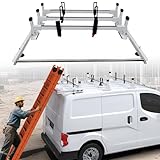
Vantech's H3 ladder rack system is the commercial-grade aluminum option used by contractors and increasingly adopted by van lifers who need serious load capacity. The welded aluminum construction handles 500 lbs of static load, and the flat top platform accommodates solar panels, rooftop tents, and large cargo. The ladder-style design allows air to pass through, reducing drag compared to a solid platform. For a permanent, hard-working roof setup, the H3 is a proven workhorse.
Adrian Steel Aluminum Crossmember Kit
Adrian Steel's crossmember kits are the professional upfitter choice for cargo vans, used by fleets and increasingly by conversion builders who want factory-quality attachment points. The aluminum crossmembers bolt to factory-drilled holes in the roof lip, providing a solid anchor for any cargo management system. For van builders who want maximum strength with minimal weight, Adrian Steel crossmembers are the foundation for a serious roof build-out.
Static vs. Dynamic Load Ratings: What You Need to Know
The most misunderstood spec in roof racks is the difference between static and dynamic ratings. The dynamic rating is what the rack and roof can safely carry while driving, when bumps, braking, and crosswinds multiply the forces on your load — this is the number that limits what you haul down the highway. The static rating is much higher and applies only when parked, which is why a rooftop tent full of sleepers is fine at rest but the same weight wouldn't be legal to drive. Always match your intended cargo to the dynamic rating for travel, and confirm the tent-plus-sleepers total stays under the static rating.
Matching the Rack to How You Use Your Van
Choose your rack around your primary mission. If you rotate between bikes, kayaks, and cargo boxes, a modular crossbar system from a brand like Thule gives you the flexibility to swap accessories without owning a permanent platform. If you run a fixed rooftop tent, solar panels, and a full basecamp setup, a rigid full platform like the Vantech H3 or an Adrian Steel crossmember base is the stronger foundation. Weekend adventurers can often get away with a lighter, removable rack, while full-timers usually justify a permanent, heavier-duty system.
Installation and Long-Term Maintenance
A roof rack is only as safe as its installation. Follow the manufacturer's torque specifications exactly, use the correct anti-seize or thread-locker where specified, and seal any penetrations against water intrusion. After installation, re-check every fastener after your first few hundred miles, since hardware settles and vibrates loose early on. Inspect the mounts periodically — especially after off-road driving — and rinse road salt off in winter climates to prevent corrosion at the mounting points.
Frequently Asked Questions
How much weight can a cargo van roof rack hold?
Most van roof racks carry 150-300 lbs dynamically (while driving) and considerably more statically (while parked). The exact figure depends on the rack design and your van's roof load limit. For driving, never exceed the dynamic rating, since highway forces multiply the effective load. For a parked rooftop tent, the higher static rating applies, but always confirm both numbers against the manufacturer's specs.
Do I have to drill into my van's roof to install a rack?
Not necessarily. Many quality racks attach to factory roof rails, mounting points, or use seam-clamp systems that require no drilling and preserve the roof's integrity. Some heavy-duty commercial racks do bolt to factory-drilled holes in the roof lip. Drilling universal racks into a bare roof is possible but risks leaks and weakens the structure, so vehicle-specific no-drill systems are generally the better choice.
How much does a roof rack affect fuel economy?
Any roof rack adds drag and reduces fuel economy, typically by a noticeable margin at highway speeds, and the penalty grows with taller cargo like a rooftop tent. Low-profile aluminum racks and a front wind fairing minimize the impact. Removing the rack or accessories when you're not using them, and driving at moderate speeds, both help offset the ongoing fuel cost.
Will a roof rack make my van noisy?
It can, especially crossbar designs that create wind whistle at highway speeds. A front wind fairing deflects air over the bars and significantly reduces noise, and low-profile aerodynamic bars are quieter than boxy round tubes. Ladder-style platforms that let air pass through tend to be quieter than solid platforms. Proper installation and eliminating loose accessories also cuts down on rattles and vibration.
Which roof rack is best for a rooftop tent?
For a rooftop tent, prioritize a rigid platform or heavy-duty crossbars with a high static load rating that comfortably exceeds the tent plus sleepers. Welded aluminum platforms like the Vantech H3 and factory-anchored crossmember systems are popular choices. Confirm the tent's footprint fits your bar spacing, and always verify both the rack's dynamic rating for travel and your van's overall roof load limit.
Final Thoughts
The right cargo van roof rack multiplies your van's adventure capability dramatically. Match your rack choice to your primary use case — a modular crossbar system for rotating between bike, kayak, and cargo duties, or a full platform for a permanent rooftop tent setup. Install carefully using the manufacturer's torque specifications, respect the dynamic load rating on the road, and inspect mounting hardware regularly, especially after off-road use.