Last updated: October 4, 2026
The Short Answer
Yes—an induction cooktop can be an excellent van-kitchen upgrade if your van can supply a steady 1,800 watts of 120-volt power. It boils water quickly, stays relatively cool around the pan, and is easier to clean than propane or a traditional electric coil. The catch is that a standard portable unit can overwhelm a small inverter, drain a battery quickly, or be useless with nonmagnetic cookware.
For 2026, the basic buying decision is less about whether induction works in a van and more about how you camp. If you regularly use shore power, a generator, or a properly sized inverter and battery bank, induction is practical. If you mostly camp off-grid with a modest electrical system, propane or butane may be the more convenient primary stove.
As an Amazon Associate we earn from qualifying purchases at no extra cost to you.
What You Actually Get
See also: Best Ways to Keep a Van Tidy on the Road • Best Cyber Monday Cologne Deals
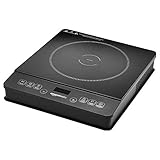
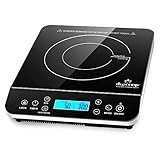
A portable induction cooktop is a single-burner appliance that creates heat directly in compatible cookware using an electromagnetic field. Instead of heating a metal coil or flame first, it heats the pan itself. Most countertop models plug into a standard 120-volt outlet and offer roughly 1,300 to 1,800 watts of power.
A typical unit measures about 11 to 14 inches wide, 10 to 16 inches deep, and 2 to 3 inches tall. Weights commonly fall between 5 and 8 pounds, so it is portable but not necessarily something you will want to unpack for every cup of coffee. The cooking surface generally accommodates pans with a base around 5 to 10 inches in diameter, depending on the model.
The Amazon Basics 1800W Portable Electric Induction Cooktop is a lower-cost example, listed around $49 to $60. It has eight power settings, temperature control up to 440°F, a timer, child lock, and overheat protection. It is designed for cookware with a 5.7- to 8.2-inch diameter. The Duxtop 9600LS 1800W model typically costs about $110 to $130 and offers a more feature-heavy control panel and a broader reputation among frequent portable-cooktop users.
Neither appliance is a complete van cooking system. You still need a stable, heat-resistant surface, ventilation, cookware that a magnet sticks to, and enough electrical capacity. The cooking area also remains hot for a while after use, even though it does not glow red like a coil.
Pros
- Fast cooking. An 1,800-watt unit can bring a small pot of water to a boil quickly, particularly when compared with a low-wattage 12-volt appliance. Actual results depend on pan size, water volume, altitude, lid use, and battery or inverter performance.
- Efficient transfer of heat. Because the pan is heated directly, less heat is wasted into the van than with a flame or exposed electric element. This can make the cooking area more comfortable in warm weather.
- No open flame. Induction avoids propane flames, fuel canisters, soot, and combustion gases inside the van. You should still ventilate while cooking, since food creates steam, smoke, and odors.
- Easy cleanup. The smooth glass-ceramic surface can usually be wiped with a damp cloth after it cools. Spills are less likely to bake onto a glowing coil.
- Precise, repeatable control. Power levels and temperature settings are useful for simmering soup, melting chocolate, reheating leftovers, or maintaining a low cooking temperature.
- Useful safety features. Common features include automatic shutoff, pan detection, overheat protection, a timer, and a child lock. These do not eliminate the need to supervise cooking, but they add a layer of protection.
- Convenient indoors or outdoors. The same unit can serve as a backup burner at home, a campsite cooktop when shore power is available, or an extra burner during holidays.
- No fuel storage. You do not need to carry spare propane or butane canisters, which saves cabinet space and avoids fuel-related odors.
Cons
- High electrical demand. At full output, an 1,800-watt cooktop draws about 15 amps from a 120-volt circuit. It may trip a small campground circuit or exceed the continuous rating of a compact inverter.
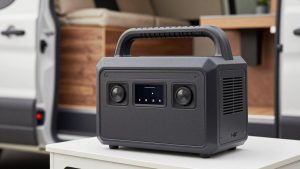
- Battery use can be substantial. Through a 12-volt system, 1,800 watts represents roughly 150 amps before inverter losses. A 2,000-watt pure-sine-wave inverter is a sensible minimum for one full-power burner, but battery capacity and wiring must also support it. A typical 2,000-watt-hour usable battery bank could provide roughly an hour at full power under ideal conditions, not counting other van loads.
- It requires compatible cookware. Cast iron and many stainless-steel pans work, but aluminum, copper, glass, and some stainless cookware do not. A magnet should cling firmly to the bottom of the pan. You may need to replace a favorite pot or carry an induction adapter plate, which reduces efficiency.
- It is not weatherproof. These are countertop appliances, not outdoor-rated equipment. Rain, condensation, splashes, and dusty storage can damage the electronics. Use one under a dry, protected awning or inside the van with ventilation.
- There is no second burner. A single burner is fine for one-pot meals but slows down pasta, vegetables, sauces, or breakfast for several people.
- Fans make noise. Internal cooling fans usually run during cooking and may continue briefly afterward. The sound is modest, but it is noticeable in a quiet van.
- The glass surface can break. Dropping a cast-iron skillet onto the cooktop or storing heavy objects on it can crack the cooking surface. It needs a protective storage location.
- Power ratings can be optimistic for real use. “1,800 watts” describes maximum input, not guaranteed cooking speed in every electrical setup. An undersized inverter, low battery voltage, or a shared circuit can cause reduced output or shutdowns.
Who Should Buy It
Buy a portable induction cooktop if you have reliable 120-volt power and usually cook inside a protected van kitchen. It is especially well suited to travelers with shore power at campgrounds, a generator, or a robust lithium battery system with a pure-sine inverter rated for continuous loads above the cooktop’s maximum draw.
It is also a good choice for people who cook one-pot meals, value easy cleanup, dislike carrying fuel, or want a burner that can move between the van and home. A budget model in the $50 range is reasonable for occasional use. A unit around $110 to $130 may make more sense for frequent cooking when you value finer controls, a sturdier interface, or a longer track record with portable induction appliances.
Who Should Skip It
Skip induction as your main van stove if your electrical system has only a small 300- to 1,000-watt inverter, if you rely on a basic 12-volt battery setup, or if you routinely camp without shore power. Running a high-wattage cooktop from an undersized inverter is frustrating and can cause repeated overloads.
You may also prefer another option if you need two burners, cook outdoors in wet conditions, use aluminum cookware exclusively, or want to prepare meals without adding meaningful battery consumption. In those situations, a fuel stove can be more flexible, though it requires careful ventilation and safe fuel storage.
Cheaper Alternatives
| Option | Cost | Trade-off |
|---|---|---|
| Single electric coil burner | $25–$60 | Usually 1,000–1,500 watts; slower, hotter to the touch, and harder to clean, but works with nearly any pan. |
| Portable butane stove | $30–$80 | Low purchase price and no inverter needed, but requires canisters, ventilation, and careful indoor use. |
| Two-burner propane camp stove | $50–$120 | More cooking capacity and strong heat; bulkier, dependent on fuel, and not appropriate for enclosed use without proper ventilation. |
| 12-volt lunch cooker or slow cooker | $30–$100 | Gentle battery draw, but commonly around 100–300 watts and far too slow for rapid boiling or high-heat cooking. |
| Used portable induction cooktop | $20–$60 | Can be a bargain, but battery compatibility, damaged glass, missing controls, and unknown safety history are concerns. |
FAQ
Can I run an 1,800-watt induction cooktop from a van battery?
Possibly, but not from the battery directly. You need a suitable 120-volt pure-sine-wave inverter, heavy-gauge wiring, adequate fusing, and a battery that can deliver the required current. At full power, the DC demand can approach 150 amps from a 12-volt system before losses. A qualified installer should size the complete system rather than relying only on the inverter’s headline wattage.
Will induction work with my existing pots and pans?
Test each pan with a magnet. If it sticks firmly to the flat cooking base, the pan will usually work. Cast iron, enameled cast iron, and magnetic stainless steel are common compatible materials. Aluminum, copper, glass, and ceramic cookware generally will not work unless they have a magnetic layer on the bottom.
Is induction safer than propane in a van?
It avoids an open flame, fuel leaks, and combustion gases, so it can be a safer choice when powered correctly. However, it still produces heat, and cooking creates steam and airborne grease. Keep the unit stable, maintain ventilation, prevent water exposure, and never leave it unattended.
Which is better: a $50 model or a $120 model?
For occasional one-pot cooking, a roughly $50 Amazon Basics-style unit may provide the essential features you need. Spending about $110 to $130 on a Duxtop-style model is more defensible for frequent use, demanding temperature control, or a cooktop that will see regular travel. Neither price tier solves an undersized van electrical system, so confirm your power setup first.