Last updated: September 18, 2026
Most people searching for a comparison between a portable power station and a van battery bank are actually facing a simpler question: how do I keep my essential devices and appliances running without wiring anything permanently into my home? A portable power station is a self-contained battery in a box, with outlets built in, ready to use the day it arrives. A van battery bank is a battery system designed to be installed and wired, usually in a vehicle, but sometimes adapted by DIYers for home backup. They overlap in what they can power, but they differ dramatically in setup, cost, safety, and how they fit into daily life. This guide breaks down both options so you can spend your money on the right one.
Quick Verdict
For nearly every homeowner and renter, a portable power station is the better choice. It requires no wiring, no electrician, no permanent modifications, and no risk of voiding a lease. You plug appliances directly into it, charge it from a wall outlet or solar panels, and move it wherever you need it. A van battery bank only makes sense if you already have a van or RV to install it in, or if you are an experienced DIYer building a fixed home system and comfortable working with fuses, inverters, and charge controllers. If you want power for emergencies, camping, or working from the porch, buy a portable power station. If you are converting a vehicle or building a permanent off-grid setup, a battery bank is the right tool.
As an Amazon Associate we earn from qualifying purchases at no extra cost to you. Product prices and availability are accurate as of the date shown and are subject to change.



Side by Side
See also: Best Van Water Filter for Refill Stations in 2026: Tested and Ranked • How to Winterize a Van Water System (2026): Step-by-Step
| Factor | Portable Power Station | Van Battery Bank |
|---|---|---|
| Setup | Unbox and use; no wiring required | Requires installation, wiring, fuses, inverter |
| Comfort | Plug in anywhere; silent operation | Integrated into vehicle or fixed system; silent once running |
| Durability | Sealed unit, typically 500–3,000 charge cycles depending on chemistry | Deep-cycle batteries rated 500–5,000 cycles; components can be replaced individually |
| Price range | $65–$2,200 for most consumer units | $300–$2,500+ for batteries alone, before inverter and wiring |
| Maintenance | Essentially none; keep charged and stored dry | Check connections, monitor charge state, inspect fuses and wiring periodically |
| Space needed | Sizes from roughly 8 x 6 x 8 inches up to 18 x 12 x 14 inches; 7 to 60+ pounds | Batteries plus inverter plus wiring typically need a dedicated bay or cabinet |
| Look | Consumer appliance; clean plastic housing with display panel | Industrial; exposed terminals, cables, and mounting hardware |
| Portability | Carry by handle; usable indoors, outdoors, or in a vehicle | Fixed once installed; 25–100+ pounds per battery |
| Resale | Easy to sell as a complete, tested unit | Harder to sell; buyers want installation history and component details |
| Best for | Home backup, camping, renters, apartment dwellers | Van conversions, RVs, permanent off-grid installs |
Where Portable Power Station Wins
Zero installation. A portable power station works out of the box. There is nothing to mount, no cables to run, and no risk of damaging your home or vehicle. Renters and apartment dwellers can use one freely, since it is just another appliance.
Safety indoors. Sealed lithium or LiFePO4 units with built-in battery management systems are safe to operate inside, away from living space concerns about venting or exposed terminals. A hand-built battery bank with bare connections is not something you want sitting in a hallway.
Built-in inverter and outlets. Portable stations include pure sine wave AC outlets, USB ports, and 12V outputs. With a van battery bank, you buy the inverter, fuses, cables, and outlets separately, which adds cost and failure points.
Solar ready without complexity. Most stations accept solar input through a single port. Pairing something like the Jackery HomePower 3000 with its included 2x200W solar panels gives you a 3072Wh system with 3600W AC output that recharges from the sun without a charge controller you have to size yourself.
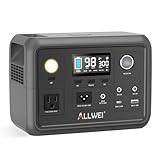
Flexibility. The same unit that backs up your refrigerator during an outage goes to the campsite, the job site, or the backyard movie night. For budget buyers, an entry unit like the ALLWEI 300W (256Wh LiFePO4) at $128.99 or even a basic 120W 110V power bank station at $66.98 covers phones, laptops, and lights for less than the cost of the wiring hardware alone in a DIY battery bank build.
Where Van Battery Bank Wins
Capacity per dollar. Raw deep-cycle batteries deliver more watt-hours per dollar than finished portable units. If you are building a large fixed system and already own an inverter, buying batteries individually can stretch your budget further.
Expandability. Most battery banks let you add batteries in parallel over time. Many portable stations have limited or no expansion, though higher-end models are changing this.
Higher sustained output. A properly sized bank with a large inverter can run heavy loads like air conditioners or well pumps continuously. Most portable stations top out well below that, though units like the HomePower 3000’s 3600W output are closing the gap for household essentials.
Replaceable components. When one battery in a bank wears out, you swap that battery. When a portable station’s internal cells degrade, you typically replace the whole unit.
Permanent vehicle power. If you own a van or RV, a wired battery bank charges from the alternator while driving and powers your rig around the clock, something a portable station cannot do without extra equipment.
Cost Over 5 Years
Portable power station: A budget unit like the ALLWEI 300W costs $128.99 upfront and needs no accessories. A mid-tier setup with a Jackery Explorer 300 (292Wh) at $289 plus a solar panel might land around $380. A whole-home backup unit like the HomePower 3000 kit runs $2149. Add nothing for maintenance; expect 80% capacity or better after five years if you use a LiFePO4 unit and avoid extreme heat. Total five-year cost: $129–$2,150.
Van battery bank: A functional system needs one or more batteries ($300–$1,000), an inverter ($150–$600), fuses and cables ($50–$150), and possibly a charge controller ($50–$200). That is $550–$1,950 upfront, plus a weekend of labor. Over five years, budget for one battery replacement in cheaper chemistries ($200–$400) and periodic connection checks. Total five-year cost: roughly $750–$2,350.
The portable station wins on total cost for anyone who does not already own the supporting hardware, because the “accessories” markup of a DIY build usually exceeds the price premium of the finished product.
Which One for Your Home
Small Apartment
Get a portable power station, full stop. You have no place to install a battery bank, no permission to wire anything, and probably limited storage. A compact unit in the 250–300Wh range, like the Jackery Explorer 300 or the ALLWEI 300W, weighs 7–9 pounds, fits on a closet shelf, and keeps phones, routers, and laptops alive through an outage.
Family with Kids or Pets
Safety and capacity both matter. Choose a mid-size LiFePO4 portable station in the 1,000–3,000Wh range with sealed casing and no exposed wiring, placed out of reach but easy to grab during an outage. Something like the HomePower 3000 can run a refrigerator, medical devices, lights, and chargers simultaneously with its 3600W output. Avoid a DIY battery bank in a living space; loose terminals and heavy cables are hazards with curious kids or pets around.
Rental
A portable power station is the only sensible option. Landlords generally prohibit permanent electrical modifications, and you want equipment that moves with you. Budget-friendly units starting around $67–$129 handle essentials, and every dollar you invest travels to your next home with you.
Long-Term Home
If you own your home, a larger portable station paired with solar panels is usually still the smarter move, since it delivers whole-circuit backup without permits or electricians. A hardwired battery bank only makes sense if you are building a dedicated off-grid structure or already have the electrical skills and tools; in that case, consult a licensed electrician rather than improvising around your main panel.
FAQ
Can I use a van battery bank indoors?
Not safely without an enclosure, fusing, and proper ventilation planning. Lithium batteries in a bank have exposed terminals and no built-in safety certification for consumer indoor use. A sealed portable power station is designed for indoor use out of the box.
How long will a 300Wh portable power station run a refrigerator?
A typical energy-efficient refrigerator drawing 60–100 running watts uses roughly 0.8–1.5kWh per day. A 292Wh unit like the Jackery Explorer 300 will usually power a fridge for about 3–5 hours of compressor runtime, enough to bridge a short outage, not a full day.
Is LiFePO4 worth the extra cost?
For anything you will use for years, yes. LiFePO4 cells are typically rated for 2,000–3,000+ cycles versus roughly 500 cycles for older lithium-ion chemistries, and they handle heat better. Budget LiFePO4 units like the ALLWEI at $128.99 have made the upgrade nearly free.
Can I charge a portable power station from my car?
Almost all of them support 12V car charging through the included cable, though charging is slow from a standard cigarette socket. Expect several hours to refill a 300Wh unit while driving, and never charge from the car while the engine is off unless you want a dead starting battery.