Last updated: September 18, 2026
Quick answer: Our top pick in 2026 is the Portable power station, roughly 500–1,000Wh — our #1 rated choice. See the full ranked comparison, alternatives and buying advice below.
The Short Answer
Yes, van solar is worth it for weekends if your electrical use is modest and you regularly camp without reliable shore power. A small solar setup can keep lights, phones, cameras, a compressor fridge, and other essentials running without idling the engine or hunting for a campground outlet. If your weekend trips include heavy air-conditioning, induction cooking, electric heating, or mostly cloudy parking, solar becomes less practical and a portable power station—or shore power—may be the better answer.
The key is matching the system to two or three days of realistic use. Weekend travelers often do not need a full-time van-life electrical system. They need enough stored energy to cover Friday night through Sunday morning, with solar replacing some of what they consume during the day.
As an Amazon Associate we earn from qualifying purchases at no extra cost to you. Product prices and availability are accurate as of the date shown and are subject to change.


What You Actually Get
See also: How to Clean Solar Panels on Van (2026): Step-by-Step • How to Set Up Van Solar Panels (2026): Step-by-Step
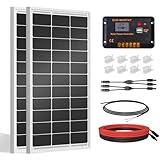
A van solar system has four main parts: panels, a charge controller, a house battery, and wiring with appropriate fuses and disconnects. An inverter is optional if you need standard 120-volt outlets for devices such as laptops, camera chargers, or small appliances.
For occasional trips, a practical entry-level setup might include 100 to 200 watts of solar, a 50- to 100-amp-hour 12-volt LiFePO4 battery, and a 20- to 30-amp charge controller. That generally means roughly 1.3 to 2.5 kilowatt-hours of usable battery energy, depending on battery size and voltage. A system in this range may fit under a seat or in a compact electrical cabinet, although exact dimensions vary by brand.
A larger weekend setup could use 300 to 400 watts of roof-mounted solar and a 200-amp-hour 12-volt LiFePO4 battery. That offers more flexibility for a fridge, laptops, lights, fans, and occasional cooking, provided the weather cooperates. Four hundred watts of panels can require approximately 18 to 24 square feet of usable roof area, including spacing and hardware. Roof vents, racks, skylights, and curved surfaces can make that footprint difficult in a compact van.
As a reference point, the Renogy 400W RV Solar Power Kit listed at $3,279.99 combines two 200-watt panels with a 7.68-kWh LiFePO4 battery system, a 3,000-watt pure sine wave inverter, and a 50-amp DC-DC MPPT charger. That is a substantial package for weekend use. It is closer to a robust, multi-day power system than a minimal phone-and-fridge setup. The larger battery and inverter also add cost, weight, installation complexity, and space requirements.
Solar output is not constant. A 400-watt array does not produce 400 watts all day. Shade, clouds, panel angle, roof orientation, dirt, and short winter days all reduce production. For planning purposes, it is safer to treat solar as a way to replenish energy gradually rather than as a guaranteed generator.
Pros
- Quiet power: Solar works silently, unlike a gas generator. That matters at dispersed campsites and in crowded campgrounds where generator hours are restricted.
- Less engine idling: A properly sized system can recharge phones, lights, a fridge, and electronics without running the van simply to produce electricity.
- Low daily effort: Once installed, roof panels charge automatically whenever conditions permit. There is no fuel can to carry or separate generator to set up.
- Useful battery reserve: A LiFePO4 battery can provide dependable energy for several ordinary weekend loads and is typically lighter than a similarly usable lead-acid battery.
- More freedom in where you camp: You can stay away from hookups and choose dispersed or primitive sites when legally permitted.
- Good fit for repeat trips: The more weekends you take, the more value you get from a permanent system. It also makes spontaneous overnight trips easier.
- Potentially better resale appeal: A clean, professionally installed electrical system can be a useful feature for a future van buyer.
Cons
- Upfront cost: A basic DIY setup may cost about $400 to $1,000 in parts, while a more complete 300- to 400-watt system with a lithium battery can range from $1,500 to more than $4,000 before professional labor.
- Weather dependence: Several cloudy or shaded days can leave the battery undercharged. Winter trips are especially demanding because daylight is shorter and heating loads rise.
- Installation takes space: Batteries, inverters, fuses, and cable runs need a dry, ventilated, accessible location. A 200-amp-hour lithium battery may weigh roughly 50 to 60 pounds, while a larger complete system can add well over 100 pounds.
- Roof limitations: A small van may not have enough clear roof area for 300 or 400 watts after accounting for vents, fans, roof racks, and maintenance access.
- Heavy appliances change the equation: Electric heaters, induction cooktops, hair dryers, and air conditioners can consume hundreds or thousands of watts. They can drain a weekend battery quickly.
- More components to troubleshoot: Incorrect wire sizing, poor crimping, missing fuses, or an undersized inverter can create safety problems. Electrical work should be planned carefully, and high-current connections deserve professional attention.
- Payback may be slow: If you take only two or three trips a year and usually stay at powered campgrounds, a permanent system may not save money.
Who Should Buy It
Buy van solar if you take at least several trips each year, regularly camp without hookups, and use electricity for modest loads. It is particularly worthwhile for travelers who keep a compressor fridge running, work remotely for part of a trip, photograph or film outdoors, or prefer quiet campsites.
A small system is usually enough if your weekend routine includes LED lights, phones, a tablet, a laptop, a water pump, and a fridge. A typical day with those loads may use roughly 500 to 1,000 watt-hours, depending on the fridge, computer, and charging habits. Add a portable solar panel or alternator charging if you want extra resilience without filling the roof.
Solar also makes sense for owners planning longer trips later. Installing a slightly larger battery now can be cheaper than replacing the entire electrical system after adding a fridge, fan, or remote-work equipment.
Who Should Skip It
Skip a permanent solar installation if you camp almost exclusively at sites with electrical hookups, drive frequently between stops, or use the van only once or twice a year. The van’s alternator can often recharge a small battery during normal driving, making a basic portable power station more sensible.
Solar is also a poor primary solution for anyone expecting to run air-conditioning, electric heat, or a large induction cooktop for long periods. Those loads may require substantial battery capacity, a large inverter, more charging sources, and careful energy management. In that situation, shore power, a properly sized generator where legal, or a hybrid system may be more realistic.
Cheaper Alternatives
| Option | Cost | Trade-off |
|---|---|---|
| Portable power station, roughly 500–1,000Wh | $300–$900 | Fast and simple to use, but limited runtime and usually no permanent roof charging. |
| 100W portable solar panel plus power station | $500–$1,200 | Good for phones, lights, and small electronics; setup must be placed in the sun and packed away. |
| DIY 100–200W roof system with 50–100Ah LiFePO4 battery | $400–$1,000 | Lower cost and permanently available, but requires wiring, fuses, mounting, and installation time. |
| Alternator charging with a DC-DC charger | $300–$900 | Reliable while driving, but provides no charging while parked and adds installation complexity. |
| Full 300–400W lithium solar system | $1,500–$4,000+ | More capacity and convenience, but often excessive for occasional short trips. |
| Weekend conversion planning guide | $9.99 | A low-cost way to plan the van before buying hardware, but it does not provide power or equipment. |
A sensible first purchase is often a portable power station with at least 500 watt-hours of capacity. Use it for a few weekends and track actual consumption. If you repeatedly run short, you will have better information for sizing a permanent battery and solar array.
FAQ
How much solar do I need for a weekend van trip?
For phones, lights, a fridge, and occasional laptop use, start around 100 to 200 watts of solar with a 50- to 100-amp-hour LiFePO4 battery. Choose 300 to 400 watts and a larger battery if you work from the van, carry camera equipment, or want several days of reserve. Avoid sizing around ideal sunshine; include a backup charging method for bad weather.
Is a solar generator better than a built-in van system?
For occasional weekend use, often yes. A portable power station is faster to install, can be used outside the van, and avoids permanent wiring. A built-in system is neater and more convenient for frequent travel, but it costs more and takes up fixed space.
Can van solar run air-conditioning?
Usually not for long without a very large battery and substantial solar input. Air-conditioning can draw hundreds to more than 1,000 watts depending on the unit and conditions. A weekend system designed for lights, refrigeration, and electronics should not be assumed to support continuous cooling.
Is van solar worth it in 2026?
It is worth it when quiet, off-grid camping is a regular priority and your electrical loads are predictable. For infrequent trips, begin with a portable power station or a small alternator-charging setup. Solar becomes a better investment after you confirm how much energy you actually use and where you normally camp.
Ready to decide? Our #1 pick for 2026 is the Portable power station, roughly 500–1,000Wh.
Live price & availability on Amazon.