Last updated: October 17, 2026
A battery-to-battery (DC-DC) charger is the right choice for almost every modern camper van — especially anything with a lithium battery or a smart alternator — while a battery isolator only makes sense for budget builds running small lead-acid house banks. Here’s the full head-to-head on charging speed, alternator protection, and LiFePO4 compatibility so you can pick the right one for your build.
Battery-to-Battery Charger vs. Battery Isolator: The Core Difference
A battery isolator is a simple switch. When your engine starts and the alternator voltage rises, it connects your starter battery to your house battery so both charge together. When the engine stops, it disconnects them so your fridge can’t drain the starter battery overnight. That’s all it does — it passes along whatever voltage the alternator happens to be producing.

Dual Battery Isolator Kit Heavy Duty 300 AMP 1000 AMP Peak Voltage Sensitive Relay VSR for 12 Volt Systems - Works with All Batteries Types Including Lithium and LiFePO4
Included for 'Battery-to-Battery Charger vs. Battery Isolator: Which Does Your Van Need?' because the listing specifies Works with All Batteries Types Including Lithium and LiFePO4, details this guide uses to compare options.
View on Amazon
Dual Battery Isolator Kit 12V - 140 Amp Voltage Sensitive Relay (VSR) for Dual Battery Setup
Included for 'Battery-to-Battery Charger vs. Battery Isolator: Which Does Your Van Need?' because the listing specifies 140 Amp Voltage Sensitive Relay (VSR) for Dual Battery Setup, details this guide uses to compare options.
View on Amazon
Dual Battery Isolator Kit 12V - 140 Amp Voltage Sensitive Relay (VSR) for Dual Battery Setup - Automatic Disconnect Switch for Car, Truck, RV, UTV, ATV, Marine
Included for 'Battery-to-Battery Charger vs. Battery Isolator: Which Does Your Van Need?' because the listing specifies 140 Amp Voltage Sensitive Relay (VSR) for Dual Battery Setup and Automatic Disconnect Switch for Car, details this guide uses to compare options.
View on Amazon
Afurkuot Dual Battery Isolator 12V 140 Amp Dual Battery Isolator Automatic Charger, Voltage Sensitive Relay (VSR), Adjustable Smart Battery Isolator Kits for Truck Marine UTV ATV RV Boat Camper
Included for 'Battery-to-Battery Charger vs. Battery Isolator: Which Does Your Van Need?' because the listing specifies Voltage Sensitive Relay (VSR), details this guide uses to compare options.
View on Amazon

RENOGY REGO 12V 40A DC-DC Battery Charger & BT-2 Smart Solar Monitor Bundle - Waterproof Charger with LiFePO4 Activation + Wireless App Control for RV Marine Lithium AGM Gel Batteries
Included for 'Battery-to-Battery Charger vs. Battery Isolator: Which Does Your Van Need?' as a relevant option in this category; details come from the product listing.
View on Amazon
Blue Sea Systems ML-ACR Charging Relay with Manual Control, 500A
Included for 'Battery-to-Battery Charger vs. Battery Isolator: Which Does Your Van Need?' because the listing specifies 500A, details this guide uses to compare options.
View on Amazon
Blue Sea Systems 7623 ML-ACR 24V DC 500A Automatic Charging Relay with Manual Control, Beige
Included for 'Battery-to-Battery Charger vs. Battery Isolator: Which Does Your Van Need?' because the listing specifies Beige, details this guide uses to compare options.
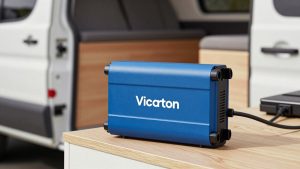
View on AmazonA battery-to-battery charger (also called a DC-DC charger or B2B charger) is an active power converter. It takes the alternator’s output, regulates it, and delivers a proper multi-stage charge profile — bulk, absorption, float — matched to your house battery’s chemistry. It can boost low voltage or limit current, which changes everything about how fast and how safely your battery charges.
Head-to-Head Comparison
See also: How Long Will a 100Ah Battery Last in a Van? Runtime Math Explained • Best Level 2 EV Chargers for Home
| Factor | Battery Isolator | Battery-to-Battery Charger |
|---|---|---|
| Typical cost | $30–$120 | $150–$500 |
| Charge current | Uncontrolled (can pull 100A+) | Regulated (20A, 30A, 40A, 60A models) |
| Charge profile | None — raw alternator voltage | Multi-stage, chemistry-specific |
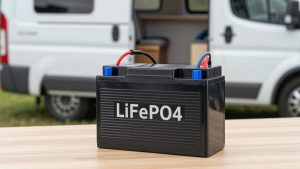
| LiFePO4 compatible | Poorly — rarely reaches full charge | Yes — dedicated lithium profiles |
| Smart alternator compatible | Often unreliable | Yes |
| Alternator protection | None | Current limiting prevents overload |
| Installation complexity | Very simple | Moderate (wiring, ignition trigger, settings) |
| Typical lifespan | 5–15 years (few failure points) | 5–10 years (electronic components) |
Charging Speed: The Numbers That Matter
This is where the gap becomes real. Say you have a 200Ah LiFePO4 house bank at 50% state of charge — you need roughly 100Ah back.
- With a 40A DC-DC charger (like a Victron Orion-Tr Smart or Renogy 40A unit), you’re looking at about 2.5 hours of driving to refill.
- With an isolator, the alternator might push 60–80A initially, but voltage tapers as the battery rises. Worse, a smart alternator on a post-2015 vehicle often drops to 13.2V or lower — too low to fully charge lithium. Real-world result: 4+ hours of driving, and the battery still tops out around 80%.
Consistently undercharging a LiFePO4 bank doesn’t just inconvenience you — it means you’re effectively paying for capacity you never use. A 200Ah bank that only ever reaches 80% is a 160Ah bank.
Alternator Protection: The Hidden Killer
Lithium batteries accept huge amounts of current. Connect a depleted 300Ah LiFePO4 bank through a basic isolator and it can demand 150A+ continuously from an alternator rated for a similar total output. Alternators aren’t designed to run at maximum output for hours — they overheat, and failures are common enough that this is the single biggest cause of premature alternator death in DIY van builds.
A DC-DC charger solves this by capping the draw at its rated output. A 30A unit will never ask your alternator for more than ~35A, no matter how hungry the battery is. Some vans with small alternators (older Sprinters, compact vans) should run a 20A unit for this reason alone.
The Real Cost Calculation
The sticker price gap narrows when you factor in ownership:
| Scenario | Isolator Route | DC-DC Route |
|---|---|---|
| Device cost | ~$80 | ~$300 (30–40A unit) |
| Replacing a cooked alternator | $400–$800 risk | Protected |
| Usable capacity from 200Ah LiFePO4 | ~150–160Ah | ~200Ah |
| Extra battery to compensate | ~$500–$700 | Not needed |
With a $600+ lithium bank, spending $200 more on the charger protects both the battery investment and the alternator. With a $150 AGM battery on a tight budget, the math favors the isolator.
Decision Matrix: Which One Fits Your Build?
| Your Situation | Best Choice |
|---|---|
| LiFePO4 house battery, any size | DC-DC charger — non-negotiable |
| Vehicle with smart/ECU-controlled alternator (most post-2015 vans) | DC-DC charger |
| Small AGM bank (≤100Ah), older vehicle, tight budget | Isolator is acceptable |
| Full-time living, heavy daily loads (fridge, induction, laptop) | DC-DC charger, 40–60A |
| Weekend trips, drives daily anyway, modest needs | Either — isolator if budget rules |
| House bank over 200Ah lithium | DC-DC charger 40A+, possibly stacked units |
| Solar is your primary charge source, alternator is backup | Small 20A DC-DC charger |
Common Mistakes and Ownership Realities
- Sizing fuse and wire wrong. A 40A DC-DC charger draws roughly 50A on the input side — it needs 6 AWG cable and a 60A fuse minimum. Undersized wiring is the most common install failure.
- Isolators do wear. Solenoid-style isolators (continuous-duty relays) have moving contacts that eventually pit and stick — expect to replace one every few years of heavy use. Solid-state diode isolators last longer but drop ~0.7V, worsening the undercharging problem.
- Ignoring the ignition trigger. Most DC-DC chargers need a D+ or ignition-sensing wire so they don’t drain the starter battery; skipping it defeats the purpose.
- Heat. DC-DC chargers get warm under load. Mount with airflow and check connections annually — vibration loosens terminals in vans faster than in boats or houses.
FAQ
Can I use a dual battery isolator with a lithium battery?
Technically yes, but you’ll rarely get a full charge, and the uncontrolled current draw can overwork your alternator. If you must, use a solenoid isolator with a current limiter — but a DC-DC charger is the proper fix.
What size DC-DC charger do I need?
Match it to your alternator’s spare capacity and driving habits. 30A is the sweet spot for most vans; go 40–60A if you drive little and need fast recovery, or 20A for small alternators and solar-primary setups.
Do I still need a battery-to-battery charger if I have lots of solar?
If solar reliably covers your usage, a small DC-DC unit as a backup is worth it for cloudy stretches and winter. An isolator as your only alternator link still leaves you vulnerable in the exact situations where solar fails.
Bottom Line
For any build with lithium batteries or a modern vehicle, buy the DC-DC charger — the isolator’s savings disappear the first time it undercharges your bank or stresses your alternator. The only builds where a battery isolator still makes sense are shoestring setups with small lead-acid batteries in older vehicles, where it remains a cheap, simple, honest solution.