Last updated: October 17, 2026
The best 40 amp DC to DC charger for most van builds in 2026 is the Redarc BCDC1240D — it delivers a true 40A even when alternator voltage sags, idles under 100mA, and survives engine-bay heat that kills cheaper units. But “best” depends on your battery chemistry, budget, and how you charge, so here’s the full ranking with the numbers that actually matter.
Quick Picks by Situation
- Best overall: Redarc BCDC1240D — true 40A output, solar input built in, sealed for engine-bay mounting
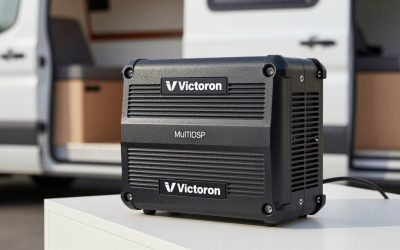
- Best for smart alternators / precision: Victron Orion XS 1400 — configurable output (technically 50A, derates cleanly to 40A), best-in-class efficiency, tiny idle draw
- Best mid-range: Renogy 40A DC-DC — decent lithium profile, Bluetooth monitoring, roughly half the Redarc price
- Best for high-heat or commercial use: Sterling Power BB1240 — 40A battery-to-battery design with aggressive charge curves
- Best budget: LiTime / Power Queen-style 40A units — work fine on flooded/AGM-to-lithium setups if you accept higher idle draw
What Actually Separates a Good 12V 40A DC-DC Battery Charger
See also: How Long Will a 100Ah Battery Last in a Van? Runtime Math Explained • Best Level 2 EV Chargers for Home
A 40 amp DC to DC charger lives or dies on three numbers that product listings bury or omit entirely:

LiTime 12V 40A Lithium Battery Charger, 14.6V Output, DC-DC, M8 Terminal | For 12.8V LiFePO4 Batteries, Smart 3-Stage Charging with Multi Safety Protection for RV, Camper, Trailer, Solar System & Home
Included for 'The 5 Best 40 Amp DC-DC Chargers of 2026, Ranked' because the listing specifies 14.6V Output and DC-DC, details this guide uses to compare options.
View on Amazon
Renogy 40A DC-DC Battery Charger 12V Multi-Stage for Lithium/AGM/Gel | 94% efficiency,alternator powered, Smart 3-stage,Li activation, over/short/thermal protection, smart alternator ready for RVs
Included for 'The 5 Best 40 Amp DC-DC Chargers of 2026, Ranked' because the listing specifies 94% efficiency and alternator powered, details this guide uses to compare options.
View on Amazon
LiTime 12V 40A DC-DC Lithium Battery Charger, 14.6V Output, M8 Terminal
Included for 'The 5 Best 40 Amp DC-DC Chargers of 2026, Ranked' because the listing specifies 14.6V Output and M8 Terminal, details this guide uses to compare options.
View on Amazon
Victron Energy Orion XS Smart (Bluetooth) DC-DC Charger 12/12V 50A 700W | Fully Configurable - Battery Charger for Dual Battery Systems - IP65 Dust & Waterproof
Included for 'The 5 Best 40 Amp DC-DC Chargers of 2026, Ranked' because the listing specifies Fully Configurable and Battery Charger for Dual Battery Systems, details this guide uses to compare options.
View on Amazon
REDARC Dual Input 40A in-Vehicle DC to DC Battery Charger with MPPT Solar Regulator, Green Power Priority, 12V/24V Compatible, for Lithium, AGM, Gel, Lead Acid, Calcium, LiFePO4 Batteries
Included for 'The 5 Best 40 Amp DC-DC Chargers of 2026, Ranked' because the listing specifies Green Power Priority and 12V/24V Compatible, details this guide uses to compare options.
View on Amazon
REDARC Dual Input 50A in-Vehicle DC to DC Battery Charger with MPPT Solar Regulator, Green Power Priority, 12V/24V Compatible, for Lithium, AGM, Gel, Lead Acid, Calcium, LiFePO4 Batteries
Included for 'The 5 Best 40 Amp DC-DC Chargers of 2026, Ranked' because the listing specifies Green Power Priority and 12V/24V Compatible, details this guide uses to compare options.
View on Amazon
Victron Energy Orion XS 1400 12/24V 50A DC-DC Charger | 1400W Output, 98.5% Efficiency, Bluetooth Monitoring, Adaptive 4-Stage Charging, IP65 Rated for Dual Battery Systems
Included for 'The 5 Best 40 Amp DC-DC Chargers of 2026, Ranked' because the listing specifies 1400W Output and 98.5% Efficiency, details this guide uses to compare options.
View on Amazon- Actual output at low input voltage. Modern smart alternators can sag to 12.0–12.4V. Some chargers deliver their rated 40A only at 13.6V+ input and fall off a cliff below that — a unit claiming 40A might give you 25A on a Euro 6 vehicle. The Redarc and Victron units hold rated output down to about 9–10V input; several budget units effectively halve their output below 12.5V.
- Efficiency. 92–94% efficient (Victron, Redarc) vs ~85% (cheap units) means roughly 40–60W of extra heat dumped into your electrical bay on every charge cycle. That matters in a sealed under-seat compartment.
- Idle draw. When the engine is off, the charger’s standby current parasitically drains your starter or house battery. Good units sit under 10–15mA; some budget chargers pull 50–150mA, which adds up to 1–3.6Ah per day — enough to flatten a battery over a winter of storage.
The Rankings
1. Redarc BCDC1240D — Best Overall
The benchmark against which everything else is measured. Dual input (alternator + up to ~40V solar with MPPT), a fully sealed, fanless housing rated for engine-bay mounting and water exposure, and a genuine 40A output that holds up at low input voltage. It works with smart alternators without needing an ignition trigger on most vehicles, though a trigger wire is supported. Lithium, AGM, gel, and flooded profiles are selectable by wire. Downsides: no Bluetooth (monitoring requires a separate Redarc gauge), the most expensive unit here, and the solar input shares capacity with alternator charging rather than stacking.
2. Victron Orion XS 1400 — Best for Smart Alternators and Monitoring
Not a native 40A unit — it’s a 50A charger, but output is fully configurable, so running it at 40A gives you headroom, cooler operation, and the highest measured efficiency in class (~98.5% peak per Victron’s published figures). Idle draw is exceptional (~1.5mA standby), it auto-detects engine run via voltage, and Victron’s app gives you real-time input/output amps, charge state, and full configuration. The catch: it’s strictly DC-DC (no solar input), IP65 but less rugged for engine-bay heat than the Redarc, and Bluetooth-only setup means no physical profile switches. If your rig runs a separate MPPT for solar anyway, this is arguably the better buy.
3. Renogy 40A DC-DC Battery Charger — Best Mid-Range
Hits the sweet spot for self-builders: selectable lithium/AGM/flooded profiles, Bluetooth via the Renogy app, an ignition-sensing wire for smart alternators, and roughly half the cost of the Redarc. Real-world output at low input voltage is less consistent than the top two — expect around 30–35A when alternator voltage drops below ~12.5V on some vehicles. Idle draw is moderate. The housing runs warm in enclosed spaces; give it airflow. For a weekend van with a 200Ah lithium bank, it’s the rational choice.
4. Sterling Power BB1240 — Best for Aggressive Charging
Sterling’s battery-to-battery design boosts alternator voltage actively rather than just passing it through, so it can bulk-charge faster on older vehicles with lazy alternators. Manual profile selection, rugged build, popular in expedition and commercial fleets. No Bluetooth, the interface is dated, and it’s physically the biggest unit here — check your mounting space.
5. Budget 40A Units (LiTime, Power Queen and similar) — Best on a Strict Budget
Generic 40A DC-DC chargers in the low-$100 range do work, and for a simple lead-acid-starter-to-lithium setup they’re hard to argue with on price. The trade-offs are real though: idle draw of 50–150mA, efficiency around 85%, no-name thermal management (most throttle output hard above ~45°C ambient), and charge profiles that run hot for lithium — often a fixed ~14.6V absorption with no float, which most LiFePO4 BMSs tolerate but battery manufacturers don’t recommend long-term. If you go this route, add a low-voltage disconnect or ignition-controlled relay on the input so the idle draw doesn’t kill your starter battery.
Spec Comparison
| Charger | Rated Output | Solar Input | Standby Draw | Lithium Profile | Monitoring | Typical Price Range |
|---|---|---|---|---|---|---|
| Redarc BCDC1240D | 40A (holds to ~9V input) | Yes, MPPT to ~40V | <100mA | Yes | Optional gauge | $450–550 |
| Victron Orion XS 1400 | 50A, configurable to 40A | No | ~1.5mA | Yes, fully custom | Bluetooth app | $300–360 |
| Renogy 40A | 40A (drops at low input V) | No (DCC50S variant adds it at 50A) | ~30–50mA | Yes | Bluetooth app | $200–280 |
| Sterling BB1240 | 40A | No | Low (needs ignition wire) | Yes | LED indicators | $350–450 |
| Budget 40A units | 40A claimed (25–35A typical at 12.4V input) | Usually no | 50–150mA | Fixed ~14.6V | None or basic display | $100–160 |
Sizing Check: Is 40A Right for Your Bank?
Match the charger to your alternator and battery, not your aspirations:
- Alternator headroom: A 40A DC-DC draw plus vehicle loads means you’re asking the alternator for roughly 50–55A continuously. Most 150A+ alternators handle this fine; on smaller vans with ~120A alternators, 30A charging is the safer ceiling.
- Charge rate vs battery: LiFePO4 banks accept 0.2–0.5C comfortably. A 40A charger is a sensible match for a 100–300Ah bank. Under 100Ah, 40A is aggressive; over 400Ah, consider stepping up to a 50–60A unit.
- Worked example — drive-time recovery: A 200Ah lithium bank at 40A input gains ~40Ah per driving hour (minus a few percent efficiency loss). Two hours of driving replaces roughly 80Ah — about a day’s consumption for a fridge-plus-lights van. The same drive on a charger delivering only 30A gives you 60Ah, which is where cheap units quietly let you down.
- Wiring: 40A charging needs 6 AWG (minimum 8 AWG on short runs) with a 60A fuse/breaker at each battery. Undersized cable is the #1 cause of “my 40A charger only outputs 28A” complaints — voltage drop on the input line does exactly what a saggy alternator does.
Ownership Realities
- Heat kills first. Every unit here throttles output when hot; budget units throttle earliest. Mount with airflow, never against carpet or insulation.
- Ignition trigger vs voltage sensing: Voltage-sensing start is convenient but can “stick on” with some smart alternators, draining the starter battery overnight. If your charger offers a D+ or ignition wire, use it.
- Starter battery drain: Pair any high-idle-draw unit with an ignition-controlled input, especially if the van sits for weeks.
- Lithium charging while driving in cold: LiFePO4 can’t charge below 0°C. Neither the charger nor most setups handle this automatically — that job belongs to your battery’s BMS or a battery with low-temp cut-off, not the charger.
FAQ
Can a 40 amp DC to DC charger run alongside solar?
Yes. Most setups run a separate MPPT for solar and a DC-DC for alternator charging — they coexist fine since both just push current into the bank. The Redarc combines both in one box, but a Victron Orion XS plus a standalone MPPT gives you independent control and often better total solar capacity.
Do I need a DC-DC charger if my alternator is “smart”?
Especially then. Smart alternators drop voltage deliberately to save fuel, so a simple isolator or VSR will barely charge a house battery. A DC-DC charger boosts and regulates the voltage to actually fill the battery.
Is 40A too much for a single lithium battery?
For a single 100Ah LiFePO4, 40A is at the upper end of comfortable (0.4C). It works but generates more BMS heat; a 20–30A unit is a gentler match unless fast recovery matters to you.
Bottom Line
Buy the Redarc BCDC1240D if you want one box that handles alternator and solar and survives anything. Buy the Victron Orion XS 1400 derated to 40A if you want the highest efficiency and proper app monitoring and already have (or plan) separate solar. Buy the Renogy if the budget is real but you still want lithium profiles and Bluetooth. Skip the sub-$150 units unless your van sits on a trickle of short drives and you’ll wire an ignition cut-off — the idle draw alone can cost you a starter battery.