Last updated: October 22, 2026
A nominal 12 V, 100Ah battery holds about 1,200 watt-hours (Wh) on paper, but the energy you can actually use is lower: roughly 1,000 to 1,200 Wh from a lithium iron phosphate (LiFePO4) battery and about 600 Wh from an AGM or other lead-acid type. In a van, that usually means somewhere between half a day and a day and a bit of modest use, such as a compressor fridge, lights, a fan and device charging. Below is the arithmetic, a worked example with every assumption stated, and the factors that shorten runtime in real vans.
- Start with watt-hours, not amp-hours
- How much of the 100Ah is usable?
- Runtime at common van loads
- Worked example: one ordinary van day
- What shortens runtime in real vans
- Ways to stretch 100Ah
- Refilling the battery between days
- When 100Ah is not enough, and when to call a pro
- Related guides
- Frequently asked questions
Start with watt-hours, not amp-hours
Amp-hours describe charge, not energy. To compare a battery with appliances rated in watts, multiply amp-hours by the battery voltage: 12 V × 100Ah = 1,200 Wh. Many lithium batteries are labeled 12.8 V because of their cell chemistry, which gives 1,280 Wh, so read the label or datasheet rather than assuming.
Runtime is then a division: usable watt-hours divided by the load in watts gives hours. A steady 50 W load drawing on 1,000 usable Wh lasts about 20 hours. The only tricky part is deciding how much of the 1,200 Wh you may safely use, and that depends mostly on battery chemistry.
How much of the 100Ah is usable?
See also: Best Level 2 EV Chargers for Home • Best Portable Inverter Generators for Van & Home
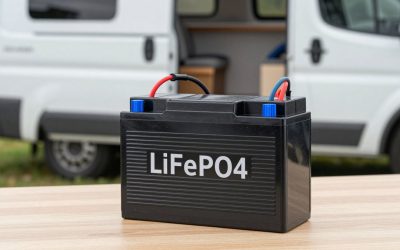
Lead-acid and AGM batteries are commonly advised to be discharged only to around 50 percent to protect their lifespan, which leaves about 50Ah, or 600 Wh. LiFePO4 batteries are generally built for much deeper discharge, and many manufacturers permit 80 to 100 percent use. Planning around 90 percent, about 1,080 Wh, is a reasonable middle ground. Always follow the limits in your own battery’s documentation.
Lithium batteries also include a battery management system (BMS) that switches output off at low voltage, so a lithium battery tends to run normally and then stop, while lead-acid voltage sags gradually. That difference is why a battery monitor is more useful with lithium than a plain voltmeter.
Runtime at common van loads
The table divides usable energy by each load. It assumes 1,080 Wh usable from lithium and 600 Wh from AGM, and for the two AC rows it divides again by 0.85 because inverters lose energy as heat. Treat the draws as typical ballpark figures, not measurements of any specific product.
| Load | Assumed draw | Lithium (1,080 Wh) | AGM (600 Wh) |
|---|---|---|---|
| LED lighting | 10 W | about 108 hours | about 60 hours |
| 12 V compressor fridge, daily average | 25 W | about 43 hours | 24 hours |
| Laptop charging | 60 W | 18 hours | 10 hours |
| Small blender via inverter | 300 W | about 3 hours | about 1.7 hours |
| Microwave via inverter | 1,000 W | about 55 minutes | about 30 minutes |
A fridge only draws power while its compressor runs, so the 25 W figure is an assumed daily average. Real numbers move with outside temperature, thermostat setting and how often the lid opens. Also note that a 1,000 W AC load pulls roughly 90 A at 12 V, which can sit near a battery’s continuous discharge limit, so check that rating before running heavy appliances.
Worked example: one ordinary van day
Here is a day built from stated assumptions. Swap in your own devices and hours to get your own number.
| Device | Assumption | Daily energy |
|---|---|---|
| LED lights | 10 W for 4 hours | 40 Wh |
| Compressor fridge | 25 W average, 24 hours | 600 Wh |
| Laptop on a 12 V adapter | 60 W for 3 hours | 180 Wh |
| Two phones | about 15 Wh each | 30 Wh |
| Ventilation fan | 10 W for 6 hours | 60 Wh |
| Total | 910 Wh |
With 1,080 usable Wh, lithium covers 1,080 ÷ 910 ≈ 1.19 days, or about 28 hours. AGM at 600 usable Wh covers 600 ÷ 910 ≈ 0.66 days, about 16 hours, so it would be flat before the next morning. The fridge accounts for about two thirds of the total, which is why trimming that one load matters more than swapping bulbs.
What shortens runtime in real vans
- Inverter losses: running AC appliances costs an extra 10 to 20 percent or so, and an idle inverter can draw a few watts all day.
- Cold weather: lead-acid batteries deliver less capacity when cold, and most LiFePO4 batteries should not be charged below freezing unless they have low-temperature protection or heating. Check the manual.
- Age: every battery loses capacity over its life, so an older 100Ah battery may offer noticeably less.
- High-current draw: lead-acid batteries deliver less total energy when discharged quickly, an effect sometimes called Peukert loss.
- Standby loads: monitors, stereos, USB sockets and chargers left plugged in quietly add up.
- Undersized wiring: thin cable wastes energy as heat and drops voltage at the appliance.
Ways to stretch 100Ah
Start with the biggest consumer. For a fridge, that means shade, a well-ventilated cabinet, pre-chilled food and a sensible thermostat setting. Next, power devices directly from 12 V or USB-C where possible instead of through an inverter, and switch the inverter off when idle. Cooking with propane rather than an electric appliance removes the largest short bursts of demand entirely.
Small habits help too. Charge laptops and tools while driving or while the sun is strong rather than from the battery after dark, close the fridge lid quickly, and avoid leaving fans running in an empty van. None of these changes is dramatic alone, but trimming 100 to 150 Wh from a 910 Wh day extends lithium runtime by several hours.
Finally, measure instead of guessing. A shunt-based monitor shows real consumption in amps, and after a few days you can replace every assumption in the table above with your own figures.
Refilling the battery between days
Runtime only matters alongside recharging. A rough solar estimate is panel watts × peak sun hours × about 0.75 for system losses, so 200 W under 4 sun hours gives roughly 600 Wh per day. Driving can add more, and the two sources complement each other because solar works while parked and the alternator works on cloudy days: a 30 A DC-DC charger moves at most about 30Ah per hour into the battery, and real rates are often lower. For the wiring side, see our guide to wiring a DC-DC charger in a van.
When 100Ah is not enough, and when to call a pro
Air conditioning, induction cooktops, electric kettles and long remote-work days usually push daily use well past 1,000 Wh, which points toward a bigger bank. If you are planning the whole electrical system as part of a larger build, a broader resource such as the Ram ProMaster van conversion guide helps place the battery in context.
Battery wiring carries enough current to start fires. Fuse the positive cable close to the battery, keep a disconnect switch within reach, size cable and fuses to the manufacturer’s specifications, and have a qualified installer check the work if you are unsure.
Related guides
- How Many Watts Of Solar Do You Need For Van Life
- Maxxfan Deluxe Vs Fantastic Fan For Vans
- Van Awning For Campers
Frequently asked questions
Can a 100Ah battery run a van fridge overnight?
Usually yes. A 12 V compressor fridge often averages somewhere around 20 to 40 W over a day, depending on ambient temperature and how often it is opened. Over a 10-hour night that is roughly 200 to 400 Wh, well within what a 100Ah lithium or AGM battery can supply. Check the fridge’s rated draw and your battery’s usable capacity, and keep other loads in mind.
Does a 100Ah lithium battery last longer than a 100Ah AGM battery?
Per charge, generally yes, because lithium iron phosphate batteries can typically be discharged much deeper. A 100Ah AGM battery is commonly limited to about 50 percent use, roughly 600 Wh, while lithium may allow 80 to 100 percent, roughly 1,000 to 1,200 Wh. Both are nominally 100Ah, so the label alone does not tell you how long they will run.
How long will a 100Ah battery run a 1,000 W inverter load?
Not long. With about 1,080 usable Wh from a lithium battery and roughly 85 percent inverter efficiency, a steady 1,000 W load lasts around 55 minutes. An AGM battery used to 50 percent gives around half an hour. Loads that large also draw close to 90 A or more at 12 V, so check the battery’s maximum continuous discharge rating and the cable and fuse sizes.
Is 100Ah enough for weekend van trips?
It can be, if your loads are modest and you can recharge. A fridge, lights, fan and device charging can total roughly 900 Wh a day, which a 100Ah lithium battery covers for about a day. Over a weekend you would need driving charge, solar, or a second battery. Add up your own daily watt-hours before deciding.
How can you tell how much battery is left?
A shunt-based battery monitor is the most dependable method because it counts amps in and out and reports a percentage. Voltage alone is a rough guide for lead-acid batteries and a poor one for lithium, since lithium voltage stays nearly flat through most of the discharge. Follow the monitor manufacturer’s instructions for calibration and shunt placement.