- Top Pick: Anker SOLIX C1000 Gen 2 Portable Power Station
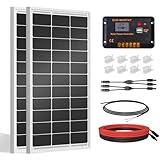
- Best Value: SOLPERK Solar Panel Kit 20W 12V Solar Battery Charger Maintainer+Controller
- Premium Choice: Grecell Portable Power Station 500W(Peak 1000W) 519Wh Outdoor Solar Generator Backup Battery Pack with 2 110V AC Outlets,10-Port Powerhouse for RV/Van Camping Fishing Climbing Road Trip Home Emergency
Last updated: September 18, 2026
The Short Answer
For most van travelers, 100Ah to 200Ah of LiFePO4 battery capacity at 12V is the practical starting range. That equals roughly 1,280Wh to 2,560Wh of stored energy before allowing for system losses. A 100Ah battery can cover basic lighting, phone charging, a water pump, and occasional laptop use. A 200Ah setup is more comfortable for daily laptop work, a 12V compressor refrigerator, fans, and regular device charging.
If you use high-draw appliances such as an electric kettle, induction cooktop, hair dryer, portable air conditioner, or microwave, capacity requirements rise quickly. Many full-time van setups need 300Ah to 400Ah of LiFePO4 (3,840Wh to 5,120Wh) plus enough solar input and alternator charging to replenish it.
As an Amazon Associate we earn from qualifying purchases at no extra cost to you. Product prices and availability are accurate as of the date shown and are subject to change.



A simple sizing formula is:
Daily watt-hours used × days between charging ÷ 0.9 = minimum usable battery watt-hours needed.
For example, if your daily use is 1,200Wh and you want two days of reserve, plan for about 2,670Wh of battery capacity. That points to a 12V 200Ah LiFePO4 bank (about 2,560Wh) at minimum, or a 300Ah bank for a more forgiving margin.
Standard Sizes
See also: How to Clean Solar Panels on Van (2026): Step-by-Step • How to Set Up Van Solar Panels (2026): Step-by-Step
Battery capacity and physical dimensions both matter in a van. A battery that fits electrically may not fit under a bed platform, inside a seat base, or in a cabinet. LiFePO4 batteries are usually lighter and provide more usable capacity than lead-acid batteries, making them the better choice for most solar-equipped vans.
| Typical Battery Size | Nominal Energy | Typical LiFePO4 Dimensions | Typical Weight | Best Fit |
|---|---|---|---|---|
| 12V 50Ah | 640Wh | 9.0–10.5 × 6.5–7.0 × 6.5–8.0 in 22.9–26.7 × 16.5–17.8 × 16.5–20.3 cm | 11–15 lb 5.0–6.8 kg | Weekend trips, lights, phones, small electronics |
| 12V 100Ah | 1,280Wh | 12.8–13.0 × 6.8–6.9 × 8.4–8.8 in 32.5–33.0 × 17.3–17.5 × 21.3–22.4 cm | 22–28 lb 10.0–12.7 kg | Basic overnight or weekend van power |
| 12V 200Ah | 2,560Wh | 20.5–21.0 × 8.5–8.7 × 8.5–9.0 in 52.1–53.3 × 21.6–22.1 × 21.6–22.9 cm | 45–55 lb 20.4–24.9 kg | Refrigerator, fans, work devices, moderate inverter use |
| 12V 300Ah | 3,840Wh | 20.5–21.0 × 8.5–9.0 × 10.5–11.0 in 52.1–53.3 × 21.6–22.9 × 26.7–27.9 cm | 65–80 lb 29.5–36.3 kg | Full-time travel and heavier daily electrical use |
| 12V 400Ah | 5,120Wh | 20.5–22.0 × 10.5–12.0 × 10.5–11.5 in 52.1–55.9 × 26.7–30.5 × 26.7–29.2 cm | 85–105 lb 38.6–47.6 kg | High-use builds, induction cooking, larger inverter loads |
Portable power stations are another option for renters, occasional campers, and people who do not want to install a permanent electrical system. A 500Wh unit, such as the Grecell 519Wh portable power station, is typically suitable for small electronics and short trips; its listed price is around $200. A roughly 1,000Wh unit, such as the Anker SOLIX C1000 Gen 2 at about $500, offers more flexibility for laptops, small appliances, and backup power. Check the exact product listing for current dimensions and input limits before building storage around one.
How to Measure Your Space
- Choose the installation zone first. Common locations include under the bed, inside a bench seat, beneath a passenger seat, in a rear utility cabinet, or near the vehicle’s electrical components. Keep batteries inside the insulated living area when possible, especially in cold climates.
- Measure width, depth, and height. Use a tape measure and record the interior dimensions at the narrowest points, not just the opening. Van walls, wheel wells, framing, hinges, and door swings can reduce usable room.
- Add clearance around the battery. Leave at least 1 inch (2.5 cm) around the battery for cables, terminal covers, mounting straps, and removal. Larger inverter and charger components need their own ventilation clearances according to their manuals.
- Account for cable bend radius. Heavy battery cables do not make sharp turns easily. Allow 3 to 5 inches (7.6 to 12.7 cm) above or beside terminals, particularly when using 2 AWG or 4 AWG cable for an inverter.
- Confirm floor strength and mounting points. A 200Ah battery may weigh 50 pounds (22.7 kg), while a larger bank can exceed 100 pounds (45.4 kg). Secure it with a battery tray, brackets, or straps attached to solid structure.
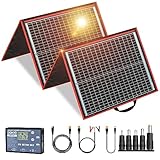
- Measure solar panel storage separately. A foldable 150W panel such as the DOKIO kit is useful when parked, but it still needs protected storage while driving. Its price is commonly around $95. A compact 20W maintainer kit, often about $35, is appropriate for maintaining a starter battery but is far too small to recharge a daily-use house battery bank.
By Room or Use Case
Weekend Camping Van
A 50Ah to 100Ah LiFePO4 battery is usually enough for one- to three-night trips when power use is limited. Expect it to handle LED lights, phone charging, a small fan, a water pump, and one laptop. Pair a 100Ah battery with roughly 100W to 200W of solar if you want to extend stays in sunny weather. Skip electric heating and electric cooking unless you have a much larger system.
Van With a 12V Refrigerator
A compressor refrigerator is often the deciding factor in battery sizing. Many 12V units use roughly 300Wh to 700Wh per day, depending on size, ambient temperature, insulation, thermostat settings, and how often the door is opened. For a refrigerator plus lights, fans, and device charging, choose 200Ah of LiFePO4 and at least 300W of roof solar where roof space permits.
Remote Work and Daily Laptop Use
For remote work, a 200Ah battery offers a solid baseline. Two laptops, a cellular router, charging bricks, lighting, and fans can easily consume 700Wh to 1,500Wh in a workday. If you also run an external monitor or use a 120V inverter regularly, 300Ah provides more reserve. Include a DC-to-DC alternator charger so driving can restore energy when solar conditions are poor.
Cooking With Electricity
Induction cooktops, electric kettles, toaster ovens, and microwaves draw large amounts of power. A 1,500W induction burner used for 20 minutes consumes about 500Wh, plus inverter losses. For regular electric cooking, plan on 300Ah to 400Ah of LiFePO4, a 2,000W to 3,000W pure sine wave inverter, and typically 400W or more of solar. Propane cooking requires far less battery capacity.
Portable, No-Install Setup
A portable power station works well when you need a removable system. Around 500Wh is best for light duty, while 1,000Wh to 1,500Wh is more realistic for laptop-heavy weekends and occasional appliance use. Verify solar charging input: a large panel may be limited by the power station’s maximum solar wattage. Portable systems are convenient, but their fixed battery size can be restrictive for full-time van living.
Common Sizing Mistakes
- Counting amp-hours without converting to watt-hours. A 100Ah battery at 12.8V stores about 1,280Wh, while 100Ah at 24V stores about 2,560Wh. Voltage matters.
- Assuming every watt-hour is usable. LiFePO4 batteries offer high usable capacity, but plan for inverter and charging losses. Avoid routinely taking any battery system to absolute empty.
- Oversizing solar while undersizing battery. Solar production peaks during limited daytime hours. Without sufficient storage, surplus power is wasted and nighttime capacity remains inadequate.
- Ignoring weather and shade. Roof vents, awnings, trees, snow, and winter sun angles can sharply reduce panel output. Solar should supplement a balanced system, not be the only charging plan.
- Forgetting cold-weather charging limits. Many LiFePO4 batteries should not be charged below 32°F (0°C) unless they have low-temperature protection or internal heating.
- Buying a battery that cannot supply inverter current. Check the battery management system’s continuous discharge rating. A 2,000W inverter can demand roughly 170A or more from a 12V battery.
FAQ
Is 100Ah enough for van solar?
Yes, for basic weekend use. A 100Ah LiFePO4 battery is a sensible minimum for lights, charging, a small fan, and modest laptop use. It is usually not enough for several days of refrigerator use, electric cooking, or full-time remote work without frequent recharging.
How many solar panels do I need for a 200Ah battery?
For a 12V 200Ah LiFePO4 battery, 300W to 400W of solar is a common match. The battery can store about 2,560Wh, while 400W of panels may produce roughly 1,200Wh to 2,000Wh on a favorable day depending on location, season, panel angle, and shading.
Can I run a refrigerator from a portable power station?
Yes, but runtime depends on the station’s watt-hour capacity and the refrigerator’s actual daily consumption. A 519Wh station may operate a small efficient refrigerator for part of a day or overnight, while a roughly 1,000Wh station provides a more practical buffer. Solar input or vehicle charging is important for multi-day trips.
Should I choose LiFePO4 or AGM for a van?
LiFePO4 is generally the stronger choice for a 2026 van build because it is lighter, offers more usable capacity, and typically lasts through more charging cycles than AGM. AGM can cost less upfront and may suit simple low-budget builds, but it is much heavier for the usable energy provided.
Ready to decide? Our #1 pick for 2026 is the 12V 50Ah.
Live price & availability on Amazon.