Last updated: October 17, 2026
Wiring two 12V batteries in parallel means connecting positive to positive and negative to negative — the voltage stays at 12V while the amp-hour capacity doubles. Done correctly, it takes about 20 minutes and requires two appropriately sized cables and a bit of attention to where the load wires land on the bank.
- What parallel wiring actually does
- Before you start: matching the batteries
- Cable gauge: getting this right matters more than you think
- Wiring diagram: two 12V batteries in parallel
- The diagonal-connection trick (and why it works)
- Step-by-step: wiring two 12V batteries in parallel
- Common mistakes that shorten battery life
- What a parallel bank changes — and what it doesn’t
- FAQ
What parallel wiring actually does
Connecting two 12V batteries in parallel is the standard way to expand a van’s house battery bank without changing system voltage. A pair of 100Ah batteries becomes a single 200Ah bank at 12V. Your inverter, solar charge controller, lights, and fridge all see exactly what they saw before — just with twice the runtime.

Connect-Ease 12V Parallel Battery Connection Kit, Dual Battery | Two 12V batteries in parallel, both charge together. Correct topology for parallel-only lithium batteries.
Included for 'How to Wire Two 12V Batteries in Parallel (Step-by-Step Diagram)' because the listing specifies Dual Battery and Two 12V batteries in parallel, details this guide uses to compare options.
View on Amazon
Connect-Ease Double Time 24V Parallel Trolling Motor Wiring Kit
Included for 'How to Wire Two 12V Batteries in Parallel (Step-by-Step Diagram)' as a relevant option in this category; details come from the product listing.
View on Amazon
Connect-Ease Easy 12V Parallel Battery Connector, Dual Battery | Two 12V batteries in parallel, both charge together. Correct topology for parallel-only lithium batteries.
Included for 'How to Wire Two 12V Batteries in Parallel (Step-by-Step Diagram)' because the listing specifies Dual Battery and Two 12V batteries in parallel, details this guide uses to compare options.
View on Amazon
Connect-Ease 3-Battery 12V Parallel Kit with Solar Panel Leads | 18-inch leads connect straight to an external solar panel. Lithium, AGM or any 12V chemistry. RV and off-grid.
Included for 'How to Wire Two 12V Batteries in Parallel (Step-by-Step Diagram)' because the listing specifies AGM or any 12V chemistry. RV and off-grid., details this guide uses to compare options.
View on Amazon
Shirbly 2 Gauge Battery Cable, 10FT Red + 10FT Black 2 AWG Pure Copper Wire Welding Cable, for Automotive, Battery, Solar and Generator, Standard USA OFC Wire
Included for 'How to Wire Two 12V Batteries in Parallel (Step-by-Step Diagram)' because the listing specifies 10FT Red + 10FT Black 2 AWG Pure Copper Wire Welding Cable and for Automotive, details this guide uses to compare options.
View on Amazon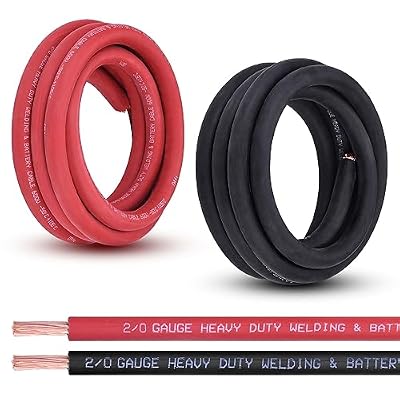
Shirbly 2/0 Gauge Battery Cable, 10FT Red + 10FT Black 2/0 AWG Pure Copper Wire Welding Cable, for Automotive, Battery, Solar and Generator, Standard USA OFC Wire
Included for 'How to Wire Two 12V Batteries in Parallel (Step-by-Step Diagram)' because the listing specifies 10FT Red + 10FT Black 2/0 AWG Pure Copper Wire Welding Cable and for Automotive, details this guide uses to compare options.
View on Amazon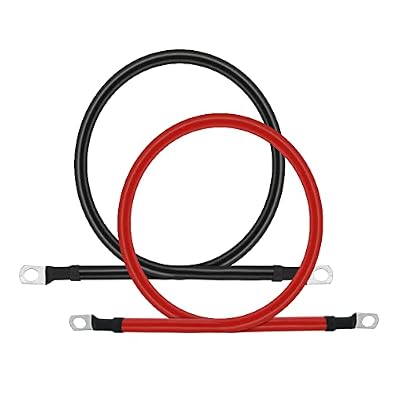
A ABIGAIL 2 AWG Battery Cable 2AWG Gauge Pure Copper Battery Inverter Cables with 3/8 in Lugs Both Ends Power Inverter Wire Set for Automotive Solar Marine Boat RV Car Motorcycle Red and Black (2FT)
Included for 'How to Wire Two 12V Batteries in Parallel (Step-by-Step Diagram)' as a relevant option in this category; details come from the product listing.
View on Amazon
RVBOATPAT 12V 250A Marine Bus Bar 48V DC 300V AC Power Distribution Block 6 x 5/16"(M8) Stud Battery Bus Bar for Car Boat Solar
Included for 'How to Wire Two 12V Batteries in Parallel (Step-by-Step Diagram)' as a relevant option in this category; details come from the product listing.
View on Amazon
Bus Bar 12V Power Distribution Block, 250A Terminal Block, 4 x 3/8" Studs
Included for 'How to Wire Two 12V Batteries in Parallel (Step-by-Step Diagram)' because the listing specifies 250A Terminal Block and 4 x 3/8" Studs, details this guide uses to compare options.
View on AmazonThis is different from wiring in series, which doubles voltage (24V) while keeping capacity the same. If your entire van electrical system is built around 12V — which almost all are — parallel is the only option that works.
Before you start: matching the batteries
See also: How Long Will a 100Ah Battery Last in a Van? Runtime Math Explained • Best Level 2 EV Chargers for Home
Running two 12V batteries in parallel only works well if the batteries are compatible. Mismatched batteries fight each other: the stronger one constantly charges the weaker one, generating heat and shortening the life of both.
- Same voltage: Non-negotiable. Both must be 12V nominal.
- Same chemistry: Don’t mix lithium (LiFePO4) with AGM or flooded lead-acid. Their charge profiles and resting voltages differ enough to cause real problems.
- Same age and model: Ideally buy both batteries at once. If you’re adding a second battery to an existing one, the older battery’s reduced capacity will drag the new one down to its level.
- Same state of charge: Fully charge both batteries separately before connecting them. Connecting a full battery to a half-empty one causes a large current spike as they equalize.
- For lithium specifically: Check the BMS specs. Some budget LiFePO4 batteries limit how many units can be paralleled (often 4). Brands like LiTime, Redodo, and Battle Born publish their parallel limits.
Cable gauge: getting this right matters more than you think
The interconnect cables between the two batteries carry the full current of your largest load, so undersizing them is both a performance problem and a fire risk. Size the cables for your maximum continuous draw — usually your inverter — and keep the run as short as possible.
| Max continuous current | Typical load | Cable gauge (runs under 3 ft) | Cable gauge (3–6 ft) |
|---|---|---|---|
| Under 50A | Fridge, lights, USB, fans | 6 AWG | 4 AWG |
| 50–100A | Small inverter (under 1,000W) | 4 AWG | 2 AWG |
| 100–150A | 1,000–1,500W inverter | 2 AWG | 1/0 AWG |
| 150–200A | 2,000W inverter | 1/0 AWG | 2/0 AWG |
| 200A+ | 3,000W inverter | 2/0 AWG | 4/0 AWG |
Use proper tinned-copper battery cable with crimped and heat-shrunk lugs — not welding cable with clamped ends, and definitely not jumper cables. The two interconnect cables should be identical in length and gauge so resistance through each path is equal.
Wiring diagram: two 12V batteries in parallel
Here’s the correct layout, including the diagonal connection covered below:
| Connection | From | To | Notes |
|---|---|---|---|
| Interconnect 1 (positive) | Battery 1 positive terminal | Battery 2 positive terminal | Same length and gauge as interconnect 2 |
| Interconnect 2 (negative) | Battery 1 negative terminal | Battery 2 negative terminal | Fuse not required here, but keep the run short |
| Main positive to loads | Battery 1 positive terminal | Main fuse → busbar/distribution | Fuse within 7 inches of the terminal, sized to the cable |
| Main negative to loads | Battery 2 negative terminal | Negative busbar/shunt | This opposite-corner takeoff is the diagonal trick |
In plain terms: the batteries are linked positive-to-positive and negative-to-negative, but the wires going out to your van’s electrical system leave from opposite corners of the bank — positive off Battery 1, negative off Battery 2.
The diagonal-connection trick (and why it works)
The most common mistake when wiring a 12V battery bank in parallel is taking both the positive and negative load connections off the same battery. It works — but it doesn’t work evenly.
Here’s why. If both load cables leave from Battery 1, current from Battery 2 has to travel through the interconnect cables plus their lugs and terminals to reach the load. That extra resistance — fractions of an ohm, but enough — means Battery 1 shoulders more of the load during discharge and absorbs more current during charging. Over hundreds of cycles, Battery 1 wears out faster, and the imbalance compounds.
The diagonal connection fixes this. By taking positive from one battery and negative from the other, the current path through either battery includes exactly one interconnect cable. Resistance is equal in both directions, so both batteries charge and discharge at the same rate and age together.
To verify it’s working, clamp a DC ammeter on each battery’s cable during a heavy load — readings should be within a few percent of each other.
Step-by-step: wiring two 12V batteries in parallel
- 1. Charge both batteries fully, separately. Let them rest for an hour, then check they’re within about 0.1V of each other.
- 2. Disconnect all loads and chargers. Kill solar input, shore power chargers, and the DC distribution panel. Work with a dead system.
- 3. Position the batteries side by side. The closer they sit, the shorter the interconnects and the lower the resistance.
- 4. Connect the positive interconnect first. Positive terminal of Battery 1 to positive terminal of Battery 2.
- 5. Connect the negative interconnect. Negative to negative. Expect a tiny spark if there’s any residual voltage difference — this is normal, but it’s why step 1 matters.
- 6. Wire the main positive. Run your cable from Battery 1’s positive terminal through a main fuse or breaker (typically a Class T or ANL fuse for lithium banks, sized to the cable) to your positive busbar or inverter.
- 7. Wire the main negative — diagonally. Run it from Battery 2’s negative terminal to your negative busbar. Install your battery monitor shunt (like a Victron BMV-712 or SmartShunt) on this leg so it reads the whole bank.
- 8. Reconnect chargers and test. Confirm the bank reads 12.6–13.6V depending on chemistry, run a load, and check both batteries share current evenly.
Common mistakes that shorten battery life
- Both loads off one battery: The imbalance problem described above. It’s the single most common wiring error in DIY van builds.
- Unequal interconnect lengths: Different cable lengths mean different resistance, which recreates the imbalance even with a diagonal takeoff.
- Mixing old and new batteries: An old lead-acid battery with 70% of its original capacity effectively turns your new battery into a 70% battery too. Replace as a pair.
- Skipping the main fuse: A 200Ah bank can dump thousands of amps into a short. Fuse the positive cable near the terminal, always.
- Stacking multiple lugs on one terminal: Better to run everything through busbars than pile four ring terminals on a single post.
What a parallel bank changes — and what it doesn’t
Doubling capacity doesn’t double how long you can run everything carefree — it doubles available amp-hours. A worked example: a 12V compressor fridge drawing an average of 4A uses about 96Ah per day. A single 100Ah lithium battery (roughly 100Ah usable) barely covers one day; a 200Ah parallel bank covers two. For AGM, only about 50% of rated capacity is safely usable, so two 100Ah AGM batteries in parallel give you roughly the same usable energy as one 100Ah lithium.
It also doesn’t change charging voltage settings — your solar controller and DC-DC charger stay configured for 12V with the correct chemistry profile.
FAQ
Can I wire more than two 12V batteries in parallel?
Yes — three or four is common in larger builds. Apply the same diagonal takeoff principle: positive off the first battery, negative off the last. Beyond four in parallel, many lithium BMS manufacturers draw the line, and a 24V or 48V series system becomes the smarter architecture.
Do I need to fuse each battery?
Best practice is a fuse or breaker on each battery’s positive terminal (often MRBF fuses mounted directly on the post) plus a main fuse on the output cable. With only two batteries, a single appropriately sized main fuse is the minimum acceptable protection.
Is a battery isolator still needed?
A parallel house bank is separate from your starter battery — the isolator or DC-DC charger sits between the starter and the bank, unchanged. Paralleling your house batteries doesn’t affect it.