Last updated: September 7, 2026
Running dual air conditioners in an RV used to mean relying entirely on a loud generator or a heavy shore power hookup. Today, advances in photovoltaic efficiency and lithium storage make off-grid climate control entirely feasible, provided your high wattage solar setup is engineered correctly. Sizing a system capable of supporting two heavy inductive loads simultaneously requires looking past marketing hype and focusing on the hard electrical realities of running simultaneous compressors on the road.
Navigating the market in 2026 requires understanding how solar yields, inverter capacities, and battery banks interact under real-world conditions. Choosing the right components prevents system shutdowns, premature hardware degradation, and sweltering afternoons when clouds roll in. This guide breaks down what actually matters when designing or selecting a high-output solar architecture for a dual-AC rig.
As an Amazon Associate we earn from qualifying purchases at no extra cost to you.

- Total Wattage Requirements and Continuous Load Demands
- Voltage Architecture: 12V vs. 24V vs. 48V Systems
- Inverter Sizing and Surge Capacity for Dual Compressors
- Battery Bank Chemistry and Storage Capacity
- MPPT Charge Controller Configuration and String Sizing
- Roof Space Optimization and Aerodynamic Mounting
- Related Guides
- FAQ
- Related Guides
Total Wattage Requirements and Continuous Load Demands
Running a single RV air conditioner typically draws around 1,500 to 1,800 watts during startup and 1,200 to 1,500 watts continuously. Doubling that for a dual-AC setup means your system must handle peak surges exceeding 3,000 watts and continuous draws upwards of 2,500 watts. To offset this consumption while simultaneously recharging your battery bank, you generally need a high wattage solar array starting well above 2,000 watts. Real-world solar yields are rarely peak, factoring in atmospheric haze, angle tilt, and temperature coefficients, so over-paneling your roof space is standard practice.
Voltage Architecture: 12V vs. 24V vs. 48V Systems
See also: How Long Will a 100Ah Battery Last in a Van? Runtime Math Explained • Best Level 2 EV Chargers for Home
Trying to pull massive continuous amperage through a traditional 12-volt system will cause severe voltage drop and require hazardously thick copper cabling. For dual-air-conditioner setups, transitioning to a 24-volt or 48-volt DC architecture is non-negotiable. Higher system voltages drastically reduce the current flowing through your wires, which minimizes resistive heat loss, allows for thinner and more manageable wire gauges, and increases the overall efficiency of your high-amperage MPPT charge controllers.
Inverter Sizing and Surge Capacity for Dual Compressors
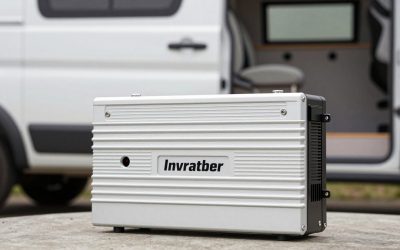
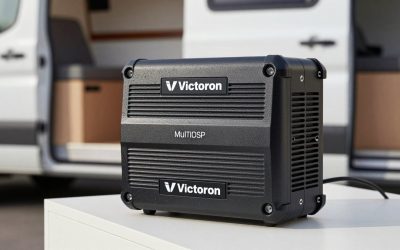
Your inverter is the literal bridge between your stored solar energy and your air conditioners. Because air conditioner compressors demand a massive surge of current the exact millisecond they kick on, your inverter must feature a high surge rating—often double its continuous power rating. If you plan to run both AC units at the same time, look for a pure sine wave inverter rated for at least 3,000 to 5,000 watts continuous, equipped with heavy-duty internal thermal management to prevent overheating during extended summer runtimes.
Battery Bank Chemistry and Storage Capacity
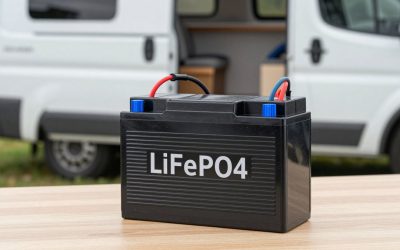
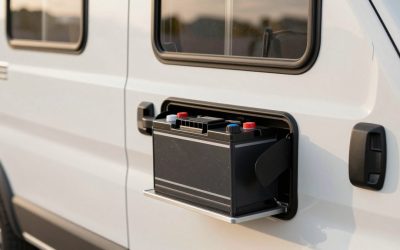
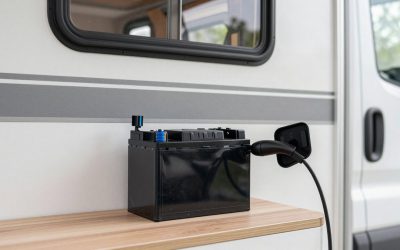
Solar panels only generate power during daylight, but you will likely want to run your air conditioners during hot afternoons or overnight. This means your battery bank needs to store enough usable energy to bridge the gap without running dry. Lithium Iron Phosphate chemistry is the only realistic option here due to its high discharge rate, deep depth of discharge, and thermal stability. Aim for a total storage capacity of at least 5 to 10 kilowatt-hours if you expect to run dual ACs off-grid for more than a couple of hours without direct sunshine.
MPPT Charge Controller Configuration and String Sizing
Maximizing a large high wattage array requires utilizing Maximum Power Point Tracking charge controllers rather than older Pulse Width Modulation models. Because you will likely be wiring multiple panels in series-parallel strings to manage high voltages, your charge controllers must be rated to handle the maximum open-circuit voltage and short-circuit current of your array. Splitting a massive roof array across dual charge controllers also provides redundancy, ensuring that a single controller failure doesn’t leave your entire rig without critical solar input.
Roof Space Optimization and Aerodynamic Mounting
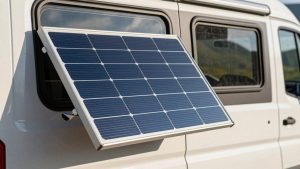
Fitting thousands of watts of solar panels onto an RV roof while leaving enough clearance for two bulky air conditioning units, vent fans, and cellular antennas is a geometric puzzle. Rigid panels offer higher efficiency per square foot, but flexible panels can sometimes squeeze into awkward curved spaces, provided they are mounted with proper air gaps to prevent destructive heat buildup underneath. Secure tilt mounts or heavy-duty mounting tape and bracket systems are essential to ensure your expensive array doesn’t tear away from the roof at highway speeds.
Related Guides
Designing a robust power infrastructure requires coordinating every component from the roof to the breaker box. For deeper insights into hardware choices, explore our comprehensive reviews on the best high wattage solar systems to find top-performing hardware packages. Additionally, pairing your solar setup with efficient cooling hardware is crucial; check out our guide on the efficient RV air conditioners to optimize your total energy consumption.
FAQ
Can I run dual RV air conditioners on solar power alone?
Yes, but it requires an exceptionally robust system featuring a high-output solar array, a large lithium battery bank, and a heavy-duty inverter. Because dual AC units draw massive amounts of power, you will need ample roof space and optimal sunlight to replenish your batteries fully each day.
Do I need soft start modules installed on my air conditioners?
Installing soft start kits on both air conditioners is practically mandatory for off-grid operation. These devices reduce the initial startup electrical surge by up to seventy percent, preventing your inverter from overloading and protecting your compressors from premature wear.
How many solar panels do I need for a dual-AC setup?
The exact number of panels depends on their individual wattage ratings, but most viable dual-AC off-grid systems require between 2,000 and 3,000 watts of total solar capacity. This ensures you can run the units while simultaneously pushing enough surplus current into your battery bank.
Is a 12V system ever viable for running dual air conditioners?
Running dual AC units on a 12-volt system is strongly discouraged due to extreme amperage draws and catastrophic voltage drop. Transitioning to a 24V or 48V architecture is essential for safety, efficiency, and keeping wire thicknesses manageable.