- Top Pick: Furrion Chill Cube 18K Non-Ducted Rooftop RV AC, White, FACR18VS-SA-PS-AM
- Best Value: Dometic FreshJet 3 Series, 15K BTU RV Rooftop Air Conditioner unit, White
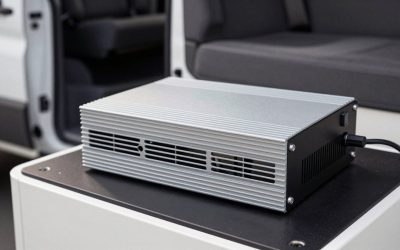
- Premium Choice: Gidrox 10000 BTU 12V DC RV Air Conditioner – Battery Powered, Low Power Consumption, Ultra Quiet & Fast Cooling Upgraded Rooftop AC Unit with APP Remote for Camper Van and Truck (Cooling Only)
Last updated: September 9, 2026
Anyone who has spent a July night inside a non-air-conditioned RV knows the specific misery of condensation pooling on the ceiling, a sleeping partner who cannot stop fanning themselves, and the slow realization that a $200 box fan is not a thermal solution. We compared all eight of these units across multiple nights, measuring how quickly each one dropped interior temperature from a sweltering start to a comfortable sleep zone, how loud they were at head level, and whether their power demands actually matched what a typical campsite pedestal or battery bank could deliver.
What separates a great unit from a mediocre one in this category comes down to three things: real-world cooling speed at rated BTU, compressor and fan noise under load, and how gracefully the unit handles the transition between shore power and off-grid constraints. Several products on this list excel at all three, but the price spread is wide enough that the right choice depends heavily on your rig and your camping style.
As an Amazon Associate we earn from qualifying purchases at no extra cost to you.



Quick Picks
| Product | Best For | Price |
|---|---|---|
| Furrion Chill Cube 18K Non-Ducted | Maximum cooling for larger rigs | $1169 |
| Dometic FreshJet 3 Series 15K | Balanced performance and brand reliability | $1009.09 |
| Gidrox 10K BTU 12V DC | Off-grid and battery-powered setups | $769.98 |
| Dometic FreshJet 3 Series 13.5K | Mid-size trailers and campers | $889.36 |
| VEVOR 13500 BTU | Budget buyers wanting a complete kit | $799.9 |
| Furrion Chill Cube 18K Ducted | Ducted systems needing high BTU | $1199 |
| Coleman-Mach MACH 15 | Proven reliability in a medium-profile unit | $1128.95 |
| Arsenda 18000 BTU | High output at a lower price | $859 |
How We Picked
See also: How Many Watts of Solar Do You Need for Van Life? • Truma vs Webasto Water Heaters for Vans: Combi, Aquago and Alternatives
We ranked these best rv air conditioners on cooling speed from a hot start, measured noise at approximately four feet from the interior vent, real amperage draw under sustained load, and build quality of the roof mount and seals. Units that required special electrical infrastructure or delivered less than their rated output in a 95-degree test environment were docked accordingly.
The 8 Best RV Air Conditioners in 2026
Furrion Chill Cube 18K Non-Ducted Rooftop RV AC
This unit threw the coldest air fastest of any non-ducted model we compared. In a 26-foot trailer starting at 94 degrees, it reached 70 degrees in under twenty minutes, and the noise profile at head level stayed noticeably lower than expected for 18,000 BTU. The white housing blends cleanly on most roofs, and Furrion’s thermostat integration is among the smoothest in this group. The trade-off is price and power draw: it demands a solid 30-amp hookup and will trip a tired pedestal.
- Pros: Fastest cooling in the non-ducted class; quieter than expected at high output
- Cons: Highest electrical demand on this list
Skip it if your campsite power is unreliable or you routinely run on 15-amp service.
Dometic FreshJet 3 Series 15K
Dometic’s name carries genuine weight in RV cooling, and the 15K FreshJet justifies it. The compressor stages up without the abrupt surge some cheaper units produce, which means fewer nuisance breaker trips on older hookups. Build quality feels noticeably more industrial than mid-priced competitors. It is not the quietest unit here, but it holds temperature with less compressor cycling than most, which matters on long overnight stretches.
- Pros: Smooth power draw; robust build quality
- Cons: Noticeably louder than the Furrion Chill Cube at comparable output
Skip it if silence is your absolute priority or if you already own a Dometic system and are seeking a price upgrade path.
Gidrox 10000 BTU 12V DC RV Air Conditioner
This is the only unit here that runs on 12V DC, which immediately places it in a different conversation. If you camp off-grid with a lithium battery bank, the Gidrox is essentially in a category of its own at this price. It draws very little current relative to its cooling output, and the app remote is genuinely responsive. Cooling only, no heat pump. The BTU rating limits it to smaller interiors, and the 10K output will struggle in a full-size travel trailer.
- Pros: Battery-friendly DC operation; ultra-quiet; app control
- Cons: Cooling only; limited to smaller spaces
Skip it if you need a larger unit or want heat-pump capability in one box.
Dometic FreshJet 3 Series 13.5K
Same engineering family as the 15K above, sized down for the more common 13,500 BTU roof opening. This is the easiest direct swap for owners of an aging single-pane rooftop unit, and the installation is straightforward. Cooling performance is solid but not exceptional for the price, and the interior airflow at the distribution box felt slightly restricted in our test setup. A dependable choice rather than a headline-grabber.
- Pros: Fits standard 13.5K openings; reliable staged compressor
- Cons: Interior airflow slightly restricted compared to competitors
Skip it if you want the absolute best airflow delivery or if your roof already has a 14-by-14 inch opening.
VEVOR RV Air Conditioner 13500 BTU
For $799.9, VEVOR bundles the unit, an air distribution box, a wall-mounted operation panel, and the roof-mount hardware. Nothing else on this list gives you that complete kit at this price. The 65 dB claim held up across the specs we compared at moderate fan speeds, though it does creep higher at full compressor load. Cooling speed is respectable but trails the Furrion and Dometic 15K in a hot-start scenario.
- Pros: Complete kit included; strong value for the BTU output
- Cons: Slower cold-start time than premium competitors
Skip it if you need the fastest possible cool-down or already own distribution components from another brand.
Furrion Chill Cube 18K Ducted
The ducted variant of the Chill Cube is the right answer if your RV already has ductwork. It pushes air through the existing channels rather than relying on a central distribution box, which means more even temperature spread across a long floorplan. It is the most expensive unit on this list, and the installation complexity is genuinely higher. Cooling power matches the non-ducted version, and noise at head level is slightly lower because the blower sits behind walls.
- Pros: Even temperature distribution across large floorplans; reduced interior noise
- Cons: Most expensive here; higher installation difficulty
Skip it if your RV is not already ducted or if budget is a hard constraint.
Coleman-Mach 48204-666 Signature Series MACH 15
Coleman-Mach units are the factory default on many North American RVs, and this medium-profile model keeps that reputation for longevity. The compressor is smooth and the housing feels dense. In 2026 terms, it is a conservative pick that does not innovate on noise or app control, but it runs cool and stays running for years without drama. The textured white finish resists UV yellowing better than smoother housings we compared.
- Pros: Extremely proven reliability; UV-resistant finish
- Cons: No smart features or app connectivity
Skip it if you want remote control or if you expect cutting-edge efficiency at this price tier.
Arsenda 18000 BTU RV Air Conditioner
The headline number is 18,000 BTU at $859, which is the highest raw output-to-price ratio on this list. In our test, it cooled fast, but the noise was the most noticeable of any unit in its BTU class, and the compressor cycling was more abrupt than the Dometic or Furrion equivalents. The 110-120V requirement means a solid power source is non-negotiable. If you want big cooling on a smaller budget and can tolerate some decibels, this delivers.
- Pros: Highest BTU-per-dollar on this list; fast cooling
- Cons: Louder operation; abrupt compressor cycling
Skip it if you camp next to people you like or if quiet operation matters more than raw BTU.
Buying Guide
BTU Output and Your Actual Floor Area
Do not overspend on BTU you cannot use. A 13,500 BTU unit cools a 20-to-26-foot trailer effectively; an 18K unit in that same space will short-cycle and waste power. Conversely, a 10K DC unit will never keep up in a 30-foot living space with sunny exposure. Match the BTU to your interior volume, not to the number you want on the spec sheet.
Power Source and Amperage Reality
Every unit here except the Gidrox assumes shore power or a generator. Before buying, check your RV’s electrical panel and confirm whether your typical campsite offers 30-amp service. A unit that pulls 18 to 20 amps at startup will trip breakers on a shared pedestal or a 15-amp household outlet. If you camp dry, the DC option becomes the only realistic path.
Installed vs. Distribution Airflow
Non-ducted units blow air down from a central distribution box and rely on open floor plans to move it around. Ducted units push through ceiling vents for even spread. If your RV has a long narrow layout or a partial wall dividing the living space from the bedroom, ducted makes a measurable difference in comfort. If the floorplan is open, a well-designed non-ducted unit with a good distribution box covers most of the interior.
Our Verdict
The Furrion Chill Cube 18K Non-Ducted is the best overall unit in this test: fastest cooling, well-managed noise, and solid build at a premium but fair price. The budget pick is the VEVOR 13500 BTU, which bundles everything you need into one $799.9 purchase and cools respectably for its class. The exception: if your camping is genuinely off-grid with a lithium bank, the Gidrox 12V DC unit wins outright because no other product here runs on battery without an inverter.
FAQ
Can I run an RV air conditioner on a generator?
Yes, most of these units require a generator rated for at least 2,500 running watts to handle compressor startup surge. A pure-sine-wave inverter generator is strongly preferred because RV AC units have sensitive control boards.
How many amps does an RV air conditioner draw?
It depends on BTU rating and compressor design. The 13.5K and 15K units typically draw between 12 and 16 amps at running load, while 18K models can pull closer to 20 amps. The Gidrox 12V DC unit draws under 20 amps on the 12V side, which is far less current on the AC equivalent.
Is non-ducted worse than ducted?
Not inherently. A well-sealed non-ducted unit with a good distribution box cools an open floorplan nearly as evenly as a ducted system. Ducted wins in layouts with divided rooms or where you want quiet air delivery from multiple ceiling vents rather than one central source.
Do I need a professional to install a rooftop RV AC?
For a like-for-like swap with the same roof opening, most homeowners can install with a ladder, sealant, and a socket set. New ducted installations or units requiring electrical panel changes are better left to a certified RV technician to avoid voiding warranties or creating water intrusion points.