Last updated: October 17, 2026
For most van builds, EcoFlow suits owners who want fast charging, higher solar input and room to add batteries later, while Jackery suits owners who want a lighter, simpler plug-and-play station for a modest electrical load. Both brands now sell LiFePO4 stations with app control, so the real decision is about charging speed, expandability, weight and warranty terms, not battery chemistry alone.
The short comparison
| Factor | EcoFlow | Jackery |
|---|---|---|
| Typical 1 kWh model | DELTA 3: 1,024 Wh, 1,800 W AC, about 27.6 lb | Explorer 1000 v2: 1,070 Wh, 1,500 W AC, about 23.8 lb |
| Solar input (brand-stated) | DELTA 3: up to 500 W | 1000 v2: the US page lists up to 400 W; larger Plus models list higher |
| Wall charging | DELTA 3: 1,500 W | Explorer 1000 v2: roughly an hour to emergency-charge, according to the brand’s listing |
| Expansion | DELTA 3 / DELTA 3 Plus: 1-5 kWh with extra batteries | Fewer expansion options; Plus models work with add-on batteries |
| Battery | LiFePO4, 4,000 cycles to 80 percent (DELTA 3) | LiFePO4, 4,000 cycles to 70 percent (1000 v2) |
| Warranty | 5 years across the listed lineup | 1000 v2: 3 years plus 2 extended, with conditions |
| Strength | Speed, expansion, features | Weight, simplicity |
These figures come from each brand’s product pages. Check the exact variant before buying, because both brands sell several generations side by side and names change often.

Jackery Explorer 300 Portable Power Station,292Wh | Backup LiFePO4 Battery, Solar Generator for Outdoors, Camping, Travel, Hunting, Blackout (Solar Panel Optional)
Included for 'Jackery vs EcoFlow for Van Life: Which Power Station Fits?' because the listing specifies 292Wh and Backup LiFePO4 Battery, details this guide uses to compare options.
View on Amazon
BLUETTI Elite 30 V2 Portable Power Station 288Wh 600W LFP Solar Generator | Power Lifting 1500W, 10ms UPS, 45 Min 0-80% Fast Charging, Emergency Backup Power for Blackout, Camping, Outage and Road Trip
Included for 'Jackery vs EcoFlow for Van Life: Which Power Station Fits?' because the listing specifies Power Lifting 1500W and 10ms UPS, details this guide uses to compare options.
View on Amazon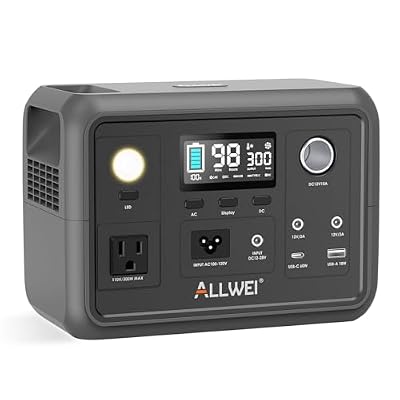
ALLWEI Portable Power Station 300W, 256Wh Solar Generator LiFePO4 Battery | Pure Sine Wave AC Outlet, PD 60W Fast Charging, MPPT & BMS Protection, Compact for Camping Outdoor Home Backup Emergency CPAP
Included for 'Jackery vs EcoFlow for Van Life: Which Power Station Fits?' because the listing specifies 256Wh Solar Generator LiFePO4 Battery and Pure Sine Wave AC Outlet, details this guide uses to compare options.
View on Amazon
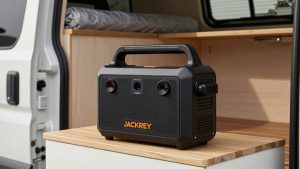
Jackery Explorer 1000 v2 Portable Power Station,1070Wh,1500W | 1 Hr Fast Charge, LiFePO4 Battery, 100W USB-C Output, Solar Generator for Camping, Emergency, RV (Solar Panel Optional)
Included for 'Jackery vs EcoFlow for Van Life: Which Power Station Fits?' because the listing specifies 1070Wh and 1500W, details this guide uses to compare options.
View on AmazonLineups at a glance
See also: How Many Watts of Solar Do You Need for Van Life? • Truma vs Webasto Water Heaters for Vans: Combi, Aquago and Alternatives
EcoFlow
EcoFlow’s collection page lists a wide range: the TRAIL 200 (192 Wh) and TRAIL 300 (288 Wh) for DC-only use, the RIVER 3 Max (572 Wh), the DELTA 3 family at 1,024 Wh (DELTA 3, DELTA 3 Plus and DELTA 3 Classic), the DELTA 2 Max and DELTA 3 Max at 2,048 Wh, the DELTA 3 Ultra at 3,072 Wh, and the DELTA Pro 3 at 4,096 Wh with 4,000 W AC output. All are listed as LFP with a five-year warranty. The DELTA 3, DELTA 3 Plus, DELTA 2 Max, DELTA 3 Ultra Plus and DELTA Pro 3 are listed as expandable.
Jackery
Jackery’s collection page lists the Explorer 300 v2 (288 Wh), Explorer 1000 v2 (1,070 Wh), Explorer 1000 Plus (1,264 Wh), Explorer 1500 v2 (1,536 Wh, 2,000 W), Explorer 1500 Ultra (1,536 Wh, 1,800 W), Explorer 2000 v2 and 2000 Plus (2,042 Wh) and Explorer 5000 Plus (5,040 Wh, 7,200 W with 120/240 V). The brand lists LiFePO4 cells for the Plus and v2 generations. Older Jackery “Classic” Explorers used a different chemistry, so avoid buying a used older unit for daily van use without confirming the cell type.
Charging speed
Charging speed is where the two brands differ most. EcoFlow’s DELTA 3 is listed at 1,500 W from a wall outlet, and CamperNation’s comparison reports that EcoFlow’s X-Stream technology reaches about 80 percent in an hour while a comparable Jackery needs roughly two. For a van, that matters when you plug into a campsite hookup for a short stop, or when you run a generator and want to refill quickly.
Jackery’s newer v2 and Plus lines have narrowed the gap: the brand advertises an emergency charge of around an hour for the 1000 v2 and about 1.3 hours for the 2000 v2. If you mostly charge from solar and driving, this difference matters less than it sounds.
Solar input and van roofs
Solar input caps how much roof array the station can use. EcoFlow lists up to 500 W on the DELTA 3 and Outdoor Life lists the older DELTA 2 at 500 W. Outdoor Life lists the Jackery Explorer 1000 Plus at 800 W, so the picture is not simply that one brand is always higher. Jackery’s US page for the 1000 v2 lists a 400 W maximum, while some reviews quote different numbers, so rely on the manual for your exact model.
For a typical van roof, space limits you to about 200-600 W of panels. Any station accepting 400-500 W covers most vans. Panel voltage matters more than wattage: series strings must stay inside the station’s stated voltage window, including cold-weather voltage rise. When unsure, consult the manual or a solar installer.
Expansion and growth
If your power needs might grow, EcoFlow’s expandable DELTA 3 (to 5 kWh) and DELTA Pro 3 (to 48 kWh) give you a path. Jackery sells add-on batteries for its Plus models, but the 1000 v2 cannot be expanded, according to comparison sources. Buyers who expect to add an induction hob or work from the van often start with an expandable system.
Weight and portability
The 1000 v2 at about 23.8 lb is among the lighter 1 kWh LiFePO4 stations, while the DELTA 3 is about 27.6 lb. Outdoor Life measured the Jackery Explorer 1000 Plus at 32 lb, compared with 27 lb for the EcoFlow DELTA 2. Weight matters if you carry the station between van, home and campsite, but is less important if it stays strapped down.
App, features and reliability
Both brands provide an app. CamperNation describes EcoFlow’s as more feature-rich, with remote monitoring and smart-home integration, and Jackery’s as simpler. Outdoor Life reported that the Jackery 1000 Plus had housing durability concerns in its testing and that the EcoFlow DELTA 2 was not water resistant. Neither is a fixed, vibration-rated battery; both are consumer stations, so secure them properly in a moving vehicle.
Sizing a station by van loads
| Van style | Typical daily load | Station size to consider |
|---|---|---|
| Weekend camper: lights, phones, fan, small fridge | 300-600 Wh | 500-1,000 Wh class (Jackery Explorer 1000 v2, EcoFlow DELTA 3) |
| Part-time: fridge, laptop, heater fan, lights | 700-1,200 Wh | 1,000-1,500 Wh class with solar |
| Full-time with remote work and occasional induction cooking | 1,200-2,500 Wh | 2,000+ Wh class or an expandable model |
| All-electric build | 3,000+ Wh | Expandable stations or a fixed battery bank |
These are planning estimates, not brand claims. A compressor fridge commonly uses a few hundred watt-hours per day, a laptop around 200-350, and a diesel heater’s fan and controls a modest continuous draw that varies by model (check the heater manual for its stated consumption). Add your loads, then leave 20-25 percent for inverter losses and cloudy days.
Who should buy which
Choose EcoFlow if
- You want faster charging from a hookup or generator.
- You may expand capacity later.
- You value a longer uniform warranty and a feature-rich app.
- You plan a larger solar array.
Choose Jackery if
- Weight and simplicity matter more than speed.
- Your loads are modest and unlikely to grow.
- You want a straightforward interface and a lighter unit to lift.
Skip both if
- You live in the van full time, want a permanent installation and need many 12V circuits. A fixed LiFePO4 battery, inverter-charger and DC-DC charger wired by a competent installer is usually the sturdier route.
Other brands worth comparing
Goal Zero’s Yeti line has a high 600 W solar rating on its X models, though several use Li-ion NMC and are listed with fewer cycles. Bluetti sells expandable LiFePO4 stations in similar sizes. Anker SOLIX and similar brands compete in the 1-2 kWh range. Compare cycle life, warranty and real-world solar input rather than headline capacity.
Care and common issues
- Store the station with a partial charge when not in use, and follow the manual’s temperature ranges. Parked vans get very hot and very cold.
- Do not run the unit in a sealed cupboard; leave airflow around vents.
- Use the supplied cables; undersized cables overheat at high current.
- Strap the station to a structural point; never leave it loose while driving.
- Any hard-wired connection needs correctly rated fusing; consult the manufacturer’s instructions or a qualified installer.
- Warranty terms for Jackery are tied to buying from authorised channels, so keep proof of purchase.
Decision table
| Pick | If |
|---|---|
| EcoFlow DELTA 3 or DELTA 3 Plus | you want a 1 kWh class station with fast charging and expansion |
| EcoFlow DELTA Pro 3 | you need high output and a large expandable bank |
| Jackery Explorer 1000 v2 | you want light weight and a simple 1 kWh unit |
| Jackery Explorer 1500 v2 or 2000 v2 | you need more capacity without a big weight step |
| Jackery Explorer 5000 Plus | you need 120/240 V and large capacity in a fixed install |
| A fixed battery bank | you live in the van full time |
Frequently Asked Questions
Is EcoFlow or Jackery better for van life?
EcoFlow is usually the better fit when you want fast charging, a bigger solar array and the option to expand. Jackery is often preferred for lower weight and a simpler app. The better choice depends on your daily watt-hours and how much you value speed over simplicity.
Do both brands use LiFePO4 batteries?
Current models from both use LiFePO4, according to the brands’ product pages and reviewer roundups. Older Jackery Classic units used a different chemistry, so confirm the cell type if you are looking at a used or older model.
Which has the better warranty?
EcoFlow’s collection page lists five years across the models shown. Jackery’s 1000 v2 page lists a three-year standard term plus two extended years, with conditions tied to authorised purchase channels. Read the terms for your exact model.
How much solar can each accept?
EcoFlow lists up to 500 W on the DELTA 3. Jackery lists up to 400 W on the 1000 v2 and higher figures on some Plus models. Always check the maximum voltage and current in the manual before wiring panels.
Can I run a diesel heater and fridge from one station?
Yes, usually. A compressor fridge and a diesel heater’s fan together often total a few hundred watt-hours per day, which a 1 kWh station can handle with solar support. Keep heater and station installation to the manufacturers’ instructions and use a CO alarm.
Should I get a power station or a fixed battery?
A station is quicker and portable; a fixed battery bank is usually better for permanent full-time systems. If you wire anything permanently, use proper fuses and cable sizes or hire a qualified installer.