Last updated: October 17, 2026
If your van already carries propane and you want one combined space and water heater, the Truma Combi is the usual choice; if you only need hot water on demand and have no space-heating requirement, the Truma AquaGo fits; and if your van runs on diesel and you want a single fuel source, the Webasto Dual Top is the diesel alternative. All three are fuel-burning appliances that must be installed with correct exhaust routing and a carbon monoxide alarm, so treat the manufacturer’s installation manual and a qualified installer as part of the purchase, not an optional extra.
What Each System Does
- Truma Combi: A combined blown-air space heater and hot water boiler. Truma lists a 10-litre water tank on the Combi 4 E and Combi 6 E product pages. Gas versions burn propane or butane, and E versions add a 230V electric element.
- Truma AquaGo: A water-only heater that heats on demand using propane, with 12V power for its controls. It does not heat the cabin air, so it is often paired with a separate heater such as Truma’s VarioHeat. The AquaGo is mainly sold with North American propane and 12V specifications, while the gas Combi and the 230V electric elements are mainly European-market products, so regional availability differs.
- Webasto Dual Top (Evo): A diesel-fired air heater and water heater in one unit, drawing fuel from the vehicle’s tank. Webasto states its integrated boiler holds about 11 litres and supplies water at 40 or 70 degrees Celsius.
Models Compared
See also: How Many Watts of Solar Do You Need for Van Life? • Garmin inReach for Van Life: Mini 2 vs Messenger and Plans
| Model | Best for | Key stated specs | Notable limits |
|---|---|---|---|
| Truma Combi 4 / 4E | Smaller vans wanting heat plus hot water from propane, with optional mains electric | 10-litre tank; gas output of 2,000 or 4,000 W; 230V element on E versions at 900 or 1,800 W, with mixed mode up to 3,800 W; about 15.5 kg for the E version; average 12V draw around 1.2 A, up to 6.5 A for short periods, per Truma | Not on-demand; needs gas supply and flue; confirm figures for your exact variant on the data sheet |
| Truma Combi 6 / 6E | Larger or colder-climate vans | 10-litre tank; 2,000, 4,000 or 6,000 W on gas; E version adds 900 or 1,800 W electric, with a mixed mode of up to 6,900 W on Truma’s current product page (older manuals show 5,800 W, so sources vary) | More output than the Combi 4; roughly 14 to 16 kg depending on version according to Truma pages; similar installation demands |
| Truma AquaGo (Basic and Comfort) | Vans that need on-demand hot water and already have a separate heater | Propane-fired on-demand heater; 12V supply; Comfort and Comfort Plus add built-in frost protection per Truma’s manual | Per Truma’s manual the Basic model has no frost protection and must be drained when freezing is possible; no space heating |
| Webasto Dual Top Evo 6 | Diesel vans that want one fuel and no gas bottle | Burner output 1.5 to 6.0 kW; 11-litre boiler; 12V; Webasto manuals state a two-year warranty from installation, with some brand material advertising three years, so terms vary by region and document | Owner reports on forums are mixed on noise and service availability, especially outside Europe; some retailers describe certain Dual Top kits as discontinued, so check availability; fuel must meet Webasto’s diesel requirements |
| Webasto Dual Top Evo 7 / 8 | Users who want a mains electric coil as well | Electric coil adds up to 1.2 kW (Evo 7) or 2.0 kW (Evo 8); combined heating up to 8 kW per retailer summaries of the specification | Requires a suitable 230V supply and more complex installation |
Truma also sells diesel combination heaters in some markets, so availability depends on region. Check the supplier for your country before planning around a specific variant.

VEVOR RV Tankless Water Heater, 42000BTU, Instant Shower with 15 x 15 inches Black Door and Remote Controller, Ideal for RVers' Family Everyday Use
Included for 'Truma vs Webasto Water Heaters for Vans: Combi, Aquago and Alternatives' because the listing specifies 42000BTU and Ideal for RVers' Family Everyday Use, details this guide uses to compare options.
View on Amazon
ORBEK RV Tankless Water Heater, Propane, 12V DC, For RV Family & Camper | High-Altitude Performance, Continuous On-Demand Hot Water, Remote Temperature Control, Built for RV Travel, CSA Certified
Included for 'Truma vs Webasto Water Heaters for Vans: Combi, Aquago and Alternatives' because the listing specifies Propane and 12V DC, details this guide uses to compare options.
View on Amazon
Suburban Advantage RV Tank Water Heater SW10DE - 10 gallon Porcelain Lined Steel Tank with Direct Spark Ignition (DSI) and Incoloy Electric Element (5243A)
Included for 'Truma vs Webasto Water Heaters for Vans: Combi, Aquago and Alternatives' as a relevant option in this category; details come from the product listing.
View on Amazon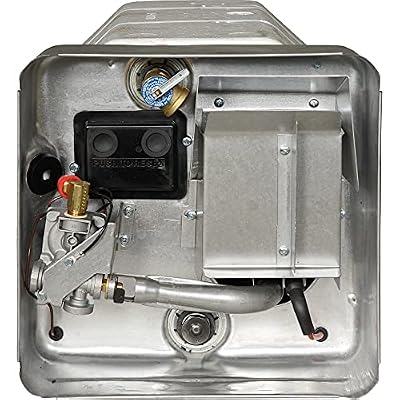
Suburban SW6D 6-Gallon RV Water Heater, Direct Spark Ignition (5238A) | Direct Spark Ignition, 5238A
Included for 'Truma vs Webasto Water Heaters for Vans: Combi, Aquago and Alternatives' because the listing specifies Direct Spark Ignition (5238A) and Direct Spark Ignition, details this guide uses to compare options.
View on AmazonGas vs Diesel: The Core Decision
Propane (Truma)
Propane is clean-burning and quiet, and bottles are easy to swap in North America. Reviewers and owners also point to a gas-fired Combi’s relative quietness compared with diesel units. The downsides are carrying gas bottles, plus regulation: in some places, fitting an LPG system requires certified installation, and propane use is restricted in certain tunnels, ferries and car parks. Heat output drops in very cold weather if the bottle cools, so butane-heavy mixes can perform poorly in winter.
Diesel (Webasto)
Diesel units draw from the vehicle’s tank, so there is no extra fuel to carry. This simplifies travel in countries where refilling propane is awkward, as one UK owner explained. Forum owners describe good heat output and economy when the unit runs properly, but some report noise and slow starts. Diesel heaters need regular running to avoid soot build-up, and lowest-output operation for long periods can cause carbon deposits. US dealer support for Webasto is described by owners as patchy, and some dealers will not service Dual Tops.
Electric
Electric elements on E versions (Truma) or Evo 7 and 8 (Webasto) are useful at campsites with a mains hookup, because they save fuel. They are not a substitute for fuel heating off-grid, since 230V draw is high.
Power Draw
Both Truma and Webasto units use 12V power for fans, controls and ignition. Truma states an average draw of roughly 1.2 A on a Combi 4 with brief peaks up to 6.5 A, and quiescent current of around 1 mA. Diesel heaters have a short high-current glow-plug phase at start. In a small battery system, a night of heating can consume a noticeable share of the day’s capacity, so factor it into your energy budget. If you have a Victron or similar system, size cable and fusing for the manufacturer’s maximum current.
Installation and Safety
- Carbon monoxide: Fit a CO alarm in the sleeping area regardless of heater type, and test it regularly. Never run a combustion heater unvented.
- Exhaust and air intake: Flue and combustion air must be routed exactly as the installation manual specifies, away from windows, vents and the fuel filler, and with clearances from flammable material.
- Gas system: Propane installation involves regulators, hoses and leak tests. Many regions require this work by a certified installer, and Truma’s AquaGo manual states that installation and service must be carried out by a certified technician.
- Diesel fuel line: Use the fuel pickup, pump and lines specified by Webasto, and fix lines so they cannot chafe or leak.
- Altitude: Combustion heaters may need adjustments or high-altitude kits above certain elevations. Check the manual before travelling to mountain regions.
- Refuelling: Switch off gas appliances when refuelling a vehicle, as many manuals instruct.
Warranty and legality often depend on professional installation. A qualified installer familiar with your chosen brand is the safest route.
Winterizing and Freeze Protection
Water in the boiler and lines can freeze and crack components. Many Truma boilers use a frost-protection drain valve that empties the boiler when temperatures fall, but the exact arrangement varies by model, so confirm it in your manual. If a van will be stored in freezing weather, drain the water system fully, open taps, and follow the manual’s winterization steps rather than relying on the automatic valve alone. Truma’s manual says the AquaGo Basic has no frost protection and must not be operated in frost, while the Comfort versions have built-in frost protection that only works when the unit is switched on with 12V power and propane available. Webasto’s documentation states that frost damage is not covered and the boiler and lines must be drained when freezing is possible, so do not rely on any automatic mode to protect a stored van.
Annual care for all three systems includes descaling the boiler with an approved descaler, checking flue connections and seals, cleaning air filters or inlets, and running the heater periodically in the off-season.
Who Should Buy and Who Should Skip
Truma Combi suits
- Vans with an existing gas system and space inside for the unit and flue.
- Full-time travelers who value quiet running and optional mains power at campsites.
Truma AquaGo suits
- Owners who want fast hot water and already have a separate space heater.
Webasto Dual Top suits
- Diesel vans where carrying gas is inconvenient or where travel crosses borders with varying propane fittings.
Skip if
- You camp only in warm weather and use a portable shower; a simple water heater or none may be enough.
- You cannot access qualified installers or service for the brand in your region.
- You are limited on installation space and weight; Combi units weigh roughly 14 to 16 kg according to Truma’s product pages.
How These Compare with Other Brands
- Eberspacher: Another established diesel heater maker with the Airtronic and Hydronic lines, often mentioned alongside Webasto for professional installations.
- Propex: Propane-fired air heaters often chosen for low power use, but they provide space heating only, without hot water.
- Chinese-made diesel heaters: Widely sold at budget tiers. Many owners install them, but quality, safety certification and support vary widely, and reviewers advise caution on flue and fuel line installation.
- Isotemp and similar electric boilers: Suit vans with a shore-power focus but do not heat the cabin.
Decision Table: Pick X If…
| Pick | If you… |
|---|---|
| Truma Combi 4 | Have a smaller van, use propane and want heat plus stored hot water |
| Truma Combi 6 | Camp in colder climates or need more output |
| Truma AquaGo | Only need on-demand hot water and have separate space heating |
| Webasto Dual Top Evo 6 | Run diesel and prefer a single fuel source |
| Dual Top Evo 7 or 8 | Also want an electric coil for campsite hookups |
| Separate air heater plus electric boiler | Rely mostly on shore power and want a simpler, modular layout |
Frequently Asked Questions
Is the Truma Combi better than the Webasto Dual Top?
Neither is universally better; they suit different fuels and regions. The Combi fits vans with propane and is described by owners as quieter, while the Dual Top suits diesel vans that want one fuel. Service availability in your country is a major factor.
Can I install a van water heater myself?
Combustion heaters involve fuel lines, flue routing and sometimes gas connections, which carry fire and carbon monoxide risks. Truma’s AquaGo manual calls for a certified technician, and many regions require certified gas installers. Follow the manufacturer’s installation manual and use a qualified professional.
How much battery power does a heater use?
Truma states an average of around 1.2 A on a Combi 4, with short higher peaks during ignition and fan start. Diesel heaters have a brief high-current start phase and then low draw while running. Add the figures from your model’s data sheet to your daily energy budget.
Do I still need a carbon monoxide alarm?
Yes. Even properly installed, sealed-combustion heaters can fail or leak, and other appliances such as stoves add risk. Fit an alarm in the sleeping area, test it regularly, and replace it at the interval the alarm maker specifies.
How do I winterize a van with a Truma or Webasto heater?
Drain the water system and boiler fully, open taps, and follow the manual’s steps for any frost-protection valve. Do not assume automatic protection works with the power off. Check the brand’s winterization guide for your exact model.
Which is best if I only want hot showers?
The AquaGo is aimed at on-demand hot water without space heating, while the Combi and Dual Top also warm the cabin. If you already have cabin heating, a water-only unit may suffice; if not, a combination unit saves space and plumbing.