Last updated: October 17, 2026
For most camper vans, the practical Victron core is a MultiPlus or MultiPlus-II inverter/charger for shore power and 120V or 230V loads, a SmartSolar MPPT controller for the roof panels, an Orion-Tr Smart DC-DC charger for alternator charging, a SmartShunt to count amps, and an optional Cerbo GX to tie it all together. Weekend campers who only run lights, a fridge and phone chargers can skip the inverter and the Cerbo. Full-time vanlifers who want a coffee maker, induction hob or laptop on a single battery bank usually need every piece. This guide explains what each component does, how they connect, how to size them, and where a professional installer is the safer choice.
- The Victron Van Lineup at a Glance
- How the Components Connect
- Sizing Logic
- Fusing and Wiring Safety
- DIY or Professional Installation
- Who Should Buy and Who Should Skip
- How Victron Compares with Other Brands
- Compatibility and Planning Tips
- Care and Common Issues
- Decision Table: Pick X If…
- Frequently Asked Questions
The Victron Van Lineup at a Glance
Victron Energy publishes official van drawings that combine the same families of products: a MultiPlus-II 3kVA (12V, 120V, 60Hz in the North American drawing), a VE.Bus BMS V2 or Smart BMS, a Cerbo GX, a SmartShunt, an MPPT solar controller (a 100/50 in the US drawing) and an Orion-Tr DC-DC charger. Independent installers’ guides, such as the Offgrid4less campervan guide, follow the same architecture with smaller European sizes.
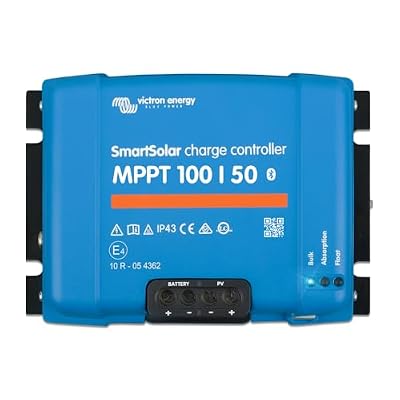
Victron Energy SmartSolar MPPT Solar Charge Controller 100V, 50A, 12/24V | Bluetooth Charge Controllers for Solar Panels, Certified to UL1741
Included for 'Victron Van Electrical Systems: Multiplus, SmartSolar and Orion Explained' because the listing specifies 50A and 12/24V, details this guide uses to compare options.
View on Amazon
Victron Energy MultiPlus-II Inverter/Charger 120VAC 3000VA 12V 120A | Pure Sine Wave Inverter Charger, Certified to UL458
Included for 'Victron Van Electrical Systems: Multiplus, SmartSolar and Orion Explained' because the listing specifies Pure Sine Wave Inverter Charger and Certified to UL458, details this guide uses to compare options.
View on Amazon
Victron Energy Orion XS Smart (Bluetooth) DC-DC Charger 12/12V 50A 700W | Fully Configurable - Battery Charger for Dual Battery Systems - IP65 Dust & Waterproof
Included for 'Victron Van Electrical Systems: Multiplus, SmartSolar and Orion Explained' because the listing specifies Fully Configurable and Battery Charger for Dual Battery Systems, details this guide uses to compare options.
View on Amazon
Victron Energy MultiPlus-II Inverter/Charger 120VAC 5000VA 48V 70A | Pure Sine Wave Inverter Charger for 70 amp Battery
Included for 'Victron Van Electrical Systems: Multiplus, SmartSolar and Orion Explained' because the listing specifies Pure Sine Wave Inverter Charger for 70 amp Battery, details this guide uses to compare options.
View on Amazon| Component | Best for | Key stated specs | Notable limits |
|---|---|---|---|
| MultiPlus / MultiPlus-II | Vans needing an inverter and a shore-power charger in one box | Victron’s 120V datasheet lists the 12V, 3kVA MultiPlus-II with a 120A maximum charge current (larger MultiPlus-II sizes are mostly offered at 24V and 48V in that range); the older 1,600VA MultiPlus 12/1600/70 (70A charger) is a common smaller European choice | Heavy, needs thick DC cable and a short run to the battery; 3kVA is more than many vans need |
| SmartSolar MPPT (for example 100/30, 100/50) | Roof solar charging | The first number is maximum PV voltage, the second is charge current; Bluetooth and VE.Direct on Smart models | Must be matched to panel voltage and array size; one controller per separate array orientation is often easier |
| Orion-Tr Smart DC-DC charger | Charging the leisure bank while driving | 12/12-30 is a 30A output model; Offgrid4less estimates roughly 30Ah added per driving hour at that rating | Alternator and wiring must support the load; check the vehicle maker’s guidance for smart alternators |
| SmartShunt | Accurate state of charge for any battery chemistry | Sold in 300A, 500A, 1000A and 2000A sizes; stays powered continuously | Measures only; it does not protect or disconnect |
| Cerbo GX (with GX Touch 50 or 70) | Central display, remote monitoring, VRM portal alerts | Victron lists VE.Bus, VE.Direct and VE.Can ports, WiFi and Bluetooth, and Venus OS | Port count is limited (current units have three VE.Direct ports; earlier units had two); extra devices need USB interfaces |
| Smart BMS / Smart Battery Protect | Protecting lithium banks and loads | Used in Victron’s own van drawings alongside the MultiPlus-II | Chemistry- and battery-specific; follow the battery maker’s requirements |
How the Components Connect
See also: How Many Watts of Solar Do You Need for Van Life? • Truma vs Webasto Water Heaters for Vans: Combi, Aquago and Alternatives
A Victron van system is easiest to understand as three charging sources feeding one battery bank, with a monitor and a load side.
- Shore power and generator: The inverter/charger takes AC in, charges the battery and passes AC through to the sockets. Victron states that its PowerAssist feature can boost a limited shore or generator supply from battery reserves when loads spike.
- Solar: Panels connect to the MPPT, and the MPPT connects to the battery through its own fuse or a distribution busbar.
- Alternator: The Orion-Tr Smart sits between the starter battery and the leisure bank, so the van’s engine charges the habitation side without hard-paralleling the two batteries.
- Monitoring: The SmartShunt sits on the negative side of the bank. All loads and chargers connect on the load side of the shunt so every amp is counted.
- Communication: Victron’s van drawings and installer guides show the SmartShunt and MPPT linked to the Cerbo over VE.Direct, and the MultiPlus linked over VE.Bus. The Cerbo then shows everything on a touchscreen and the VRM portal.
Victron’s van drawings are the best reference for wire layout, showing the sequence of main fuse, busbars and shunt for your battery model.
Sizing Logic
Start with daily consumption
List each appliance, its watts and its hours of use, then convert to watt-hours per day. Offgrid4less describes a typical day at roughly 40 to 80Ah at 12V and recommends a 200Ah (2.56kWh) lithium bank as a comfortable reserve for most conversions. Heavy users should size upward.
Battery bank
Battery capacity should cover at least a day or two of use without sun. The battery maker’s maximum charge and discharge currents also matter: a 3kVA inverter at full load draws a very large current from a 12V bank, so the bank must be able to deliver it. If the battery cannot, choose a smaller inverter or a higher-voltage system.
Solar
Offgrid4less uses 400W of panels on a SmartSolar 100/30 and estimates roughly 600 to 1,200Wh a day in summer and 120 to 320Wh in winter in the UK. Those are one guide’s estimates; latitude, shading and season dominate. Match the array’s open-circuit voltage to the controller’s maximum PV voltage, allowing for cold-weather voltage rise.
DC-DC charger
A 30A Orion-Tr Smart suits many 12V vans. A 50A or 60A model charges faster but needs heavier cable and a stronger alternator feed. Modern vehicles with smart (variable-voltage) alternators can behave differently from older ones, so consult the vehicle manufacturer’s documentation for the correct charging arrangement.
Inverter size
Add up the loads that run at the same time. A 1,600VA unit handles a coffee machine, microwave or hair dryer on low in the Offgrid4less example. A 3kVA MultiPlus-II suits induction hobs, kettles and air conditioning, but it also calls for large battery cables and a bank that can supply the current.
Fusing and Wiring Safety
Battery banks can deliver very large short-circuit currents, so fusing is the most important safety element in a van build. Common guidance, such as the Offgrid4less guide, says every positive cable leaving the battery should have a fuse close to the terminal (within about 300mm), and its 1,600VA reference system uses at least 50mm2 cable with a 200A fuse at the battery. Victron’s MultiPlus 12/1600 manual likewise specifies 50mm2 cable with a 200A fuse for runs up to 5 m. The exact cable and fuse size depends on the inverter model, the cable length and the battery. Use the values in Victron’s manual or drawing for your specific model, not a generic number.
- Use fuses specified for high-current DC battery work (for example Class T or MEGA-type), not automotive blade fuses, on high-current runs.
- Crimp lugs with a hydraulic or proper ratcheting tool and torque terminals to the manufacturer’s value.
- Keep the inverter/charger close to the battery to minimise voltage drop and cable cost.
- Ventilate chargers and inverters; they produce heat under load.
- Fit residual-current protection and a correctly earthed or bonded AC system where local regulations require it.
- Where a gas appliance or diesel heater is also fitted, install a carbon monoxide alarm. It is a separate system but it is part of the same sleeping space.
Follow each Victron manual for commissioning and storage steps, including firmware updates and how to switch off the inverter/charger. The SmartShunt remains powered, so a stored battery still sees a small continuous drain and should be checked periodically.
DIY or Professional Installation
Low-voltage DC work such as wiring a SmartShunt, connecting an MPPT to a fused busbar or mounting a Cerbo is within reach for careful DIY builders following a published drawing. The higher-risk parts are the main battery cables, the inverter’s DC feed, the 120V or 230V AC wiring and the alternator-side charging. A fault there can cause fire. Offgrid4less recommends professional installation for high-current DC work for this reason. In many regions, AC installations in vehicles also need to meet local regulations or inspection. If you are unsure, have a qualified auto-electrician or marine/RV electrician fit those sections or at least inspect your work before use.
Who Should Buy and Who Should Skip
Buy this approach if
- You want one ecosystem where the monitor, charger and inverter talk to each other over standard Victron ports.
- You plan to stay off-grid for days, run a laptop or induction cooktop, or need a battery meter you can trust.
- You value remote monitoring and alerts through the VRM portal while the van is parked.
Skip or simplify if
- You only run 12V lights, a fan and a small fridge. A basic solar controller, a battery monitor and a DC-DC charger may be enough, and you can omit the inverter.
- Your budget is tight; the SmartShunt and Bluetooth apps already show the main numbers without a Cerbo GX.
- You are unwilling to learn the configuration, since Victron’s tools have many settings.
How Victron Compares with Other Brands
Victron sits at the premium end of the van electrical market, and the alternatives each trade something away.
- Renogy: Offers all-in-one inverter/chargers, DC-DC chargers and solar controllers at budget to mid-range tiers. Reviewers often value the lower cost and the integrated boxes, while Victron is often favored for its monitoring and expandability.
- Redarc: Popular in Australia and with 4×4 builds; its Manager30 and BCDC chargers combine several charging inputs in compact units. They are simple to wire but are less modular than Victron’s separate components.
- Sterling Power and CTEK: Strong in battery-to-battery and mains chargers; they cover the charging side but usually do not provide the same unified monitoring and remote portal.
- Mastervolt and Xantrex: Established inverter/charger makers with their own systems; they are often found in factory-fitted RVs.
The main reason people pay for Victron is the combined ecosystem, wide documentation and community knowledge. If you only need one function, a single-purpose product from another brand may cost less.
Compatibility and Planning Tips
- Check that the battery’s chemistry and charge profile are supported by every charger; lithium (LiFePO4) batteries usually need a specific voltage and sometimes a BMS signal.
- Match system voltage to inverter size: 12V is common in vans, while 24V and 48V reduce current for larger inverters.
- Plan port use on the Cerbo before buying; if all of the Cerbo’s VE.Direct ports are already used, additional VE.Direct devices such as an Orion need a VE.Direct-to-USB interface, or can be monitored over Bluetooth.
Care and Common Issues
- Firmware: Update through VictronConnect before commissioning and occasionally afterwards. Mismatched firmware is a common source of communication errors.
- Loose terminals: Vibration can loosen battery lugs, so recheck torque as the manufacturer specifies.
- Winter storage: Follow Victron’s storage advice and keep the battery within the maker’s temperature limits. Many lithium batteries should not be charged below freezing unless they have heating.
Decision Table: Pick X If…
| Pick | If you… |
|---|---|
| MultiPlus 12/1600 class | Want a coffee maker, microwave or laptop charging and need shore charging in a compact unit |
| MultiPlus-II 3kVA | Run induction cooking or high-power tools and have a large battery bank and heavy cabling |
| SmartSolar MPPT | Have roof panels and want Bluetooth monitoring of daily yield |
| Orion-Tr Smart | Drive daily and want the alternator to top up the bank safely |
| SmartShunt | Need a reliable state-of-charge reading for any battery system |
| Cerbo GX plus GX Touch | Want a dashboard, remote alerts and one place to see every component |
| Basic non-inverter setup | Only use 12V loads and want the simplest, lowest-cost build |
Frequently Asked Questions
Do I need a Cerbo GX in a Victron van system?
No, the Cerbo GX is optional. A SmartShunt and an MPPT already show data through the VictronConnect app over Bluetooth. The Cerbo adds a central display, remote monitoring through VRM and the ability to automate settings, so it suits larger or more complex builds.
What is the difference between MultiPlus and MultiPlus-II?
The MultiPlus-II is Victron’s newer generation inverter/charger family. According to Victron, it offers transfer-switch capability, PowerAssist and a broader range of power ratings. The older MultiPlus remains common in smaller sizes, such as 1,600VA, so check the specification sheet for the exact variant you plan to buy.
How big should my solar array be?
It depends on your daily consumption, your latitude and how much roof space you have. One installer guide uses 400W for a 200Ah bank and estimates strong summer output with much lower winter output. Add up your daily watt-hours first, then choose an array that covers a realistic share, rather than assuming a number from another van.
Can I install a Victron system myself?
Many builders do install low-voltage parts themselves by following Victron’s published drawings. High-current battery cabling, fusing and any mains AC wiring carry fire and shock risk, so a qualified installer is the safer choice for those sections. Always follow the instructions supplied with each product.
Do I need a DC-DC charger if I have solar?
Not always, but it is useful. Solar output drops in winter, in shade and on travel days, while a DC-DC charger delivers steady current whenever the engine runs.
Is a 12V or 24V system better for a van?
Most vans use 12V because appliances and vehicle systems are 12V. A 24V bank reduces current for larger inverters, which can cut cable thickness, but it needs extra converters for 12V loads. For a typical van with a 1,600VA to 3kVA inverter, 12V is the common choice and matches Victron’s van drawings.