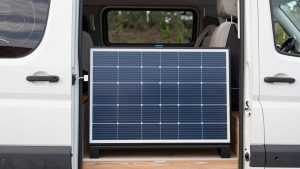
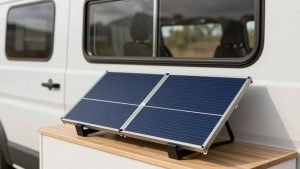
TL;DR: A 200W portable solar briefcase gives van lifers a plug-and-play charging solution that works in campgrounds, trailheads, and urban parking spots without a roof mount — tilt it toward the sun, clip to your battery, and charge. Ideal as a primary source for minimal builds or a supplement to fixed panels when extra input is needed. Best pick: ASIN B097GSPVNB.
Best Portable Solar Briefcase 200W Foldable for Van Life (2026)
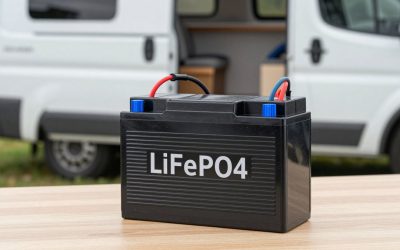
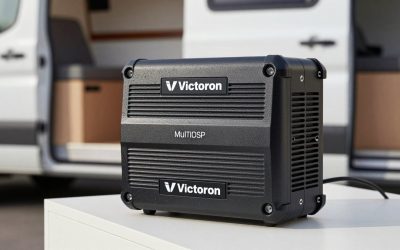
Fixed rooftop solar panels are the backbone of most van life electrical systems — but they have one fundamental limitation: they only harvest energy at whatever angle the roof presents to the sun. A portable solar briefcase 200W foldable panel eliminates that constraint. Park in the shade, run your panel cable out the window or door gap, prop the briefcase in direct sun, and capture full output regardless of how the van is oriented. For stealth urban camping, it also keeps your charging invisible — no rooftop panels advertising that someone is living in the van. Connect it to your system through the same MPPT charge controller you use for fixed panels, check that your LiFePO4 battery bank can accept the charge rate, and read the off-grid solar setup guide to see how a portable briefcase panel fits into a complete electrical design.
As an Amazon Associate we earn from qualifying purchases at no extra cost to you.


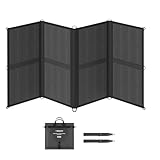

🛒 Best Price Today on Amazon
Prime members get fast, free shipping on everything above, plus member-only deals. New members get a 30-day free trial — cancel anytime.
Start 30-Day Prime Free Trial →See Today’s Amazon DealsTop Pick
Portable Briefcase vs. Fixed Roof Panels: The Right Tool for Each Job
See also: How Long Will a 100Ah Battery Last in a Van? Runtime Math Explained • Best Level 2 EV Chargers for Home
Fixed roof panels win on convenience — they harvest energy passively while you drive, park, and sleep without any setup action. Their weakness is orientation: if your best available parking spot puts the roof in shade, you generate nothing. In cities, van parking is rarely optimized for solar azimuth.
A portable briefcase panel lets you physically chase the sun independent of where the van is parked. Set it on the ground, on a picnic table, or propped against the van’s side — tilt it to the optimal angle for the current sun position, and collect full rated output. Many experienced van lifers run a hybrid system: 100–200W of fixed panels for passive driving and overnight charging, plus a 200W briefcase for days when they are stationary and need maximum input.
Key Specs to Compare
| Spec | What to Look For | Why It Matters |
|---|---|---|
| Rated wattage | 200W | 200W is the practical sweet spot — meaningful daily output without excessive weight or bulk |
| Cell type | Monocrystalline | Higher efficiency per square foot than polycrystalline; better low-light performance |
| Open circuit voltage (Voc) | 22–24V for 12V systems | Must match your MPPT controller input range; most 12V MPPT controllers accept up to 50V |
| Short circuit current (Isc) | 10–12A | Determines how fast the panel charges at full sun |
| Folded dimensions | Under 28″×20″×3″ | Fits in most cargo van storage areas when not in use |
| Weight | Under 30 lbs | Manageable for solo setup; heavier units require two people |
| Included controller | PWM (basic) — upgrade to MPPT separately | Most briefcase kits include a PWM controller; MPPT extracts 20–30% more energy |
| Cable length | 10+ feet | Allows positioning the panel away from the van in shade situations |
Real-World Output: What 200W Actually Delivers
Peak wattage ratings are measured under Standard Test Conditions (STC): 77°F cell temperature, 1000 W/m² irradiance, and a specific air mass spectrum. Real-world output is typically 70–85% of rated peak in optimal conditions and significantly less in partial cloud, haze, or suboptimal tilt angles.
A practical daily energy budget for a 200W panel in a sunny region (5 peak sun hours): 200W × 5 hrs × 0.75 system efficiency = 750Wh per day. That is enough to fully recharge a 60Ah LiFePO4 battery (768Wh capacity) from 50% depth of discharge in a single sunny day, with energy left over for loads. In overcast regions or winter, plan for 2–3 peak sun hours — roughly 300–450Wh daily from the same panel.
Connecting a Briefcase Panel to Your Van System
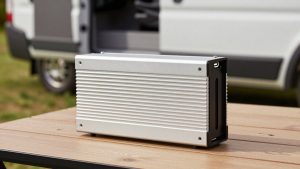
Most 200W briefcase panels ship with MC4 output connectors — the same standard used by fixed roof panels. Connection options:
- Through your existing MPPT controller — if your roof panel and briefcase panel are the same voltage, they can often be wired in parallel into the same MPPT input. Check your controller’s maximum input current rating first.
- Dedicated secondary MPPT — a second small MPPT controller (20A, $25–$50) dedicated to the briefcase panel gives independent tracking and monitoring. Clean, scalable, and the preferred approach for a hybrid system.
- Direct to battery via included PWM controller — simple and functional but sacrifices 15–25% of potential energy harvest. Acceptable for occasional use; not ideal as a daily charging method.
Frequently Asked Questions
Can a 200W solar briefcase fully power a van life system?
For a minimal van life setup — LED lighting, phone and laptop charging, a 12V fan, and occasional small appliance use — yes, a 200W briefcase panel in a sunny region generates enough daily energy to sustain most users on a 100Ah LiFePO4 battery. For power-intensive setups including a 12V compressor fridge, heating system, and regular laptop work, 200W alone is typically undersized and works best as a supplement to fixed panels or alternator charging.
How do you store a solar briefcase in a cargo van when not in use?
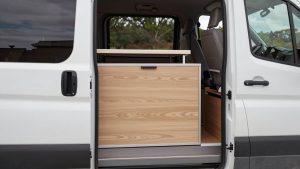
Most 200W briefcases fold to approximately 26″×20″×2.5″ — slim enough to slide under a van bed platform, stand upright in a narrow storage bay, or strap to a roof rack when traveling between sites. The rigid frame protects the cells during storage and transit better than flexible rollable panels. A padded carrying bag (often included) protects the glass surface from contact damage with tools and gear.
What angle should a portable solar panel be tilted at for maximum output?
The optimal fixed tilt angle equals your geographic latitude. At 35° N latitude (roughly the southern US), a 35-degree tilt from horizontal maximizes annual energy harvest. For day-to-day optimization, tilt the panel so it faces the sun as directly as possible — the panel face should be perpendicular to incoming sunlight, which means the shadow of the frame edge falls directly behind the panel. Adjusting tilt every two to three hours as the sun moves improves daily output by 20–30% versus a fixed morning position.
Is a portable solar briefcase durable enough for full-time van life use?
Quality briefcase panels from established brands (Renogy, Jackery, EcoFlow) use tempered glass over monocrystalline cells with an aluminum frame — the same construction as fixed roof panels. They are rated for outdoor use in rain, wind, and temperature extremes. The primary durability risk is physical impact from improper handling or falling over in wind. Use the included kickstand on calm days; add a light tether to a fixed point when wind is a factor.
Can a solar briefcase charge while the van is driving?
Not safely when deployed — a briefcase panel extended on its kickstand cannot be driven with. However, some van lifers cable their briefcase panel to an exterior-mounted bracket or roof rack position as a semi-fixed installation for driving, then redeploy it on the ground when parked. This is non-standard use and requires securing the panel firmly to prevent aerodynamic lift at highway speeds. Most use the alternator for driving charge and deploy the briefcase panel only when stationary.
Integrate your portable panel into a complete electrical system: run it through a quality MPPT charge controller to maximize energy harvest, store that energy in a LiFePO4 house battery with proper cycle life, and read the complete off-grid solar setup guide to design a system that balances fixed and portable inputs for your specific travel pattern.