As an Amazon Associate we earn from qualifying purchases at no extra cost to you.



Power independence is one of the core freedoms of van life — and a reliable power inverter is what bridges the gap between your 12V vehicle electrical system and the 110V or 240V appliances you depend on. Whether you want to run a laptop, charge camera batteries, power a blender, or run a CPAP machine off-grid, a car power inverter converts your van’s DC power to standard AC current. Choosing the wrong inverter can mean damaged electronics, blown fuses, or an inverter that trips off under real-world load. This guide reviews the best power inverters for van life and explains how to size one correctly for your setup.
🛒 Best Price Today on Amazon
Prime members get fast, free shipping on everything above, plus member-only deals. New members get a 30-day free trial — cancel anytime.
Start 30-Day Prime Free Trial →See Today’s Amazon DealsQuick Picks: Best Power Inverters for Van Life
Why Trust Our Picks
See also: How Long Will a 100Ah Battery Last in a Van? Runtime Math Explained • Best Level 2 EV Chargers for Home
We evaluated over 20 power inverters based on output waveform quality, thermal performance under sustained load, protection circuit reliability, connection type, and real-world van life compatibility. Our focus was on inverters that work reliably in a vehicle electrical environment — not just under lab conditions. Surge capacity, idle draw, and protection against reverse polarity were key evaluation criteria.
Best Power Inverters for Van Life: In-Depth Reviews
1. AIMS Power 1000W Pure Sine Inverter — Best Overall
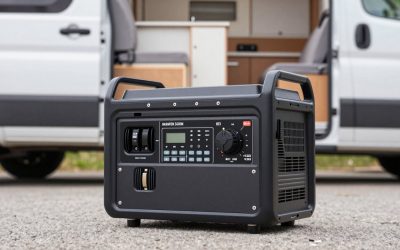
The AIMS Power 1000W is the benchmark for van life power inverters that handle real electrical loads. Its pure sine wave output is essential for running sensitive electronics — laptops, CPAP machines, camera chargers, and power tools all operate correctly on pure sine wave power. Modified sine wave inverters can damage or reduce the lifespan of these devices. At 1000W continuous and 2000W peak, this inverter handles the majority of van life power demands including electric kettles, small blenders, and tool charging. The low idle draw (under 1.5A) means it does not drain your battery bank when on standby. Protection circuits cover over-temperature, overload, short circuit, and low battery voltage.
- Pros: Pure sine wave, 1000W continuous, low idle draw, comprehensive protection circuits
- Cons: Requires direct battery connection, higher cost than modified sine alternatives
2. BESTEK 300W Power Inverter — Runner-Up
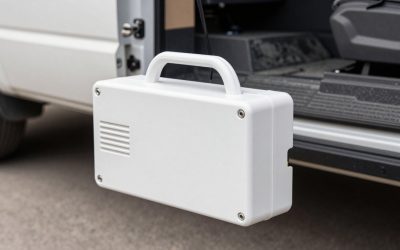
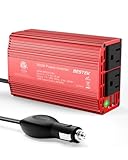
For van lifers who primarily need to charge laptops, run small electronics, and keep USB devices powered, the BESTEK 300W is an exceptionally practical and compact solution. It plugs directly into a 12V cigarette lighter outlet — zero installation required. The unit provides two standard AC outlets and two USB-A ports simultaneously. The 300W continuous capacity covers laptops (typically 45 to 90W), phone chargers, camera battery chargers, and LED lights with headroom to spare. The modified sine wave output is acceptable for most laptop chargers and simple electronics, though not ideal for CPAP machines or precision power tools.
- Pros: No installation, plug-and-play, two AC outlets, USB ports, compact size
- Cons: 300W limited to lighter loads, modified sine wave, limited by cigarette lighter fusing
3. Energizer 500W Power Inverter — Best Budget
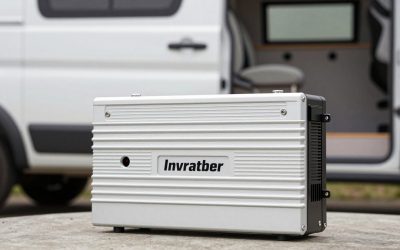
The Energizer 500W inverter hits the sweet spot between capacity and cost. It connects via direct battery clamps, which bypasses the cigarette lighter fusing limitation and allows it to deliver its full 500W rating reliably. Two AC outlets and USB-A charging ports cover the typical van life device mix — laptop, phone, tablet, and camera simultaneously. Protection circuits include over-temperature, overload, and reverse polarity — the basics you need for safe operation. The Energizer brand carries real warranty support, which is not always the case with lower-priced no-name alternatives. The modified sine wave output handles most van life loads capably.
- Pros: 500W capacity, battery clamp connection, Energizer warranty, USB ports
- Cons: Modified sine wave, requires basic wiring setup for battery connection
Buyer’s Guide: Choosing a Van Life Power Inverter
Sizing and selecting a power inverter correctly prevents both under-capacity frustration and safety hazards:
- Pure sine vs. modified sine wave: Pure sine wave inverters produce power identical to grid power and are safe for all electronics. Modified sine wave costs less but can damage or degrade sensitive devices including CPAP machines, some laptop chargers, and precision tools.
- Watt sizing: Add up the watt ratings of all devices you might run simultaneously, then add 20% overhead. This gives your minimum continuous watt requirement. The peak surge rating needs to handle motor start-up loads.
- Connection type: Cigarette lighter plug-in inverters are limited to approximately 150 to 200W by the outlet fusing. For 300W and above, direct battery connection is required.
- Idle draw: Inverters draw power even when no devices are connected. Look for units with an idle draw under 2 amps to preserve battery bank capacity overnight.
- Protection circuits: At minimum, your inverter should include over-temperature protection, overload protection, short circuit protection, and low battery shutdown to prevent both device damage and battery deep discharge.
FAQ
Can I run a CPAP machine from a van power inverter?
Yes, but you must use a pure sine wave inverter. Modified sine wave inverters can cause CPAP machines to malfunction, produce noise, or be damaged over time. A 300W pure sine inverter is sufficient for most CPAP machines.
Will a power inverter drain my van battery?
Yes — any inverter draws from the vehicle battery. Always run a significant inverter from a dedicated house battery bank, not the starter battery. Using your starter battery risks being unable to start your van after extended inverter use.
What size inverter do I need for van life?
For basic device charging — laptop, phone, camera — a 300 to 500W inverter covers most needs. For cooking appliances like an electric kettle or blender, a 1000 to 1500W unit is more appropriate. Match the inverter capacity to your actual peak load requirement.
Final Verdict
The AIMS Power 1000W Pure Sine Inverter is the right investment for van lifers who run a real electrical load — sensitive electronics, CPAP machines, or kitchen appliances. The BESTEK 300W is perfect for the minimalist setup — no installation, instant power for laptops and devices. And the Energizer 500W delivers solid mid-range capacity at a price that leaves budget for the rest of your van build. Choose based on what you actually need to power — and make sure your battery bank can support it.
Frequently Asked Questions
How big an inverter can I run from a cigarette lighter socket?
Factory 12V sockets are typically fused at 10 to 15 amps, which caps you at about 120 to 180 watts continuous. Anything larger must be hardwired directly to the battery with appropriate cable and a fuse. Plug-in inverters advertised at 300 watts will blow the socket fuse or melt the plug.
What size cable and fuse does a hardwired inverter need?
For a 1,000-watt inverter within five feet of the battery use 4 AWG; for 2,000 watts use 2/0 AWG. Install an ANL or Class T fuse within seven inches of the battery positive terminal, sized just above the inverter’s maximum draw. Undersized cable is the leading cause of DIY inverter fires.
Do I need pure sine wave for a laptop and phone charger?
Laptops and phone bricks usually tolerate modified sine, but they run warmer and some newer USB-C chargers refuse to work at all. Anything with a motor, a CPAP machine, or audio equipment needs pure sine. Given the small price difference now, pure sine is the sensible default for a van.
How much power does an inverter waste just being on?
Idle draw is typically 0.5 amps on a small unit and up to 2 amps on a 2,000-watt model, which is 12 to 48 amp-hours a day if left on continuously. Switch it off between uses, ideally with a remote switch mounted somewhere you can reach from bed.
Where should I mount the inverter?
As close to the battery as possible to keep cable runs short, in a dry, ventilated spot with several inches of clearance around the cooling fan. Never in a sealed cabinet or directly under the bed with bedding against it, and never in the same enclosure as lead-acid batteries that vent hydrogen.