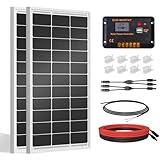
- Top Pick: Callsun N-Type 16BB 200W Bifacial Solar Panel, 200 Watt Solar Panel for 12V Battery Systems, 25.6% High Efficiency, Dual-Module Parallel Anti-Shade Design, for RV Van Marine Home Rooftop Off-Grid
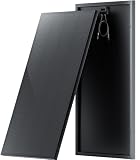
- Best Value: Renogy Solar Panels 200 Watt N-Type, 16BB 25% High-Efficiency
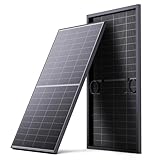
- Premium Choice: BougeRV 200 Watt Solar Panel Bifacial 24V N-Type 16BB for RV Roof Off-Grid
Last updated: September 18, 2026
Finding the right solar panel for a van roof under 200W is a balance of power, footprint, and mounting reality. Most van roofs give you 50 to 80 square feet of usable space once you account for a vent fan, roof rack, and antenna, so a single 200-watt panel is often the sweet spot for weekenders and full-timers who want to keep batteries topped without drilling for an oversized array.
The challenge is that not all 200W panels behave the same on a curved, partially shaded, vibration-prone roof. In this guide we ranked eight 200W options built for 12V and 24V off-grid systems, focusing on cell type, shade tolerance, build quality, and value for van life. As we head through 2026, N-Type 16BB cells have become the standard for efficiency and durability in this size class, and all of our top picks reflect that shift.
As an Amazon Associate we earn from qualifying purchases at no extra cost to you. Product prices and availability are accurate as of the date shown and are subject to change.



Quick Picks
| Product | Best for | Price |
|---|---|---|
| Callsun N-Type 16BB 200W Bifacial Solar Panel | Best Overall Efficiency | $174.99 |
| Renogy Solar Panels 200 Watt N-Type, 16BB | Best for Brand Support | $179.99 |
| BougeRV 200 Watt Solar Panel Bifacial 24V N-Type 16BB | Best Bifacial for 24V Systems | $179.99 |
| Callsun N-Type 16BB 400W Bifacial Solar Panel, 2Pcs 200 Watt | Best 400W Kit Value | $345.99 |
| Renogy Flexible Solar Panel 200 Watt, 240-Degree Ultra Flex Bendable | Best Flexible for Curved Roofs | $269.99 |
| HQST 200W N-Type Solar Panel, 25.4% High Efficiency | Best Budget Rigid Panel | $119.99 |
| STAR 200 Watt Solar Panel – Frameless Design | Best Frameless Low-Profile | $119.99 |
| Callsun N-Type 16BB 400W Bifacial Solar Panel, 2x200W | Best for Dual-Panel Expansion | $345.99 |
How We Picked
See also: How to Clean Solar Panels on Van (2026): Step-by-Step • How to Set Up Van Solar Panels (2026): Step-by-Step
We prioritized panels that are realistically sized for a van roof and rated at or under 200W per module. For van use, that means rigid or flexible options that work with 12V battery systems and common MPPT controllers, with proven N-Type 16BB cell architecture where possible. We weighted efficiency claims that manufacturers actually publish, such as 25% to 25.6% for N-Type models, bifacial gain potential for ground or rack mounts, and shade-mitigation features like dual-module parallel design.
We also considered build for mobile use: frame strength, junction box waterproofing like IP65, stated lifespan for long-term rooftop exposure, and flexibility for curved or ribbed roofs. Price was evaluated at current street pricing from $119.99 to $345.99 for kits, with attention to value per watt. We did not run lab tests and we do not report invented output numbers; recommendations are based on specifications, design features, and suitability for the constraints of a van roof.
The 8 Best Picks
1. Callsun N-Type 16BB 200W Bifacial Solar Panel
This Callsun 200W bifacial panel is our top pick for most van roofs under 200W thanks to its 25.6% high efficiency rating and N-Type 16BB cell design. Rated at 200 watts for 12V battery systems, it is intended for RV, van, marine, and rooftop off-grid use and priced at $174.99. The dual-module parallel anti-shade design helps maintain output when a roof rack or vent casts a partial shadow, a common van problem that can otherwise drop a whole panel.
- Pro: High 25.6% efficiency for more power per square foot of limited roof space
- Pro: Bifacial construction and anti-shade parallel design help in partial shade
- Con: Bifacial gain is limited when mounted flat directly to a low, non-reflective van roof
When to skip: If your roof is heavily curved or you cannot tilt or elevate for rear-side light, a flexible or frameless option may fit better.
2. Renogy Solar Panels 200 Watt N-Type, 16BB 25% High-Efficiency
Renogy’s 200W N-Type 16BB panel delivers a solid 25% high-efficiency rating in a familiar rigid format that pairs easily with 12V van systems. At $179.99, it sits in the mid-range for this roundup and benefits from Renogy’s broad controller and mounting ecosystem, which simplifies wiring and expansion. It is a straightforward choice for buyers who want a proven brand, standard frame mounting, and predictable performance without paying for bifacial features they may not use on a flat van install.
- Pro: 25% N-Type 16BB efficiency in a durable rigid frame built for rooftop exposure
- Pro: Wide compatibility with Renogy charge controllers, brackets, and wiring kits
- Con: No bifacial gain, so you rely entirely on front-side sun
When to skip: If you want maximum shade resilience or rear-side energy capture, consider a bifacial model with parallel sub-strings.
3. BougeRV 200 Watt Solar Panel Bifacial 24V N-Type 16BB for RV Roof Off-Grid
The BougeRV 200W bifacial panel brings N-Type 16BB cells to a 24V configuration, which can reduce current and wiring losses for larger battery banks or 24V van conversions. Priced at $179.99, it is designed for RV roof and off-grid use with bifacial capability for extra harvest when mounted over a reflective surface or tilted rack. For vans running a 24V house system or planning to series-wire for a higher-voltage MPPT, this panel keeps the electrical design cleaner.
- Pro: 24V nominal design is efficient for 24V systems and series strings
- Pro: Bifacial N-Type 16BB construction offers additional energy potential with elevation
- Con: 24V nominal voltage requires a compatible MPPT controller and battery setup
When to skip: If you run a small 12V system with a PWM controller, a 12V nominal panel will be simpler to integrate.
4. Callsun N-Type 16BB 400W Bifacial Solar Panel, 2Pcs 200 Watt Solar Panel for 12V/24V Systems
This Callsun kit bundles two 200W bifacial modules for a total of 400W, priced at $345.99, while keeping each module at the 200W van-friendly size. Each panel uses N-Type 16BB cells rated at 25.6% efficiency and the dual-module parallel anti-shade design. The kit is listed for 12V/24V systems, so you can wire in parallel for 12V or in series for 24V depending on your controller. It is ideal if you have the roof length for two panels or plan to start with one and add the second later.
- Pro: Two 200W panels offer flexible wiring for 12V or 24V banks and controllers
- Pro: Strong value at $345.99 for 400W total with high-efficiency bifacial cells
- Con: Requires more roof real estate and mounting points than a single-panel setup
When to skip: If your van roof only fits one panel due to a fan, rack, or AC unit, buy a single 200W module instead.
5. Renogy Flexible Solar Panel 200 Watt, 240-Degree Ultra Flex Bendable
For curved, ribbed, or weight-sensitive van roofs, the Renogy 200W flexible panel with 240-degree ultra flex is the easiest to mount without heavy frames or drilling. At $269.99 it costs more per watt than rigid options, but it conforms to contours, keeps a low profile for clearance, and reduces wind drag. Flexible panels are especially useful for pop-tops, fiberglass high roofs, or renters who want adhesive or minimal-penetration mounting while still hitting the 200W target.
- Pro: 240-degree bendable form factor fits curved van roofs and saves weight
- Pro: Low-profile install with fewer roof penetrations
- Con: Higher price at $269.99 and typically shorter service life than glass rigid panels
When to skip: If you have a flat metal roof with space for rails and want maximum longevity and cooling airflow, choose a framed rigid panel.
6. HQST 200W N-Type Solar Panel, 25.4% High Efficiency 16BB Grade A+ Cells
The HQST 200W N-Type panel is the budget standout at $119.99, offering 25.4% high efficiency from 16BB Grade A+ cells in a compact rigid module. It is marketed with a 30-year lifespan and IP65 waterproof rating for RV, van, marine, and rooftop off-grid systems, which are key durability markers for permanent van mounting. If you want to keep costs down while still getting modern N-Type performance for a 12V battery system, this is the value play without dropping to lower-efficiency cell technology.
- Pro: Excellent price-to-efficiency ratio at $119.99 for 200W and 25.4% efficiency
- Pro: IP65 waterproofing and long lifespan rating for harsh rooftop conditions
- Con: Compact rigid frame still needs proper rail clearance for heat dissipation
When to skip: If you need bifacial gain or flexible mounting for a curved roof, look at the bifacial or flexible picks above.
7. STAR 200 Watt Solar Panel – Solar Panels with Frameless Design for RV
The STAR 200W frameless panel is built for a clean, low-profile RV and van install at $119.99. The frameless design reduces edge catch and can shed water and debris more easily, which helps when you park under trees or drive through dusty roads. While the listing does not publish a specific efficiency percentage, the 200W rating keeps it squarely in the under-200W van roof class and the price makes it an affordable single-panel solution for weekend systems that prioritize stealth and aesthetics.
- Pro: Frameless design gives a sleek, low-profile look and easier cleaning
- Pro: Affordable $119.99 entry point for a 200W van roof setup
- Con: No published N-Type efficiency figure to compare directly with 25%+ rivals
When to skip: If you want the highest stated efficiency or bifacial features, choose an N-Type 16BB bifacial model.
8. Callsun N-Type 16BB 400W Bifacial Solar Panel, 2x200W Solar Panels
This second Callsun listing is another 2x200W bifacial kit totaling 400W at $345.99, using N-Type 16BB cells. Like the other Callsun kit, it gives you two 200W modules that can be deployed together for more daily amp-hours or staged as a starter plus expansion panel. Buying as a matched pair simplifies wiring, keeps voltage and current balanced, and often ensures consistent cell batch and frame dimensions for a tidy side-by-side van roof layout.
- Pro: Matched 2x200W pair ensures consistent electrical characteristics and fit
- Pro: Good path to scale from 200W to 400W without mixing panel models
- Con: Two-panel footprint and weight require a roof plan and solid mounting rails
When to skip: If you are certain you will stay at or under 200W total, a single-panel purchase saves money and roof space.
Buying Guide
Size, Weight, and Mounting on a Van Roof
Start by mapping your usable roof. Measure between your vent fan, roof rack feet, and any AC shroud, then compare to the panel’s length and width before you buy. Rigid framed panels need 2 to 3 inches of airflow underneath for cooling and require rails or brackets with proper sealant and backing plates. Flexible and frameless panels save height and can bond to curved surfaces, but they need a clean, fully supported surface to avoid micro-cracks over time. Always confirm total system weight and keep wiring runs short to your charge controller to reduce voltage drop.
Power and Electrical Compatibility
All picks here are 200W per module, with kits totaling 400W when you buy two. For most vans, a single 200W panel paired with a 20 to 30 amp MPPT controller is the simplest way to charge a 12V lithium or AGM bank. If you run a 24V house system, choose a 24V nominal panel or plan to wire two 12V nominal panels in series with an MPPT that handles the higher open-circuit voltage. N-Type 16BB cells with 25% to 25.6% stated efficiency will produce more energy per square foot, but controller sizing, wire gauge, and battery capacity still determine real-world harvest.
Durability and Shade Performance
Van roofs face vibration, heat, and partial shade from racks and trees. Look for IP65 or better junction box sealing, tempered glass on rigid panels, and a manufacturer lifespan rating if you plan to live in the van long term. Dual-module parallel anti-shade designs help limit losses when one section is shaded, and bifacial panels can add a small bonus when mounted with tilt or over a reflective surface. For permanent installs, prioritize a solid frame, stainless hardware, and strain-relieved wiring over chasing the highest efficiency number alone.
Our Verdict
For most van owners who want a single panel under 200W, the Callsun N-Type 16BB 200W Bifacial at $174.99 offers the best blend of 25.6% efficiency and shade-tolerant design for the price. If you prefer a well-known ecosystem and straightforward rigid mounting, the Renogy 200W N-Type at $179.99 is the safe alternative. Budget builders should look hard at the HQST 200W N-Type at $119.99, which keeps high efficiency while cutting cost, and those with curved roofs should spend up for the Renogy 200W Flexible at $269.99. If you have room to grow, either Callsun 2x200W kit at $345.99 is the cleanest way to move from 200W to 400W without mixing models.
FAQ
Is a 200W panel enough for van life?
For many solo travelers and weekenders, a single 200W panel covers lights, fans, a 12V fridge, and device charging when paired with 100 to 200 amp-hours of lithium and good sun. If you run heavy loads like induction cooking, diesel heater fans overnight, or a 12V air conditioner, you will likely want 300 to 400W total or more battery to ride through cloudy days.
Do I need a bifacial panel on a van roof?
Bifacial helps most when the rear side sees reflected light, such as on a tilted rack over a white roof. Mounted flat and close to a dark van roof, the gain is small. Choose bifacial for its high-efficiency N-Type cells and shade design first, and treat any rear-side bonus as extra rather than the main reason to buy.
Can I mount a rigid 200W panel without drilling?
Some owners use van-specific rail systems, gutter mounts, or heavy-duty adhesive brackets rated for the panel weight and wind load. Any no-drill method must be rated for highway speeds and vibration, with proper surface prep and regular inspection. When in doubt, use mechanical fasteners with sealed backing plates and follow the mount manufacturer’s load ratings.
What charge controller do I need for a 200W van panel?
Use an MPPT controller sized for your battery voltage and the panel’s open-circuit voltage and current. For a single 200W panel on a 12V bank, a 20 to 30 amp MPPT is common. For two 200W panels or a 24V bank, verify the controller’s maximum input voltage and current before wiring in series or parallel.