Last updated: November 13, 2026
“Best power station” is a search with no natural stopping point, because the useful answer depends on whether you are charging a phone in a hammock or keeping a freezer cold after a storm. The range in a single shopping list can run from under 100 watt-hours to roughly 2000, with outputs ranging from a laptop-charger level to a figure that handles several household appliances at once. The six picks below respect that spread, so no two of them solve exactly the same problem. A van dweller needs a different box than a homeowner, and a weekend hiker needs a different one than a mobile worker.
The six units below are chosen to cover that range without repeating each other: one pocket-class pack, one camping-class unit, two kilowatt-hour batteries from competing brands, a long-runtime home-backup model, and a high-output household unit. Each is judged only from its listed title. If you are buying in 2026 and want to understand the tradeoffs before you spend, work from the table, then read the buying notes.
Quick Picks

Jackery Explorer 300 Portable Power Station,292Wh | Backup LiFePO4 Battery, Solar Generator for Outdoors, Camping, Travel, Hunting, Blackout (Solar Panel Optional)
Included for '6 Best Power Station (October 2026)' as a representative gaming product in this roundup; selection reflects the product set returned for this topic.
View on Amazon
Anker SOLIX C300 DC Portable Power Station, 288Wh, 300W, Outdoor Camping | 288Wh LiFePO4 Battery, 300W Solar Generator for UPS, Travel, and Emergency Use (No Wall Charger Included)
Included for '6 Best Power Station (October 2026)' as a representative gaming product in this roundup; selection reflects the product set returned for this topic.
View on Amazon
DJI Power 1000 V2 Portable Power Station, 1024Wh LFP Battery | 2600W Stable Output, Compact Size, 0-80% Recharge in 37 Mins, Electric Generator for Home Use, Camping & RVs, Outdoors
Included for '6 Best Power Station (October 2026)' as a representative gaming product in this roundup; selection reflects the product set returned for this topic.
View on Amazon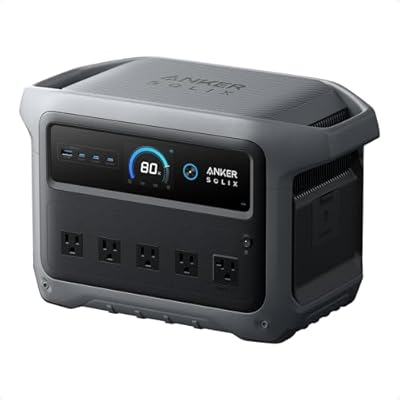
Anker SOLIX C1000 Gen 2 Portable Power Station | 1,024Wh LiFePO4 Battery, Full Charge in 49 Min, 2,000W Solar Generator (Peak 3,000W) for UPS, Outdoor and Emergency Use
Included for '6 Best Power Station (October 2026)' as a representative gaming product in this roundup; selection reflects the product set returned for this topic.
View on Amazon
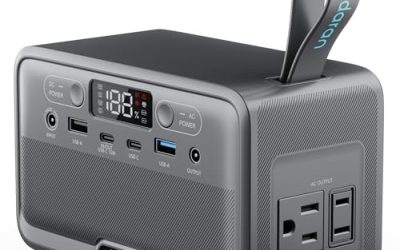
HOWERASY Portable Power Station 98Wh, 135W(270W Peak) Solar Generator | 65W USB-C Fast Charging with AC Outlet Solar Power Bank, 7 Outlet , Power Bank with LED, Phone, Laptop for Home/Camping
Included for '6 Best Power Station (October 2026)' as a representative gaming product in this roundup; selection reflects the product set returned for this topic.
View on Amazon
Anker SOLIX S2000 Portable Power Station, 2,010Wh, 1,500W | 2,010Wh LiFePO4 Battery, 1,500W Output, Solar Generator for Home Backup, Outdoor and Emergency Use
Included for '6 Best Power Station (October 2026)' as a representative gaming product in this roundup; selection reflects the product set returned for this topic.
View on Amazon| Product | Best for | Key spec from the title |
|---|---|---|
| HOWERASY 98Wh | Phones and tablets on the move | 98Wh, 135W (270W peak), 65W USB-C, 7 outlets |
| Jackery Explorer 300 | Camping, hunting, and blackout basics | 292Wh, LiFePO4 battery |
| DJI Power 1000 V2 | Compact kilowatt-hour power with quick recharge | 1024Wh LFP, 2600W stable output, 0-80% in 37 minutes |
| Anker SOLIX C1000 Gen 2 | Fast-charging UPS and outdoor use | 1,024Wh LiFePO4, 2,000W (3,000W peak), full charge in 49 minutes |
| Anker SOLIX S2000 | Longer runtime for home backup | 2,010Wh LiFePO4, 1,500W output |
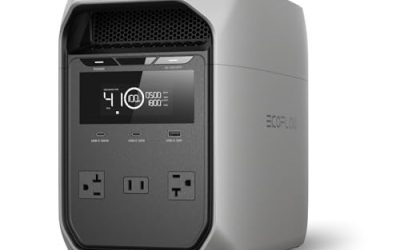
| EBL 2400W | High output across many devices | 1843.2Wh LiFePO4, 2400W, 12 outlets |
How to Choose
See also: Best Battery Backup Power Stations 2026: 7 Top Picks • Best Camping Generators for Quiet Campgrounds: 7 Picks
Capacity decides how long, output decides what
Two numbers define every power station: watt-hours of storage and watts of AC output. A 98Wh pack is a travel accessory, a 292Wh unit is a camp companion, a 1000Wh battery is a small-home backup, and a 2000Wh battery begins to look like a genuine appliance-class system. Add up the running watts of your devices and divide the battery’s Wh by that total to estimate runtime, then subtract a margin for inverter loss. The calculation takes thirty seconds and prevents most regrets. Remember that cold weather and aging cells shave usable energy, so leaving a cushion is wise.
Balance stored energy against output
The S2000 on this list stores almost twice what the C1000 Gen 2 does but lists lower output than the smaller Anker, which is a good reminder that bigger is not automatically stronger. If you want to run a microwave or a hair dryer, output is the limiting factor; if you want a freezer to run through a long outage, capacity is. Ask which constraint will actually bite you, and buy for that one first.
Chemistry, recharge speed, and standby behavior
Most of the models here name LiFePO4 or LFP cells, which are widely chosen for long cycle life and stability. Recharge time matters nearly as much as capacity: a unit that returns to 80% in under an hour can be topped up during a lunch stop or a short window of grid power. Charging speed also affects how comfortable you are with a smaller battery: a fast-charging 1000Wh unit can feel bigger than a slow-charging one with more storage. For standby use, look for UPS-style behavior if you want it to sit between the wall and sensitive electronics.
Ports, size, and where the unit will live
Count outlets and USB-C ports, and check that the fast-charge USB-C output suits your laptop. Think about where the unit will sit: a heavy box on a high shelf is a hazard, and a unit in a hot trunk ages quickly. Skip spec-sheet gloss, such as unexplained “peak” numbers, and weigh the continuous output. If you are weighing batteries against fuel, remember that gas generators produce carbon monoxide and must never run indoors or in an attached garage.
The 6 Best Options
HOWERASY 98Wh
The smallest option in the group, the HOWERASY lists 98Wh with 135W continuous (270W peak), a 65W USB-C fast-charging port, and seven outlets. It is aimed at people who want a power bank with household-style sockets.
- A 65W USB-C port can charge many laptops directly.
- Seven outlets reduce the need for adapters.
- Trade-off: 98Wh is a short-lived battery and 135W is a narrow ceiling.
Skip it if you need to run a fridge, a fan for hours, or anything with a motor. It works best as a bag-sized backup for a trip or a bedside stash for a brief outage.
Jackery Explorer 300
The Explorer 300 lists a 292Wh battery described as LiFePO4, positioned for outdoors, camping, travel, hunting, and blackouts.
- The use-case list is broad, which suits a general-purpose kit.
- LiFePO4 cells are a good match for gear used often.
- Trade-off: the title does not state the AC output, so check that figure before pairing it with an appliance.
Skip it if you need to power a cooking or heating appliance. For a first station, the 300 class is a familiar starting point, because it covers lights, phones, and a laptop without the bulk of a home unit.
DJI Power 1000 V2
This unit lists a 1024Wh LFP battery, 2600W of stable output, a compact size, and 0-80% recharging in 37 minutes. The title frames it for home and outdoor use.
- 2600W of output is high for a kilowatt-hour class unit, leaving room for demanding tools.
- Fast recharge makes short stops useful.
- Trade-off: it has the same stored energy as the other 1024Wh units, so high loads will drain it quickly.
Skip it if your priority is the longest possible runtime from a single charge. The compact size and quick top-up are the draw, so it fits a van or a job site better than a cabinet at home.
Anker SOLIX C1000 Gen 2
The C1000 Gen 2 lists 1,024Wh of LiFePO4 capacity, a full charge in 49 minutes, and 2,000W output with a 3,000W peak. It is billed for UPS use and outdoor setups.
- The 3,000W peak figure suggests it can start motor-driven loads.
- UPS positioning suits a home office.
- Trade-off: a 49-minute full charge is quick, but the capacity is still limited to roughly one kilowatt-hour.
Skip it if you want multi-day home backup from a single unit. Its fast recharge and UPS role make it the better choice when the grid is mostly reliable and the battery covers short interruptions.
Anker SOLIX S2000
The S2000 pairs 2,010Wh of LiFePO4 storage with a 1,500W output, aimed at home backup, outdoor use, and emergencies.
- Roughly double the storage of the 1,000Wh class helps with longer outages.
- A 1,500W rating runs most small appliances.
- Trade-off: the output ceiling is lower than the C1000 Gen 2 despite the larger battery.
Skip it if you need to run higher-wattage tools alongside a fridge. It rewards patient, low-draw use, such as lights, a router, a laptop, and a fridge, over short high-power bursts.
EBL 2400W
The EBL lists 1843.2Wh of LiFePO4 storage and 2400W AC output across 12 outlets, framed as a solar generator for home backup.
- 2400W allows more simultaneous loads than most of the group.
- Twelve outlets accommodate a crowded workshop or kitchen counter.
- Trade-off: it is a large unit that suits a fixed location rather than a pack.
Skip it if you want something light enough to carry on a trail. It is better placed in a utility room or a workshop corner where its outlets can serve a whole bench.
Which One Fits Your Situation
You hike or travel and mostly charge phones
The HOWERASY 98Wh is the right size, and its seven outlets handle a camera charger, a headlamp, and a phone at the same time. If you also want a laptop for a few sessions, the Explorer 300 gives about three times the storage.
You want one battery for a van or truck bed
The DJI Power 1000 V2 and Anker SOLIX C1000 Gen 2 are the main candidates. Choose the DJI if raw output matters most; choose the Anker if UPS behavior and a 3,000W peak figure appeal to you.
You want to ride out outages at home
The Anker SOLIX S2000 offers the most stored energy on this list, while the EBL 2400W gives the most output and outlets. Pick the S2000 for runtime and the EBL for load. Whichever you choose, list the essentials first, such as refrigeration, a modem, lights, and medical devices, and leave the discretionary appliances for sunny days when panels can help.
You work remotely and need a battery behind your desk
The C1000 Gen 2’s UPS-style listing and quick recharge make it a sensible desk-side pick. A laptop, a monitor, and a router draw modest power, so the kilowatt-hour class gives hours of cushion, and the unit can stay plugged in as a buffer against flickers.
Common Mistakes
- Shopping by capacity alone and overlooking the continuous output rating.
- Assuming a peak figure is the number the unit can hold.
- Ignoring recharge time and ending up with an empty battery during a multi-day outage.
- Buying a unit larger than the loads require, then finding it too heavy to move or too bulky for the spot where it has to live.
- Using a gas generator indoors or in an attached garage because the battery ran out. Gas engines emit carbon monoxide, which is odorless and dangerous; keep them outside and away from windows, or plan enough battery capacity to avoid the temptation.
Specs and Terms Explained
UPS-style switchover
Some stations switch to battery in a few milliseconds when wall power drops, which can keep a desktop computer or router running. Others take longer, and a longer gap will reboot most electronics. If you plan to sit one behind a desk, look for a stated switchover time and the words UPS or EPS.
Chemistry: LFP versus NMC
LFP packs usually list thousands of charge cycles and tolerate heat well, but they weigh more per watt-hour. NMC packs are lighter and denser. For a home backup that sits idle most of the year, long cycle life is the stronger selling point; for hiking, weight dominates.
Total input in watts
This figure combines AC, solar, and sometimes car charging. A high maximum input only helps if you have a source that can deliver it, such as a strong wall outlet or enough panel wattage in clear sun.
Standby drain
An idle inverter and display consume a small but steady amount of power. Over days, that drain can quietly empty a unit left switched on, which matters during an extended outage.
Which One Should You Buy?
| If you… | Choose… |
|---|---|
| Hike or travel and mostly charge phones | HOWERASY 98Wh |
| Want a familiar, easy first station for camping | Jackery Explorer 300 |
| Want a van or truck-bed battery with ample output | DJI Power 1000 V2 |
| Want a mid-size unit that charges quickly from the wall | Anker SOLIX C1000 Gen 2 |
| Want a larger reserve for outages at home | Anker SOLIX S2000 |
| Need the biggest output and capacity in this list | EBL 2400W |
Setup and Care Tips
- Keep the vents uncovered and give the unit a few inches of clearance on each side.
- Set a reminder to recharge a stored battery every few months so it never rests at empty.
- Avoid leaving it in a hot car or on a sunny porch; cell wear speeds up with heat.
- Do a dry run before storm season by plugging in your most important device and noting how long it lasts.
- Keep the manual and charging cables in the same bag as the unit so they are not missing when you need them.
Who Should Skip These
- Anyone who needs to run a central air conditioner, electric range, or well pump; those loads call for an installed system.
- Shoppers who only want to charge phones on trips, where a simple power bank is lighter.
- Buyers with a home-medical-equipment dependency who have not confirmed a manufacturer-approved backup plan.
Sizing and Compatibility Checklist
- Pick the single device that matters most and look up its running watts on the label.
- Multiply that number by the hours you want it covered to get watt-hours, then add roughly a fifth for conversion losses.
- Confirm the station’s continuous output exceeds the total of everything running at once.
- Check the surge rating if the device has a motor or compressor.
- Make sure the port types fit: USB-C for laptops, standard AC sockets for appliances, and a car outlet if you carry 12V gear.
- Decide on your recharge source before you buy; solar input limits vary a lot between models.
- Measure the shelf, trunk, or desk space, and confirm you can lift the weight comfortably.
Related guides
- How Many Watts Of Solar Do You Need For Van Life
- How Long Will A 100Ah Battery Last In A Van
- Maxxfan Deluxe Vs Fantastic Fan For Vans
Frequently Asked Questions
How many watt-hours do I need?
Start with the loads that matter. Add up the watts of everything you will run, multiply by the hours you want to run it, and add a margin of about a fifth. For a phone and laptop, a few hundred watt-hours is plenty; for a fridge overnight, think in the thousands.
Is a power station safe to use indoors?
Battery units do not burn fuel and do not emit carbon monoxide, so they are designed for use in sheltered spaces. Keep them dry, ventilated, and away from heat sources, and avoid covering the vents with bedding or cargo. Gas generators are the opposite and must stay outdoors, well clear of doors, windows, and vents, because carbon monoxide can build up indoors within minutes.
What does a UPS function do?
It switches to battery power when wall power drops, fast enough that connected electronics usually keep running. It is useful for desktop computers and networking gear. Check the switchover time in the listing, since a slower transfer can still reboot a sensitive desktop.
Does LFP last longer than other lithium chemistry?
LFP and LiFePO4 cells are generally chosen for longer cycle life and better thermal stability, which is why they dominate recent home-backup models. Older lithium-ion packs can be lighter, but the titles above lean toward the sturdier chemistry for good reason.