- Top Pick: 10FT Solar Cable Entry Gland with 10AWG Solar Extension Cable MC4 Connectors Solar Junction Box RV Boat Camper & Van Lnstallations Tinned Copper Wire
- Best Value: BougeRV 10 Feet 12AWG Solar Extension Cable with Female and Male Connector
- Premium Choice: Solar Cable Entry Gland with 3FT 10AWG Solar Extension Cable MC4 Connectors Solar Junction Box Fit for RV Boat Camper & Van Lnstallations Tinned Copper Wire
Last updated: September 7, 2026
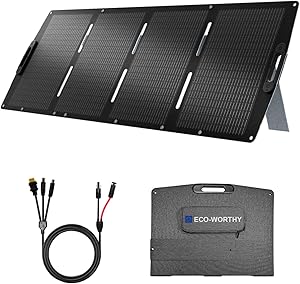
Van Solar Wire MC4 Connectors: Get the Wiring Right Before It Costs You a Panel
TL;DR Quick Answer
MC4 connectors are the industry standard for van solar wire connections — they’re weatherproof, rated to 1,000V DC, and lock together with an audible click that tells you the connection is solid. ASIN B07SY9J14X is the go-to MC4 connector set in the vanlife build community: proper IP67 waterproofing, compatible with 10–14 AWG solar cable, and a contact resistance low enough that you won’t lose meaningful wattage at the junction. Get the crimping tool specified for MC4 — flathead screwdriver installations fail in the field.
Solar wiring is the part of a van build that most people get wrong in a way they don’t discover until something fails. The panels work. The charge controller works. The battery works. But somewhere between the roof and the battery, a bad MC4 crimp or undersized wire is eating 15% of your system capacity — or worse, creating a resistance hot spot that will eventually fail, arc, or start a fire.
As an Amazon Associate we earn from qualifying purchases.

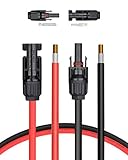


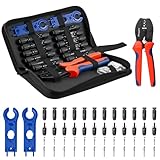
I’ve rewired two van solar systems — my own and a friend’s — after we both made the same mistake: trusting the included connectors and cable that came with budget panel kits. The wire was undersized. The connectors were uncertified knockoffs. After one summer of thermal cycling, the crimps had backed out far enough to create a resistive connection running visibly warm to the touch. This guide covers how to wire it right the first time.
🛒 Best Price Today on Amazon
Prime members get fast, free shipping on everything above, plus member-only deals. New members get a 30-day free trial — cancel anytime.
- Top Van Solar Wire and MC4 Connector Picks
- What Are MC4 Connectors and Why Does Van Solar Use Them?
- Wire Sizing: The Calculation That Matters
- How to Crimp MC4 Connectors Correctly
- MC4 Connector and Solar Wire Spec Sheet
- Roof Entry: Getting Wire from Panel to Van Interior
- Related Solar Build Guides
- FAQ: Van Solar Wire MC4 Connectors
- Frequently Asked Questions
- Related Articles
- Related Guides
Top Van Solar Wire and MC4 Connector Picks
BEST MC4 CONNECTORS
IP67 MC4 Solar Connector Set — 10–14 AWG, TUV Certified

9
Ivation Portable Camping Shower | Compact Handheld & Hands-Free Rechargeable Outdoor Shower Head & Cleaning System w/ 3.7V Pump, 6-Ft Hose, Bidet Head, Removable Filter, Multiuse Hook & USB Cable
In Stock


As an Amazon Associate we earn from qualifying purchases. Product prices and availability are accurate as of the date/time indicated.
BEST SOLAR CABLE
10 AWG Solar PV Wire — USE-2 Rated, UV Resistant, 50 ft
BEST MC4 CRIMP TOOL
MC4 Connector Crimping Tool — Ratchet Action, Correct Die Set

8
Setpower 12V Refrigerator 21 Quart Portable Freezer 50 Hours Keep Cool,Electric Cooler for Vehicles Car Refrigerator for Car Camping Truck Van RV SUV Road Trip Travel (3-year warranty)
In Stock


As an Amazon Associate we earn from qualifying purchases. Product prices and availability are accurate as of the date/time indicated.
What Are MC4 Connectors and Why Does Van Solar Use Them?
See also: MaxxFan Deluxe vs Fantastic Fan for Vans: Which to Choose? • Can I Lay LVP in a Van? Van Flooring Guide
MC4 stands for Multi-Contact, 4mm — a reference to the contact pin diameter. They were developed by Multi-Contact (now Stäubli) and have become the universal standard for photovoltaic panel interconnections worldwide. Every solar panel manufactured for the residential, commercial, or mobile market ships with MC4-compatible pigtails. When you buy panels for a van build, the MC4 connector is already on the panel end of the cable.
Why MC4 specifically?
- Weatherproofing: Properly mated MC4 pairs achieve IP67 rating — submersible to 1 meter. For a roof-mounted application exposed to rain, car washes, and morning dew, that weatherproofing is essential.
- Voltage rating: MC4 connectors are rated to 1,000V DC (some to 1,500V). Van solar systems typically run 12V–48V on the panel string, so you have massive headroom.
- Locking mechanism: The male and female halves click-lock together and require a specific MC4 disconnect tool (or careful flathead technique) to separate. They don’t vibrate apart, which matters on a vehicle application.
- Current rating: Standard MC4 connectors are rated for 30A continuous. A 400W 12V panel string produces about 33A at peak — use 30A-rated connectors for anything over 360W, or bump to MC4 connectors rated at 40A for higher-output systems.
Wire Sizing: The Calculation That Matters
Undersized wire is the #1 electrical mistake in DIY van solar builds. It causes voltage drop (losing free watts you’ve already paid for), excessive heat at the wire, and in worst cases, insulation failure and fire. Here’s the practical sizing guide:
Panel-to-Charge-Controller Wire
This is the highest-voltage segment of a van solar system, especially in series-wired panel arrays. Calculate your maximum current (panel Isc rating x number of parallel strings) and your wire run length, then size for less than 2% voltage drop.
- Up to 200W single panel, run under 15 ft: 12 AWG minimum, 10 AWG preferred
- 200–400W, run 10–20 ft: 10 AWG minimum
- 400–800W, run 10–25 ft: 8 AWG minimum
- Over 800W or runs over 25 ft: calculate with an online voltage drop calculator using your specific Isc and distance
Wire Type: USE-2 vs. THHN vs. PV Wire
Not all wire is safe for solar applications. Standard THHN building wire is rated for wet locations inside conduit — not for direct exposure to UV and outdoor temperature extremes. Solar PV wire (USE-2 or PV Wire designation) has UV-resistant insulation, a wider temperature range (-40°F to 194°F), and sunlight resistance. Use only USE-2 or PV Wire for the outdoor roof run between your panels and the roof entry gland. Inside the van, standard marine-grade or automotive wire is acceptable.
How to Crimp MC4 Connectors Correctly
Most MC4 wiring failures trace back to bad crimps. The correct process:
- Strip 5/8 inch (16mm) of insulation — not more, not less. Too little means insufficient contact length; too much means bare wire extending past the connector body.
- Insert wire into contact pin — all conductor strands must be inside the barrel. No stray strands outside the crimp zone.
- Crimp with the correct die — MC4 contact pins require a hex crimp die. Round or flat-jaw pliers will not achieve the correct deformation and will fail under vibration. The B0DN6CPDBZ ratchet crimper uses the correct hex die for both 10 and 12 AWG MC4 contacts.
- Pull test — after crimping, pull the wire firmly. A correct crimp holds 50+ lbs of pull force. If the pin slides out under moderate pull, the crimp has failed — cut it off and redo it.
- Insert pin into connector body — push until it clicks. The pin locks into place with a small retaining clip inside the body.
- Seat the weather seal — the rubber gland must seat flush against the connector body. If it’s not flush, the IP67 rating is not achieved.
MC4 Connector and Solar Wire Spec Sheet
| Spec | B07SY9J14X MC4 Connectors | B0FN3TVVD8 Solar Cable | B0DN6CPDBZ Crimp Tool |
|---|---|---|---|
| Rating | 1,000V DC / 30A | 600V, USE-2 rated | 10–14 AWG range |
| Wire Compatibility | 10–14 AWG | 10 AWG (others avail) | MC4 contact pins |
| Weatherproofing | IP67 | UV resistant, -40°F–194°F | N/A |
| Certification | TUV, CE | UL listed | CE marked |
| Pairs per Pack | 5 pairs | 50 ft roll | Single tool |
| Contact Material | Tinned copper | Stranded copper | Hardened steel dies |
Roof Entry: Getting Wire from Panel to Van Interior
The roof entry gland is the other common failure point. Cheap foam grommets compress, crack, and leak within a year. Use a proper cable entry gland with a UV-stable rubber seal and stainless screws. Run two wires (positive and negative) through a dual-port gland, never through a single hole with no seal. Seal the underside of the gland with self-leveling lap sealant — the same product used for RV roof repairs. Re-inspect the seal annually; thermal cycling works lap sealant loose over time.
For the wire run inside the van from the entry gland to the charge controller, protect the cable in split loom or conduit and secure every 12–18 inches with cable clamps. Unsupported wire runs vibrate against metal edges and eventually wear through insulation.
Related Solar Build Guides
Getting your MC4 wiring right feeds directly into the rest of your electrical system. See our complete guides on 200W portable solar panel selection, LiFePO4 battery sizing for van builds, and the full RV electrical accessories checklist to complete your system design.
FAQ: Van Solar Wire MC4 Connectors
Are all MC4 connectors cross-compatible with all solar panels?
Technically no, practically usually yes. MC4 is a standard, but different manufacturers produce connectors with slightly different tolerances. Most reputable MC4 connectors (Stäubli, Amphenol, Renogy, and quality third-party brands) mate correctly with panel pigtails. Avoid mixing connector brands within the same string — if you’re extending a panel’s pigtail with new wire, terminate both ends with the same connector brand. Mismatched MC4 connectors can appear to mate but fail to achieve full IP67 sealing or proper contact depth.
Can I use mc4 connectors inside the van or only on the roof?
MC4 connectors can be used anywhere in a solar circuit, but their weatherproofing is designed for outdoor exposure. Inside the van, standard ring terminal or bus bar connections are more practical — they’re easier to inspect, easier to test with a multimeter, and take up less space. Use MC4 for the outdoor roof section and the transition through the entry gland, then switch to bus bars and ring terminals for all interior connections at the charge controller, fuse, and battery.
How do I disconnect MC4 connectors without the special tool?
You can use a small flathead screwdriver to depress the locking tab on the female connector while pulling the male apart. Insert the flathead into the slot on the outer ring of the female connector, depress the tab slightly, and pull the connectors apart. Don’t pry — you’ll crack the housing. The MC4 disconnect tool (a small plastic key, about $5) is faster and prevents housing damage if you’re disconnecting frequently. Keep one in your electrical kit.
What happens if I use undersized wire with MC4 connectors on my van solar?
Undersized wire creates resistance, and resistance creates heat proportional to current squared. A wire running at 2x its ampacity rating dissipates 4x the heat. That heat degrades insulation, can melt connector housings, and in a worst-case scenario creates a fire in the cable run. You’ll also lose free watts to resistive voltage drop — a 3% voltage drop on a 400W system wastes 12 watts continuously when the sun is out. Over a summer that’s real energy loss. Size the wire correctly upfront; it’s a $20–40 difference in cable cost that pays back immediately in performance and safety.
How many MC4 connectors do I need for a typical van solar setup?
A single 200W panel to charge controller run needs 2 connectors (one male, one female) — the panel has its own pigtail, so you only need to terminate the charge controller end. Two panels in parallel need MC4 branch connectors (Y-connectors) — 2 female-to-1-male on the positive side, 2 male-to-1-female on the negative side, plus 2 connectors for the controller end. Buy a pack of at least 5 pairs for a single-panel system; 10 pairs for a 2–4 panel array to account for extensions, Y-connectors, and any redo crimps.
Frequently Asked Questions
What gauge solar wire do I need for a van roof array?
For runs under 20 feet, 10 AWG handles up to about 30 amps with under 3 percent voltage drop, which covers most 400-600W arrays wired in series. Series wiring raises voltage and lowers current, letting you use thinner wire. Parallel wiring at 12V may need 8 AWG for the same array.
Are cheap MC4 connectors safe on a van roof?
Off-brand connectors are the most common failure point in DIY solar, because loose crimps create resistance, heat and eventually an arc under the panel. Buy genuine Stäubli or a reputable equivalent, use the proper MC4 crimp tool rather than pliers, and tug-test every joint before you seal the roof.
How do I get the wires through the roof without leaking?
Use a proper cable entry gland with a rubber gasket, bed it in Sikaflex 252 or Dicor self-leveling lap sealant, and drill the hole slightly oversize so the wire never chafes on bare metal. Prime the exposed steel edge to stop rust, and route the cable in split loom inside.
Do MC4 connectors handle rain, snow and washing?
Genuine MC4s are IP67 rated, so a properly clicked and seated pair survives rain, snow and pressure washing. Water intrusion almost always comes from an unmated connector left open, a mismatched brand pairing that will not seal, or a cracked housing from UV after several years. Inspect them annually.
Do I fuse each panel or just the array?
Two panels in parallel do not need string fuses because neither can backfeed enough current. Three or more parallel strings need an inline fuse or combiner box per string, sized at about 1.56 times the panel short-circuit current. Always fit a breaker or fuse between the charge controller and battery.