- Top Pick: Lutown-Teen 16 Inch Bed Frame Queen Size with Heavy Duty Steel Slat Support
- Best Value: KOMFOTT 14 Inches Wood Platform Bed Frame Full Size, Wooden Mattress Foundation with Rubber Wood Frame, Strong Wooden Slat Support, No Box Spring Needed, Bed Frame (Brown Cherry)
- Premium Choice: KOMFOTT 14 Inches Wood Platform Bed Frame King Size, Wooden Mattress Foundation with Rubber Wood Frame, Strong Wooden Slat Support, No Box Spring Needed, Bed Frame (Brown Cherry)

Van Bed Platform: Best Plywood Builds, Designs & Hardware for 2026
TL;DR Quick Answer
A van bed platform is the structural base your mattress sits on — typically built from 3/4″ plywood on a wood or aluminum frame, elevated to create under-bed storage. The right design depends on your van length, whether you sleep lengthwise or crosswise, and how much storage you need below. Budget $80–$250 in materials for a solid DIY build. This is the highest-impact structural project in any van conversion.
The bed is where you spend a third of your life — and in a van, it’s also your primary storage system, your workspace surface, and the structural backbone of your entire rear cabin layout. Getting your van bed platform right on the first build saves you from tearing everything out six months later when you realize the height is wrong, the storage is inaccessible, or the platform flexes every time you roll over.
As an Amazon Associate we earn from qualifying purchases.


This guide covers the four main platform designs, framing materials, plywood selection, hardware, and the decisions you need to make before cutting a single board.
🛒 Best Price Today on Amazon
Prime members get fast, free shipping on everything above, plus member-only deals. New members get a 30-day free trial — cancel anytime.
Start 30-Day Prime Free Trial →See Today’s Amazon Deals- Top Picks: Van Bed Platform Hardware & Materials
- Platform Design Options: Pick Your Layout First
- Materials: Plywood, Framing & Hardware
- Van Bed Platform Build Comparison
- Under-Bed Storage Access Strategies
- Securing the Platform to the Van
- FAQ: Van Bed Platform Questions
- Frequently Asked Questions
- Related Articles
- Related Guides
Top Picks: Van Bed Platform Hardware & Materials
BEST OVERALL — BED LIFT HARDWARE
Gas Strut Lift Kit for Van Bed Platform Storage Access


As an Amazon Associate we earn from qualifying purchases. Product prices and availability are accurate as of the date/time indicated.
BEST DRAWER SLIDES — UNDER-BED
Heavy-Duty Full-Extension Drawer Slides 24″


As an Amazon Associate we earn from qualifying purchases. Product prices and availability are accurate as of the date/time indicated.
BEST BUDGET HARDWARE
Bed Platform Leg Brackets & Corner Connectors

Ivation Portable Camping Shower | Compact Handheld & Hands-Free Rechargeable Outdoor Shower Head & Cleaning System w/ 3.7V Pump, 6-Ft Hose, Bidet Head, Removable Filter, Multiuse Hook & USB Cable


As an Amazon Associate we earn from qualifying purchases. Product prices and availability are accurate as of the date/time indicated.
Platform Design Options: Pick Your Layout First
See also: MaxxFan Deluxe vs Fantastic Fan for Vans: Which to Choose? • Can I Lay LVP in a Van? Van Flooring Guide
Before you cut any wood, decide on your platform orientation. This single decision shapes every other choice in your build.
Lengthwise Fixed Platform
The most common design for full-size cargo vans (Transit 148″, Sprinter 144″+ extended, ProMaster 159″). The bed runs parallel to the van sides, with your head at the cab end or the rear doors. A standard twin mattress (38″x75″) or twin XL (38″x80″) fits lengthwise in most full-size van cargo areas. The platform spans the full width of the van (roughly 48–58″ depending on the van model) and is typically built 16–24″ tall to maximize under-bed storage height.
This layout gives you the most storage — a 48″x75″ footprint at 18″ height is nearly 40 cubic feet of accessible space. The tradeoff: the bed occupies most of the rear and you need to plan around it for kitchen and work areas.
Crosswise Garage Platform
The bed runs side to side across the van, perpendicular to the length. This creates a “garage” underneath — a large, tall open space accessible from the rear doors that fits bikes, surfboards, ski gear, and large cargo. The garage area is typically 24–36″ deep by 48″+ wide and 24–30″ tall. The platform itself sits at the garage wall, with the mattress width running across the van.
This design requires the bed to be narrower than the van’s interior width to allow walking access, or the mattress must be lifted to get into the garage. Popular for adventure and gear-heavy vanlife builds. A crosswise platform in a 148″ wheelbase Transit typically fits a full-size mattress (54″x75″) across the width with room to spare.
Convertible / Rock-and-Roll Bed
A folding platform that converts between a bed and a seating/table arrangement. Popular in shorter vans (Transit Custom, RAM ProMaster City) where a fixed full-size bed takes too much space. Rock-and-roll mechanisms fold the seat backrest flat to create a sleeping surface and fold back up during the day. These require purpose-built mounting hardware anchored to the van’s seat bolt points — this is a structural safety consideration if the seat is used while driving.
Raised Cab-Over Platform (High-Roof Vans)
In high-roof vans, some builders create an elevated sleeping loft above the main living area — like a bunk above a seated workspace or kitchen. This requires significant structural support from the van walls and is heavier and more complex than a floor-level platform. The appeal: you get a full living/working area below and a dedicated sleeping area above without sacrificing floor space. Maximum weight on upper platforms should be calculated conservatively — stick to 400–500 lbs total load including mattress, bedding, and occupants for safety.
Materials: Plywood, Framing & Hardware
Plywood Selection
The platform top (the surface your mattress sits on) needs to be flat, strong, and smooth. Best options:
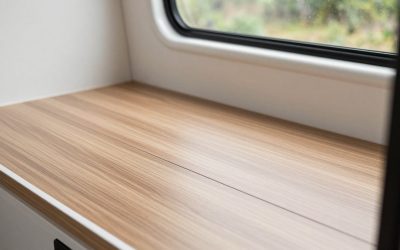
- 3/4″ birch plywood (cabinet grade) — smooth both sides, holds screws well, relatively light at about 60 lbs per 4×8 sheet. The default choice for platform tops.
- 3/4″ OSB (oriented strand board) — stronger for the price, but rougher and heavier. Fine for framing members and substructure, less ideal for the visible top surface.
- 1/2″ birch with 2×4 frame support — lighter than 3/4″ for the top panel but requires more framing below. Good for builds where weight reduction is a priority.
- 1″ Baltic birch — overkill for most builds but useful for very wide spans without intermediate framing.
Sand the top surface and seal with polyurethane or van-specific floor coating. Unsealed plywood absorbs moisture and can warp or develop mold in the humid van environment.
Frame Construction: Wood vs. Aluminum
2×4 or 2×3 pine/fir framing is the most common approach. It’s easy to work with standard tools, screws hold well, and it’s cheap. A 2×4 frame on 16″ centers easily spans the van width without deflection under normal loads. The downside is weight — a fully framed 6’x4′ bed platform in 2×4 adds 40–60 lbs of wood alone.
80/20 aluminum extrusion or T-slot aluminum framing is lighter, more adjustable, and doesn’t absorb moisture. It’s significantly more expensive ($150–$400 for the framing materials) and requires metric hardware and specialized cuts. Popular in builds where every pound matters or where modularity is a priority.
Steel angle iron welded or bolted together — extremely strong, used in off-road and overlanding builds. Requires welding skills or a fabricator. Heavier than wood or aluminum for equivalent strength in a van application.
Van Bed Platform Build Comparison
| Design | Best Van Size | Under-Storage | Material Cost | Build Difficulty | Best For |
|---|---|---|---|---|---|
| Lengthwise Fixed | 148″+ WB | High | $80–$180 | Easy | Full-time living |
| Crosswise Garage | 136″+ WB | Gear garage | $100–$220 | Medium | Outdoor adventure |
| Rock-and-Roll | Any size | Low | $200–$600 | Hard | Compact/stealth vans |
| High-Roof Loft | High-roof only | Full floor | $150–$350 | Hard | Live-work builds |
Under-Bed Storage Access Strategies
Under-bed storage is only useful if you can actually get to it. The three main access methods:
Lift-top panels: The platform top is divided into sections, each hinged or removable. Gas strut lifts hold the panel open while you access the storage below. This is the most accessible option and allows you to reach items anywhere in the storage space. The downside: hinged panels add hardware weight and the mattress must be removed or sectioned to open the lid.
Side-access drawers: Full-extension drawer slides mounted under the platform allow pull-out access from the side or rear of the van. You don’t need to move the mattress. Drawers work best for items you access frequently — clothing, food, tools. Size drawers to clear your wheel wells and leave clearance for the slide mechanism (typically 1″ per side). Heavy-duty drawer slides rated for 100–150 lbs are worth the extra cost for reliability.
Rear-access compartments: Open-face storage bays accessible from the rear doors, between the platform legs. Great for large items you access occasionally. No hardware required — just structural framing with open faces. Add a cargo net or strap to keep items from shifting while driving.
A well-designed platform uses all three: lift-top panels for bulky stored items, drawers for daily-access items, and rear bays for large or rarely-used gear. Plan your van electrical panel location before finalizing the platform design — many builders run 12V wiring along the platform frame, and access to the fuse box and battery connections should not be blocked by the bed structure.
Securing the Platform to the Van
The platform must not shift while driving. Options for anchoring:
- L-brackets to the van floor ribs — most cargo vans have raised floor ribs or tie-down tracks. L-brackets bolted to these give a solid connection without drilling through the floor.
- Anchor bolts into the floor — stainless bolts through the floor with backing plates underneath. Strong but creates potential rust and water intrusion points if not properly sealed.
- Non-slip feet + wall contact — for lighter platforms, rubber non-slip feet on the floor combined with contact against the van walls can be sufficient. Not recommended for heavy builds or aggressive off-road use.
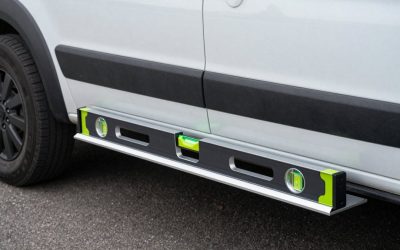
Use van leveling when parked at a campsite to ensure the platform — and your mattress — stays level for sleeping. Our guide on van leveling blocks and jack pads covers the fastest methods for getting a level sleep surface at any campsite.
FAQ: Van Bed Platform Questions
What height should a van bed platform be?
Platform height is a balance between storage depth below and headroom above. In a standard-roof van (interior height ~50″), a 16–18″ platform height gives you 32–34″ of sitting headroom on the mattress — enough to sit upright comfortably. A 12″ platform height is the minimum for useful under-bed storage. In a high-roof van (interior height ~72″), you can go up to 24″ and still have 48″ of headroom above the mattress. Most full-time builders land at 16–20″.
What size mattress fits in a van?
A twin XL mattress (38″x80″) fits lengthwise in most full-size cargo vans with some length to spare. A full/double mattress (54″x75″) fits crosswise in a Transit, Sprinter, or ProMaster — this is the most comfortable option for couples. Many vanlifers use a custom-cut foam mattress to maximize the platform footprint — a 4″–6″ high-density foam mattress cut to your exact platform dimensions costs $80–$200 from foam suppliers and is lighter and thinner than a standard mattress.
Does a van bed platform need ventilation underneath?
Yes. A sealed under-bed space in a van accumulates moisture from below (road humidity through the floor) and above (body heat through the mattress). This moisture leads to mold on the plywood and condensation on the van floor. Drill 1″ ventilation holes through the platform frame every 12–16″, or leave small gaps between the platform legs and the side walls for air circulation. A slatted or grated platform top (instead of solid plywood) allows better airflow but requires a firmer mattress base.
How do I cut plywood for a van bed platform without a table saw?
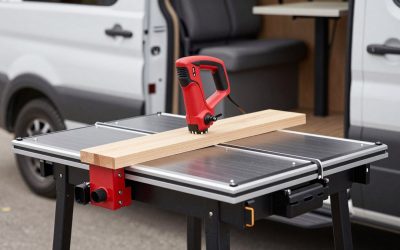
A circular saw with a rip fence or straight-edge guide makes accurate cuts in 3/4″ plywood without a table saw. Clamp a straightedge to the plywood sheet and run the circular saw against it. A jigsaw is necessary for the curved cutouts around wheel wells. If you don’t have tools, most big-box hardware stores (Home Depot, Lowe’s) offer sheet goods cutting for a small fee — bring your cut list and let them rip the large pieces down. You’ll still need a jigsaw for wheel well cutouts at the van.
How much weight can a plywood van bed platform hold?
A properly framed 3/4″ plywood platform on 2×4 framing with supports every 16–24″ easily handles 600–800 lbs of distributed load — more than sufficient for two adults plus a mattress and bedding. The limiting factor in most builds is not the plywood strength but the connection between the platform legs and the van floor. If you’re using L-brackets into factory tie-down tracks, verify the track is fully engaged and the bracket is bolted, not just clipped. For any doubts about structural load, add a center support leg directly to the van floor.
Frequently Asked Questions
What plywood thickness should I use for a van bed platform?
Half-inch birch or Baltic birch plywood is the sweet spot for slat-supported platforms, offering strength at roughly 1.5 pounds per square foot. Three-quarter-inch is stiffer for spans over 24 inches but adds serious weight. Quarter-inch only works with closely spaced supports and is rarely worth the weight saved.
How high should the bed sit above the floor?
Work backwards from your garage. Most people need 30-36 inches of clear space to fit bikes or storage bins, then check you still have 22-26 inches of sitting headroom above the mattress. In a high-roof Sprinter or Transit both fit; in a low-roof van something has to give.
Fixed platform or a convertible bed?
A fixed platform is stronger, faster to build and always ready, which is why most full-timers choose it. Convertible or slide-out beds free up daytime floor space and suit smaller vans and couples who work inside, but every hinge and slide is another failure point and adds noticeable weight.
How do I stop condensation and mould under the mattress?
Air must move under the mattress. Use slats with 1-2 inch gaps rather than solid plywood, or lay a 3D mesh underlay such as HyperVent. Body heat meeting a cold platform is what creates the damp patch, so insulate the floor and cargo walls beneath the bed too.
How do I secure the platform so it survives a crash?
Bolt the legs through the floor into steel crossmembers with backing plates, or weld or bolt into the factory L-track and wall ribs. Screws into plywood alone will not hold a loaded bed under braking. Brace the frame diagonally so it cannot rack, and re-check the bolts every few months.