TL;DR: A Dometic 3 way fridge runs on 12V, 120V AC, or propane — making it uniquely flexible for boondocking and campground use. But compressor fridges have largely surpassed them on efficiency and cooling performance. This guide explains when a 3-way still makes sense, and when it doesn’t.
Dometic 3 Way Fridge: Is It Still Worth It in a Modern Van or RV Build?
The Dometic 3 way fridge has been a fixture in RVs and campervans for decades. Three power sources — propane, 12V DC, and 120V AC — promised ultimate flexibility for travelers who couldn’t predict their next power source. That promise still holds in certain scenarios. But the landscape has changed significantly, and a lot of builds that defaulted to 3-way absorption fridges are now better served by modern 12V compressor units.
As an Amazon Associate we earn from qualifying purchases.

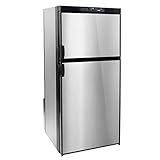

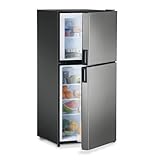


Here’s the honest breakdown of both technologies so you can make the right call for your specific setup.
🛒 Best Price Today on Amazon
Prime members get fast, free shipping on everything above, plus member-only deals. New members get a 30-day free trial — cancel anytime.
Start 30-Day Prime Free Trial →See Today’s Amazon Deals- Top Fridge Options for Van and RV Builds
- 3-Way Absorption vs. 12V Compressor: Side-by-Side
- When a 3-Way Fridge Still Makes Sense
- Why Most Modern Vanlife Builds Choose Compressor
- Dometic’s 3-Way Lineup: Model Differences That Matter
- Practical Verdict for 2026 Builds
- FAQ: Dometic 3 Way Fridge
- Frequently Asked Questions
- Related Articles
Top Fridge Options for Van and RV Builds


As an Amazon Associate we earn from qualifying purchases. Product prices and availability are accurate as of the date/time indicated.

WAYSKA Diesel Heater 12V, 5L Tank, Diesel Heater 2KW, Muffler, Diesel Parking Heater with LCD Monitor & Remote Control for Trucks, Trailer, Boat and Motor-Home


As an Amazon Associate we earn from qualifying purchases. Product prices and availability are accurate as of the date/time indicated.


As an Amazon Associate we earn from qualifying purchases. Product prices and availability are accurate as of the date/time indicated.
3-Way Absorption vs. 12V Compressor: Side-by-Side
See also: MaxxFan Deluxe vs Fantastic Fan for Vans: Which to Choose? • Can I Lay LVP in a Van? Van Flooring Guide
| Feature | Dometic 3-Way (Absorption) | 12V Compressor Fridge |
|---|---|---|
| Power sources | Propane / 12V / 120V AC | 12V DC / 120V AC (via inverter) |
| 12V efficiency | Poor (4–8A continuous) | Excellent (avg 1–3A) |
| Cooling on propane | Excellent | N/A |
| Cooling speed | Slow (3–6 hrs to temp) | Fast (30–60 min) |
| Ambient temp sensitivity | High (degrades above 90°F) | Low |
| Must be level to operate | Yes (within ~3 degrees) | No |
| Moving parts | None (silent) | Compressor (some noise) |
| Freezer capability | Limited (ice tray only) | True freezer possible |
| Typical lifespan | 15–20 years | 7–12 years |
| Price range | $500–$1,500+ | $300–$1,200 |
When a 3-Way Fridge Still Makes Sense
The absorption fridge’s killer feature is propane operation. If you’re in an RV or converted van with a substantial propane system already onboard — and you regularly camp without shore power or solar — running your fridge on propane while driving and switching to AC at campgrounds is a genuinely efficient workflow that’s hard to replicate otherwise.
The other scenario is noise sensitivity. Absorption fridges have zero moving parts and run completely silently. For light sleepers or builds where the fridge is directly adjacent to the sleeping area, the near-silence of absorption cooling is a real quality-of-life advantage. Modern compressor fridges are much quieter than they used to be, but they still cycle on and off throughout the night.
Long-haul RV travelers who regularly use full-hookup campgrounds (shore power) and want propane as a backup have a legitimate use case. The 3-way is a decades-proven technology in that environment. For full-time vanlifers running solar and battery systems, the calculus is different.
Why Most Modern Vanlife Builds Choose Compressor
The efficiency gap is significant. A 3-way fridge running on 12V draws 4–8 amps continuously — it’s not designed for 12V operation as a primary mode. It’s meant as a stopgap between propane and shore power. A quality 12V compressor fridge averages 1–3A depending on ambient temperature and how often you open the door. That’s a 3–4x efficiency difference that matters enormously when you’re budgeting solar and battery capacity.
The levelness requirement is also a real constraint. Absorption fridges need to be within about 3 degrees of level for the cooling system to function properly. Parking on uneven ground — extremely common in dispersed camping and street parking — degrades cooling performance and can damage the unit if operated severely off-level for extended periods. Compressor fridges don’t care.
For side-by-side comparison of the leading 12V compressor options, our dedicated Dometic vs Alpicool comparison and our best 12V portable fridge guide cover the compressor field in detail. If you want dual-zone capability (fridge + freezer in one unit), our dual-zone fridge guide is the right starting point.
Dometic’s 3-Way Lineup: Model Differences That Matter
Dometic produces several 3-way absorption models. Key differentiators are capacity (ranging from 1.6 cu ft up to 7+ cu ft), built-in freezer compartment size, and whether the unit is designed for recessed cabinet installation vs. freestanding. The RM series (RM 2193, RM 2354, etc.) are the workhorses commonly found in factory RV builds. The DM series targets the aftermarket and retrofit segment.
For a DIY van build using a 3-way, the cabinet installation requirements are strict — you need specific clearances for heat dissipation (the rear coils get hot) and ventilation openings sized per the manual. Improperly vented installations are a fire hazard and a performance killer. Budget time and materials for a proper cabinet build if you go this route.
Practical Verdict for 2026 Builds
For a new van build starting from scratch with solar: choose a 12V compressor fridge. The efficiency advantage and levelness flexibility make it the right tool for the modern vanlife power system. Pair it with a solid LiFePO4 battery bank — our LiFePO4 battery guide covers sizing — and your fridge will run reliably off-grid indefinitely.
For upgrading or replacing a fridge in an existing RV with propane infrastructure and a habit of campground hookups: a Dometic 3-way still earns its place. Replacement-in-kind also avoids modifying the existing cabinet cutout.
FAQ: Dometic 3 Way Fridge
How does a Dometic 3 way fridge work?
It uses absorption refrigeration — heat (from propane flame, electric heating element, or 12V element) drives a chemical cycle involving ammonia, hydrogen, and water. No compressor or moving parts. The heat input drives ammonia through evaporation and condensation, which removes heat from the interior. It runs silently but requires the unit to be level for the gravity-fed cycle to function.
Can a Dometic 3 way fridge run on 12V while driving?
Yes, but inefficiently. The 12V mode draws 4–8A continuously from your vehicle’s electrical system. It’s designed to maintain temperature during transit between propane and shore power, not as a primary long-term power source. Running it on 12V while parked and boondocking will drain most battery systems rapidly.
What happens if a 3-way fridge isn’t level?
The absorption cycle relies on gravity for proper fluid flow. Operating more than 3–6 degrees off level causes the ammonia mixture to pool incorrectly, reducing efficiency and potentially causing irreversible damage to the cooling unit over time. Always level the vehicle before extended absorption fridge use.
Is a Dometic 3 way fridge better than a 12V compressor fridge?
Depends on the use case. For solar-powered boondocking builds, a 12V compressor fridge wins on efficiency, cooling speed, and level-ground flexibility. For RVs with substantial propane and regular campground hookups, the 3-way’s multi-fuel capability remains genuinely useful.
How long does a Dometic 3 way fridge last?
15–20 years with proper installation and use is typical. The absorption cooling unit (the heart of the system) can fail earlier if operated severely off-level or with poor ventilation. Replacement cooling units are available but can cost $300–$500+, often making a new compressor fridge a better value proposition for older units.
Frequently Asked Questions
What does 3-way actually mean on a Dometic fridge?
It runs on 120V shore power, 12V from the vehicle, or LP propane gas. The 12V mode is intended only for driving because it draws 10-15 amps continuously, which would flatten a house bank overnight. Automatic energy selection models switch between sources based on what is available.
How much propane does it use per day?
Around one to one and a half pounds daily depending on ambient temperature and how often you open the door, so a 20-pound tank lasts two to three weeks running the fridge alone. That efficiency is why absorption fridges remain popular with people who boondock without large solar arrays.
Why does my absorption fridge stop cooling in hot weather?
Absorption cooling depends on a temperature difference between the boiler and the ambient air, and performance collapses above roughly 90F. Improve the vent stack airflow, add a small 12V fan behind the cooling fins, shade the exterior vent, and never park with the vent side facing afternoon sun.
Do I have to park level?
Yes, within about 3 degrees. Absorption units rely on gravity-driven ammonia flow, and parking on a slope for hours causes crystal blockages that permanently ruin the cooling unit, which is usually more expensive to replace than the whole fridge. Driving is fine because motion keeps the fluid circulating.
Is a 3-way fridge hard to install?
Harder than a compressor fridge, because it needs a sealed enclosure isolated from the living space, a low intake vent and a high exhaust vent on the exterior wall, plus a propane line with a shutoff. Most people have the gas connection done professionally and leak tested.