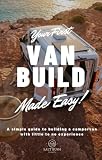
- Top Pick: Van Build: A complete DIY guide to designing, converting and self-building your campervan or motorhome
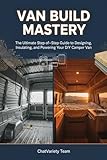
- Best Value: Van Build Mastery: The Ultimate Step-by-Step Guide to Designing, Insulating, and Powering Your DIY Camper Van (DIY Car Repair & Maintenance Series)
- Premium Choice: Build Your Own Box Truck Business Blueprint: A Beginners Guide
Last updated: September 12, 2026


🛒 Best Price Today on Amazon
Prime members get fast, free shipping on everything above, plus member-only deals. New members get a 30-day free trial — cancel anytime.
Introduction
Documenting a van build serves two essential purposes: it creates a reference record for future repairs and modifications, and it produces the content that van life communities — and increasingly, YouTube and social media audiences — love to consume. Whether you're building for yourself or sharing the journey publicly, the right documentation tools make capturing the process effortless. Here's what experienced van builders use to document their conversions, and how to build a system that pays off long after the last panel is screwed in.
As an Amazon Associate we earn from qualifying purchases at no extra cost to you.



What to Look For in Van Build Documentation Tools
See also: Best Ways to Keep a Van Tidy on the Road • Best Cyber Monday Cologne Deals
- Process documentation focus: The most useful build documentation captures the before-and-after of each stage — insulation before paneling, wiring before walls, plumbing before cabinets. These photos and measurements become invaluable when you need to find a wire junction buried behind a wall six months later.
- Measurement and diagram tools: A combination of physical measurements (tape measure, laser measure) and digital tools (apps like SketchUp or RoomSketcher) lets you create accurate floor plans and electrical diagrams that survive the build and inform future modifications.
- Video quality for content creation: If you plan to share your build on YouTube or social media, video quality matters more than photo quality for audience retention. A camera that shoots 4K/60fps with good autofocus makes build content significantly more watchable than smartphone footage.
- Redundant backups: Build footage and reference photos are irreplaceable. A cloud sync plus a physical drive protects months of documentation from a lost phone or corrupted card.
Top Picks: Best Tools for Recording Your Conversion
Sony ZV-E10 II Mirrorless Camera
The Sony ZV-E10 II is purpose-built for content creators and is one of the best van build documentation cameras available. Its APS-C sensor delivers excellent image quality in the mixed lighting conditions of a van build workspace, the fully articulating touchscreen flips out for self-filming progress updates and walk-throughs, and the compact body handles being set on a workbench or tripod in tight van spaces. 4K video, fast autofocus, and excellent in-camera stabilization make build documentation footage genuinely polished. The product-showcase autofocus mode is a standout for build videos, snapping focus to whatever tool or part you hold up to the lens.
Leuchtturm1917 Hardcover A5 Dotted Notebook
Every van builder needs a dedicated build notebook — for measurements, material lists, wiring diagrams, plumbing sketches, and installation notes. The Leuchtturm1917 A5 hardcover notebook is the preference of engineers and makers everywhere: high-quality thick paper that handles marker and pen without bleed-through, numbered pages with an index, and a durable cover that survives construction site conditions. A completed van build notebook is one of the most valuable documents you'll own — the definitive reference for your specific van's construction. The dotted grid is ideal for sketching cabinet layouts and wiring runs to rough scale.
Rode Wireless GO II Microphone System
For van builders who want to create voiceover build videos — narrating the process as they work — clean audio is more important than video quality for audience retention. The Rode Wireless GO II is a compact dual-transmitter wireless microphone system that clips to your shirt, transmits wirelessly to a receiver mounted on your camera, and delivers broadcast-quality audio even in the echoey, ambient-noise environment of a workshop or driveway build. The clean audio transforms build video quality from amateur to professional instantly, and the dual transmitters let you capture two people during collaborative build sessions.
How to Choose Your Documentation Setup
Match your tools to your goal. If you are documenting purely for your own future reference, the notebook plus your existing smartphone camera covers most needs — the discipline of photographing every wall cavity and labeling every wire matters more than the gear. If you intend to publish, invest in the camera and microphone first, because audiences forgive shaky footage far less than they forgive amateur audio.
Build a consistent capture routine rather than relying on inspiration. Photograph each stage from the same few angles, jot the date and key measurements in the notebook, and shoot a short walk-through at the end of every work session. This system means that when you inevitably need to trace a plumbing line or explain your electrical layout to a mechanic, the answer is one notebook page or one photo away.
Digital vs. Analog Records
The strongest approach combines both. Digital photos and video capture visual detail and are easy to search and back up, while a physical notebook survives dead batteries, holds hand sketches and running calculations, and never needs to be charged in the middle of a wiring session. Use the notebook for numbers and diagrams and the camera for visual proof, and back up every digital file to two locations.
Related Guides
- Best Van Conversion Kit: Top Picks to Build Your Camper 2026
- Best Folding Tables for Van Life: Dining, Work, and Outdoor Use
- Best Van Life WiFi Hotspot: Top Mobile Internet Solutions for Working Van Lifers
- Portable Washing Machine for Camping: Best Options Reviewed
- Complete Van Life Solar Setup Guide & Best Kits 2026
Frequently Asked Questions
Do I need a dedicated camera, or is my phone good enough?
For personal reference records, a modern smartphone is entirely sufficient — clarity and consistent angles matter more than sensor size. If you plan to publish build content on YouTube or Instagram, a dedicated camera like the Sony ZV-E10 II delivers noticeably better low-light performance, autofocus, and audio input options that keep viewers watching. Choose based on whether the footage is for you or for an audience.
What is the single most important thing to document during a build?
Photograph everything before you cover it up. Wiring runs, plumbing lines, and insulation all disappear behind walls and cabinets, and the photos you take at that stage become the only map you will ever have of what is inside your walls. Combine those photos with measurements written in your notebook and you can locate any hidden component months or years later without tearing anything apart.
How should I organize my build photos and notes?
Organize by build stage — subfloor, insulation, framing, electrical, plumbing, cabinetry, finishing — so related material stays together. Use a numbered notebook like the Leuchtturm1917 with its built-in index to cross-reference page numbers to photo folders, and name your digital folders with dates and stage labels. A little structure during the build saves hours of searching when you later need a specific reference.
Is clean audio really worth a separate microphone?
For published build videos, absolutely. Viewers tolerate imperfect visuals but abandon videos with echoey, distant, or noisy audio within seconds. A wireless lav system like the Rode Wireless GO II captures your voice clearly even in a reverberant garage or a windy driveway, and it is the single upgrade that most reliably makes homemade build content sound professional.
How do I protect months of build documentation from being lost?
Use redundant backups. Sync photos and video to a cloud service automatically, and periodically copy everything to a physical external drive you keep separate from your camera and phone. Because build documentation is genuinely irreplaceable — you cannot re-photograph a wall once it is closed — treat two independent copies as the minimum, and verify the backups actually contain your files.
Final Thoughts
Documenting your van build is an investment that pays dividends for years. The reference photos and measurements you capture during construction become essential when you need to modify, repair, or upgrade your build — and if you share the journey publicly, the build process content consistently outperforms post-build lifestyle content in the van life creator community. Shoot every stage, keep a thorough notebook, back everything up twice, and you'll thank yourself the first time you need to locate a hidden wire junction behind a finished wall.