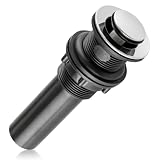
- Top Pick: Pop up Drain for Bathroom Sink,Vessel Sink Drain without Overflow,Black
- Best Value: Artiwell Sink Pop-Up Drain Stopper Assembly with Lift Rod and Overflow, Solid Brass Lavatory Pop Up Drain Assembly for Bathroom Vanity Sink, All Brass Construction (Chrome Plated)
- Premium Choice: Dura Faucet DF-PU202-CP RV Bathroom Sink Pop-Up Drain No Overflow (Chrome)
Last updated: September 18, 2026
Buying a van sink seems simple until the drain leaks on day three, the faucet splashes everywhere, or the pop-up stopper sticks halfway. The most common mistakes are not about style, they are about compatibility. People order a beautiful vessel sink and then learn their drain is for an overflow hole they do not have, or they pair a tall faucet with a shallow bowl and get constant splashback. Others reuse an old drain assembly to save $18 and end up with a slow leak that warps the vanity cabinet.
Another frequent error is ignoring the three numbers that determine whether everything fits: drain diameter, sink hole diameter, and faucet reach. A standard bathroom sink drain is 1.25 inches, while kitchen drains are 3.5 inches, and they are not interchangeable. If your van counter has a single 1.375-inch faucet hole, a widespread faucet that needs three holes spaced 8 inches apart will not work without a new top. Getting these details right before you buy saves a second trip to the hardware store and a plumber callback that costs more than the fixtures themselves. This guide, updated for shoppers in 2026, breaks down what actually matters so you can match drain, faucet, and sink correctly the first time.
As an Amazon Associate we earn from qualifying purchases at no extra cost to you. Product prices and availability are accurate as of the date shown and are subject to change.



- Decide These 3 Things First
- Size, Hole Configuration, and Compatibility
- Material and Finish Durability
- Construction: Drain Assembly Types and How They Fail
- Comfort, Performance, and Daily Use
- Price Tiers: What Your Money Actually Buys
- Warranty, Support, and Delivery / Assembly Realities
- Spec Checklist
- Red Flags
- FAQ
Decide These 3 Things First
Before you compare finishes or brands, lock in these three decisions. They filter 90 percent of incompatible options.
1. Does your sink have an overflow hole? Look for a small hole near the top rim inside the bowl. If you have one, you need a drain with overflow. It has a small side slot that channels water to the overflow outlet. If your sink is a vessel or a modern van top without that hole, you need a drain without overflow. Installing a drain with overflow on a non-overflow sink leaves an open slot inside the drain pipe where water can leak and gunk collects. Installing a drain without overflow on a sink with an overflow blocks that emergency channel and can cause water to pool on the counter if the sink overfills.
2. How many faucet holes do you have? Most van tops come in three configurations: single-hole (one 1.25 to 1.5 inch hole), centerset (three holes with 4 inches between the outer holes), and widespread (three holes with 6 to 16 inches between outer holes, most commonly 8 inches). Measure center-to-center between the holes. Your faucet must match this spread. Single-hole faucets can be installed on a 3-hole sink with a 6-inch deck plate, but a centerset faucet cannot be stretched to fit a widespread layout.
3. What mounting height and depth are you working with? Van faucets typically have a total height of 5 to 8 inches and a spout reach of 4.5 to 6.5 inches. For a standard undermount van sink that is 17 x 14 inches and 5 to 6 inches deep, a 4-inch spout reach leaves your hands too close to the back wall, while a 6.5-inch reach on a small 13-inch vessel causes splashing over the rim. Match reach to bowl size and check clearance under the van mirror or medicine cabinet.
Size, Hole Configuration, and Compatibility
See also: Best Van Water Filter for Refill Stations in 2026: Tested and Ranked • How to Winterize a Van Water System (2026): Step-by-Step
Van sinks are not one-size-fits-all. Standard van sink widths are 16, 19, 21, and 24 inches for single vanities, with double vanities at 48, 60, and 72 inches total. Bowl interior dimensions typically run 15 to 17 inches long, 11 to 13 inches wide, and 5 to 8 inches deep. Vessel sinks sit on top of the counter and are often 16 to 17 inches in diameter and 5 to 6 inches tall, which raises the rim height by that amount and requires a taller faucet.
Check the drain hole diameter in the sink. Almost all bathroom van sinks use a 1.625 to 1.75 inch drain opening to accept a 1.25 inch drain assembly. The threaded tailpiece below is usually 1.25 inches in outer diameter and 6 to 10 inches long. If you are replacing an RV van sink, confirm you do not have a smaller 1 inch tailpiece or a non-standard plastic nut, as seen on some RV-specific models.
For the faucet, verify the shank length under the deck. Standard van counters are 0.75 to 1.25 inches thick. If you have a thick stone top at 1.5 inches or a vessel sink that adds height, you may need a faucet with a longer 2 to 2.5 inch mounting shank plus 30 to 40 inches of braided supply lines with 3/8 inch compression fittings to reach the shutoff valves.
Material and Finish Durability
Material determines weight, feel, and how the finish holds up to daily abrasives and cleaners.
Drains are typically all-brass, brass with zinc alloy components, or stainless steel 304. Solid brass drains weigh 9 to 14 ounces and resist corrosion better than zinc alloy, which weighs 6 to 9 ounces and can pit after 2 to 3 years in hard water if the plating is thin. Chrome plating should be at least 10 microns thick for bathroom use. Matte black and brushed gold finishes are PVD or electrophoretic coatings; budget models use powder coating that chips more easily around the flange.
Faucets follow a similar hierarchy. A solid brass body weighing 3 to 5 pounds will outlast a zinc alloy body at 1.5 to 2.5 pounds. Ceramic disc cartridges are the standard for drip-free performance and are rated for 500,000 cycles. Look for cartridges from established suppliers and confirm replacement cartridges are available. Aerators determine water feel: a 1.2 gallons per minute aerator is WaterSense standard and saves about 30 percent versus older 2.2 GPM models without feeling weak, while 1.0 GPM models can feel too sparse for rinsing.
Sinks themselves are most often vitreous china, fireclay, or solid surface. Vitreous china is 20 to 30 pounds for a 19-inch van top, resists staining, and tolerates cleaners with pH 2 to 12. Fireclay is heavier at 30 to 45 pounds but offers a thicker glaze that resists scratches. Stainless steel is rare for van use but lightweight at 5 to 8 pounds for the bowl.
Construction: Drain Assembly Types and How They Fail
The drain assembly is where cheap construction shows. You have two main operating types.
Pop-up with lift rod and pivot ball: This is the traditional assembly with a lift rod through the faucet, a clevis strap, and a pivot rod that goes through the drain body to lift the stopper. The Artiwell-style assembly is a complete example at around $20.99 and includes the pivot rod, ball, gasket, and brass tailpiece. These seal well and work with overflow sinks, but they have more leak points. The pivot ball seal is the most common failure. If it is plastic instead of brass with a silicone gasket, it can drip within 6 to 12 months.
Click-clack or push-button pop-up without rod: Common for vessel sinks without overflow, like the black vessel drains listed at $16.99 to $18.49. You push the stopper to seal, push again to open. There is no rod, so the drain body is simpler and the look is cleaner. The failure point is the spring cartridge inside the stopper, which typically lasts 2 to 5 years and is replaceable for $5 to $8. These drains must use a solid body without the overflow slot.
Whichever type you choose, insist on a brass tailpiece and brass locknut, not thin plastic. The tailpiece should be 1.25 inches x 6 inches minimum, with coarse threads that do not cross-thread. A rubber gasket and friction washer above and below the sink prevent over-tightening cracks. Hand-tighten plus a quarter turn with channel locks is enough; over-torquing at 15 to 20 foot-pounds can crack vitreous china.
Comfort, Performance, and Daily Use
Comfort comes down to splash, noise, and cleaning effort.
Spout aeration matters. Laminar flow aerators produce a clear, non-splashing stream ideal for shallow van sinks under 5 inches deep. Aerated streams feel softer but splash more if the stream hits the drain stopper directly. Position the spout so the stream lands 1 to 2 inches in front of the drain, not directly on it.
Drain opening speed also affects comfort. A push-button drain should open and close with 2 to 3 pounds of fingertip pressure and stay sealed with 1 to 2 inches of standing water for at least 30 minutes without slow leaking past the silicone stopper ring. Lift-rod drains should lift the stopper 0.5 to 0.75 inches to allow fast draining at 1.5 to 2 gallons per minute.
Consider noise and maintenance. Metal pop-up stoppers click noticeably when closing. Silicone-tipped stoppers are quieter and create a better seal on slightly uneven drain flanges. For cleaning, a drain with a removable stopper and a hair catcher lets you clear debris in 30 seconds without tools. If anyone in the household uses heavy hair products or beard trimmings go down the van sink, this feature prevents clogs that otherwise require removing the P-trap every 3 to 6 months.
Price Tiers: What Your Money Actually Buys
Use these ranges to set expectations. Prices are for individual drain assemblies and single-handle van faucets; sink tops are separate.
Budget drains $10 to $20: This is where you find RV drains around $13.96 and basic vessel click-clack drains at $16.99 to $18.49. Typically chrome-plated zinc alloy or thin brass, plastic pivot ball, and no extra gaskets. Functional for a rental refresh or RV, but expect to replace the stopper cartridge or pivot seal within 2 years under hard water conditions.
Mid-range drains $20 to $35: Solid brass construction, brass tailpiece and nut, thicker PVD finishes, and complete hardware including overflow. The $20.99 brass pop-up assembly sits at the entry to this tier. These weigh 30 to 50 percent more and hold up better to daily tightening and cleaning chemicals.
Premium drains $35 to $75: Heavy brass at 12 to 16 ounces, fine-thread adjustment, color-matched flange to faucet, and often a 5-year to lifetime finish warranty.
Faucets scale similarly: Budget pull-down or single-handle van faucets run $40 to $90, mid-range with ceramic cartridges and brass bodies run $90 to $220, and premium brands with 1.2 GPM WaterSense certification and spot-resistant finishes run $220 to $450. A $50 faucet can work fine, but check that supply lines are braided stainless steel, not vinyl, and that the cartridge is replaceable.
Warranty, Support, and Delivery / Assembly Realities
Warranty length tells you how much the manufacturer trusts the plating and cartridge. Budget drains often carry a 1-year limited warranty that covers manufacturing defects only, and requires you to pay return shipping on a $14 part. Mid-range options typically offer 3 to 5 years on function and finish. Premium faucets often advertise lifetime limited warranties to the original purchaser for leaks and drips, with 5 years on finish, but keep your receipt and order number; without proof of purchase most brands deny claims.
Delivery is straightforward: drains and faucets ship at 1 to 3 pounds total, usually in a 10 x 6 x 4 inch box, with no freight concerns. Inspect on arrival for a bent tailpiece or chipped flange. For assembly, plan 45 to 90 minutes for a DIY drain and faucet swap if shutoff valves work. Tools needed are an adjustable wrench, basin wrench, plumber’s putty or silicone, and Teflon tape. Shutoff valves that have not been turned in 5-plus years often seize; have a plan to replace a 1/2 inch x 3/8 inch compression angle stop if it drips. If your van is an RV, confirm your water pump pressure is 40 to 55 PSI; high household pressure at 60 to 80 PSI can cause RV-specific drains and plastic P-traps to leak at the slip joint.
Spec Checklist
| Spec | Budget | Mid | Premium |
|---|---|---|---|
| Drain Material | Zinc alloy or thin brass, plastic nut, 6-9 oz | Solid brass body and tailpiece, brass nut, 9-14 oz | Heavy brass, 12-16 oz, machined flange |
| Overflow Option | Single option only, may lack proper slot | Choice of with/without overflow, correctly slotted | Both options, labeled and gasket-matched |
| Stopper Mechanism | Push-button with plastic spring, 2-year life | Click-clack with replaceable brass cartridge or brass pivot ball | Brass cartridge, silicone seal, tool-free removal |
| Finish Thickness | Powder or thin electroplate, 5-8 microns | PVD or 10+ micron chrome, resists hard water spots | PVD with 5-year finish warranty, spot-resistant |
| Faucet Body | Zinc alloy, 1.5-2.5 lb, vinyl supply lines | Solid brass, 3-4.5 lb, braided steel lines, ceramic disc | Solid brass, 4-5 lb, 500k-cycle cartridge, 1.2 GPM WaterSense |
| Flow Rate | 1.5-2.2 GPM, may splash | 1.2 GPM aerated or laminar, balanced | 1.0-1.2 GPM with selectable aerator, quiet |
| Warranty | 1 year limited | 3-5 years function and finish | Lifetime limited, 5 years finish |
| Price Range (each) | Drain $10-$20, Faucet $40-$90 | Drain $20-$35, Faucet $90-$220 | Drain $35-$75, Faucet $220-$450 |
Red Flags
Skip any listing that does not clearly state with overflow or without overflow. Vague titles lead to the wrong drain and a return you pay for. Avoid drains that show no underside photo; if you cannot see the overflow slot or solid wall, you cannot confirm compatibility.
Be cautious of faucet listings that omit GPM, cartridge type, and supply line size. No mention of ceramic disc cartridge or 3/8 inch compression fittings usually means plastic internals and vinyl lines that kink.
Watch for mismatched flange diameters. A vessel drain flange should be 2.5 to 2.75 inches to cover the sink hole and seal with putty. A 2-inch flange looks skimpy and can leave a ring gap that collects grime.
Finally, avoid any drain where reviews repeatedly mention leaks at the pivot rod within weeks, a stopper that does not stay up, or a black finish that shows brass within months. Those are plating and tolerance failures that a second unit from the same batch will repeat. Choose a seller that lists exact dimensions, weight, material, and includes all gaskets in the box.
FAQ
Can I reuse my old pop-up assembly with a new van sink?
Sometimes, but measure first. If the new sink has the same overflow status and the tailpiece reaches the P-trap without extension, you can reuse it. However, old putty and compressed gaskets rarely reseal perfectly, and reused pivot ball seals are a top source of slow leaks. For $18 to $25, a new solid brass assembly with fresh gaskets is cheaper than repairing a swollen van cabinet.
How do I know if I need a drain with overflow?
Check inside the bowl for a small 0.5 inch hole near the rim. If it is there, buy a drain labeled with overflow. The drain body will have a rectangular cutout or slot about 0.75 inches tall to align with that channel. If there is no hole, buy without overflow. Do not block an overflow channel with a solid drain, and do not leave the overflow slot open to the cabinet on a vessel sink.
Are universal drains truly universal?
Universal usually means it fits standard 1.25 inch bathroom sinks with a 1.625 to 1.75 inch opening and includes both overflow-compatible and overflow-free gaskets. It does not mean it fits kitchen sinks, 1.5 inch bar sinks, or RV sinks with non-standard tailpieces. Confirm drain diameter, flange size, and total tailpiece length of 6 to 10 inches before ordering, especially for RV van sinks.
What faucet height works best to avoid splashing in a van sink?
For an undermount sink 5 to 6 inches deep, a faucet 6 to 7 inches tall with a 5 to 5.5 inch reach usually lands the stream near the center without hitting the back wall. For a vessel sink 5 to 6 inches tall sitting on the counter, add that height and choose a vessel-height faucet 10 to 12 inches tall with a 6 to 7 inch reach, and keep flow at 1.2 GPM with a laminar aerator to reduce splash.
Ready to decide? Our #1 pick for 2026 is the Drain Material.
Live price & availability on Amazon.