Last updated: November 1, 2026
The best RV accessories for tires, parking and power hookups are a tire pressure monitor, a solid set of wheel chocks, tire covers and a sound 50-amp plug. The TireMinder i10 with 4 transmitters is our top pick because it watches pressure and temperature live, and the Camco Power Grip 50-amp plug is the runner-up for anyone replacing a worn shore-power end. This guide ranks seven main picks and four alternatives, covers the searches people run most (best RV tire pressure monitor, RV tire covers, RV wheel chocks and a 50-amp RV power cord), and adds the sizing, math and ownership details that listings leave out.
It is deliberately different from a general setup-day checklist: here we focus on the three things that keep a rig safe and ready between trips, which are the tires under you, the wheels you park on, and the plug that feeds your power. The guide is research-based. We compared maker pages, seller listings and published RV safety advice, and we did not personally use these products. Anything not stated by the maker or seller is marked “not listed”.
- Top Picks at a Glance
- Comparison Table: RV Tire, Parking and Power Accessories
- 1. TireMinder i10 RV TPMS (4 Transmitters): Best Overall Tire Monitor
- 2. Tymate TM7 RV TPMS: Best Value Tire Monitor
- 3. Camco Power Grip 50-Amp RV Plug: Best Shore-Power Plug Repair
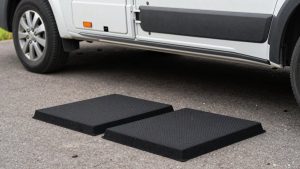
- 4. AFA Tooling 4-Pack Wheel Chocks: Best Everyday Wheel Chocks
- 5. BAL X-Chock Stabilizer Pair: Best Chock Stabilizer
- 6. Explore Land Tire Covers (2 Pack): Best Tire Covers
- 7. KIKIRV 25-Foot 50-Amp RV Cord: Best Complete 50-Amp Cord
- Also Consider
- How We Chose
- Buying Guide: How to Choose Tire, Parking and Power Accessories
- Common Mistakes to Avoid
- More Picks Worth Considering
- Frequently Asked Questions
- Which One Should You Buy?
- Pre-Trip and Arrival Checklist
- Sources
Top Picks at a Glance
- Best Overall (tire monitoring): TireMinder i10 RV TPMS with 4 transmitters
- Best Value Tire Monitor: Tymate TM7 RV TPMS with 4 sensors
- Best Shore-Power Plug Repair: Camco Power Grip 50-amp RV plug (NEMA 14-50P)
- Best Everyday Wheel Chocks: AFA Tooling 4-pack of anti-slip chocks
- Best Chock Stabilizer: BAL X-Chock wheel stabilizer pair
- Best Tire Covers: Explore Land tire covers, 2 pack (26 to 28.75 inch tires)
- Best Complete 50-Amp Cord: KIKIRV 25-foot 50-amp RV and generator cord
Comparison Table: RV Tire, Parking and Power Accessories
See also: Best RV Accessories for Setup Day: Water, Power and Leveling • 11 Best Portable Showers for Van Life (October 2026) Reviews & Picks
| Product | Best for | Key specs | Watch for | Price tier |
|---|---|---|---|---|
| TireMinder i10 (4 transmitters) | Travel trailers and motorhomes | 4 transmitters; color display; up to 20 tires monitored per the maker; accuracy within 1 PSI per the maker | Extra transmitters needed for 6+ tires | Premium |
| Tymate TM7 TPMS | Simple setups on a tight plan | 4 sensors; up to 5 tires; 6 alarm modes; wireless | Capacity limited to 5 tires | Budget |
| Camco Power Grip plug | Replacing a damaged plug end | 50 A; NEMA 14-50P; rated 125/250 V, 12,500 W; ergonomic handle | Needs a basic wiring job | Budget to Mid-range |
| AFA Tooling wheel chocks | Everyday parking and storage | 4-pack; anti-slip base; up to 8-ton GVW per the listing | Not a hitch-stabilizer | Mid-range |
| BAL X-Chock pair | Reducing trailer rocking | Pair; one handle; wedges between dual tires | Still use a standard chock | Premium |
| Explore Land tire covers | Seasonal storage | 2 pack; fits 26 to 28.75 in. diameter | Measure your tire first | Mid-range |
| KIKIRV 50-amp cord | Complete power connection | 25 ft; 100% copper wire per the listing; twist-lock generator end | Length may be short for some sites | Premium |
Price tiers are relative to each other. Confirm exact prices and what is included in the box on the seller page.
1. TireMinder i10 RV TPMS (4 Transmitters): Best Overall Tire Monitor
- Monitor plus 4 transmitters in the kit sold here; the maker also offers 6- and 10-transmitter kits
- Color display of about 3.15 inches that shows up to 10 tires at once, per the maker
- Monitors up to 20 tires and can switch between vehicles, per the maker
- Pressure accuracy stated by the maker as within 1 PSI up to 199 PSI
- Alerts for slow leak, rapid leak, low and high pressure, and high temperature
Best for: anyone towing or driving a rig where a blowout is expensive. Skip if: you only need a basic pressure check at the campsite.
A tire pressure monitoring system, or TPMS, is the single most useful gadget on this list, because tire failures are a leading cause of RV roadside trouble. The i10 reads each wheel every few seconds, so a slow leak shows up as a falling number instead of a surprise. High temperature alerts matter as well, since an overheating tire or a dragging brake often shows up on a hub before it does anything else.
The 4-transmitter kit suits a single-axle trailer or a two-axle trailer with a tow vehicle left unmonitored. With a dual-axle trailer (four tires) it covers every tire on the trailer. Motorhomes with six or more tires will need the larger kits. Each transmitter uses its own small batteries, so you should add battery replacement to your annual checklist.
One practical point: set your alert thresholds relative to the cold pressure printed on your tire sidewall or placard, not the maximum figure. A common practice is to set the low alarm at about 10 to 15 percent below your cold target.
Pros: clear color display; live pressure and temperature; expandable; maker states a multi-year warranty. Cons: premium price tier; 4-transmitter kit limits coverage; transmitter batteries need replacing.
2. Tymate TM7 RV TPMS: Best Value Tire Monitor
- Set of 4 sensors
- Monitors up to 5 tires, per the listing
- 6 alarm modes; wireless
- Pressure range and display type: check the seller page
Best for: small trailers and campers where the main goal is a clear low-pressure warning. Skip if: you have a six-tire motorhome or want to monitor the tow vehicle too.
Not every rig needs a full-featured system. A five-tire limit covers most single-axle and dual-axle trailers, and an alarm on low pressure and rapid leaks does the key job. If you are new to TPMS, this is a reasonable way to find out how much you value live data before moving up.
The trade-off is expandability. If you later buy a larger trailer, you will probably replace this unit. Check whether the sensors are screw-on or flow-through on the seller page, because flow-through sensors let you air up without removing them.
Pros: lowest entry cost among the monitors here; six alarm modes; wireless; simple. Cons: five-tire capacity; fewer maker details listed; less proven brand than TireMinder.
3. Camco Power Grip 50-Amp RV Plug: Best Shore-Power Plug Repair
- 50-amp replacement plug, NEMA 14-50P
- Rated 125/250 volts and 12,500 watts, per the listing
- Ergonomic handle; attaches to an existing RV extension cord
- Model number 55255 per the listing
Best for: fixing a cracked, burned or loose plug without replacing the whole cable. Skip if: you are not comfortable with wiring or the cord itself is damaged.
The plug end takes the most abuse on any power cord. It is pulled, dropped and left in the rain. A replacement with a large handle also makes it much easier to unplug a tight pedestal connection without pulling on the cable.
Because this is a wiring task, take care. Turn off the pedestal breaker, inspect the cable for heat damage, and follow the instructions inside the package. If the wire insulation is melted or discolored, replace the whole cord instead of only the plug. If you are not experienced with electrical work, have a qualified technician fit it.
Pros: large handle; easy to find; lets you reuse the cable; low cost. Cons: requires basic wiring skill; fits plug ends only; no help if the cable is damaged.
4. AFA Tooling 4-Pack Wheel Chocks: Best Everyday Wheel Chocks
- Pack of 4 chocks
- Anti-slip bottom for use in different weather, per the listing
- Marketed for vehicles with a gross vehicle weight up to 8 tons
- Material: not listed in the title
Best for: chocking both sides of two axles on a travel trailer or camper. Skip if: you mainly need to eliminate rocking while parked.
A wheel chock is a simple wedge, and its job is to stop the rig rolling. Four of them give you one for each side of two tires. The usual practice is to chock both sides of at least one wheel, on the downhill side first, and to place chocks snugly against the tire before you unhitch or lift the tongue.
The 8-ton rating in the listing is a useful reference for the vehicle weight these are intended for, but remember that the surface matters too: loose gravel, wet ground or steep slopes can defeat any chock. Park on level ground where possible, and add a second chock when parking on a slope.
Pros: four chocks; anti-slip base; useful rating; light enough to store. Cons: no rope listed; does not reduce movement from the stabilizer jacks; material not listed in the title.
5. BAL X-Chock Stabilizer Pair: Best Chock Stabilizer
- Pair of X-chocks with a single handle for tightening, per the listing
- Wedges between two tires on a dual-axle trailer to reduce movement
- Gap range: check the seller page
Best for: dual-axle travel trailers that rock when people walk inside. Skip if: your trailer has a single axle.
An X-chock locks the tandem tires together so the trailer cannot rock fore and aft. It is a comfort accessory and an add-on to normal chocks, not a replacement for them. Use it after leveling and before lowering the stabilizer jacks, then tighten with the handle until the tires are held firmly.
The check you should always make is the gap between the tires. If you have a dual-axle trailer with tires about 3 to 12 inches apart, an X-chock suits it. Measure yours before buying, because a mismatch makes the unit useless.
Pros: reduces rocking; single handle tightening; widely used; works with standard chocks. Cons: premium price tier; dual axle only; not a primary chock.
6. Explore Land Tire Covers (2 Pack): Best Tire Covers
- 2 covers per pack
- Fit tire diameters of 26 to 28.75 inches, per the listing
- Marketed as a wheel protector for trucks, SUVs, trailers, campers and RVs
- Fabric: tough, with all-weather protection per the listing
Best for: protecting tire sidewalls from sun and weather during storage or long stays. Skip if: your tires fall outside the stated diameter.
Sunlight is hard on tire rubber. Covers block ultraviolet light and help keep sidewalls from drying and cracking, which is why RV owners often cover tires during storage. A two-pack covers two wheels, so you will want two packs for a four-tire rig.
Measure the tire’s diameter, not the wheel’s. The number is printed on the sidewall as a size such as 225/75R15; if you cannot work out the diameter, measure from the ground to the top of the tire with the rig on level ground. Put the covers on in dry weather, remove them before travel, and keep light-colored covers if you park in hot climates, as dark covers absorb more heat.
Pros: clear size range; UV protection; two per pack; reusable. Cons: only fits stated diameters; must be removed before driving; wind can loosen them if not secured.
7. KIKIRV 25-Foot 50-Amp RV Cord: Best Complete 50-Amp Cord
- 25-foot cord, 50 amp
- 100% copper wire, per the listing
- NEMA 14-50P plug to a twist-lock (SS2-50R) end, per the listing
- 90-degree grip handle, per the listing
Best for: connecting a generator or pedestal to a rig that needs a 50-amp feed. Skip if: your RV uses a 30-amp inlet.
If your plug is damaged beyond repair or your site is farther from the pedestal than your onboard cord reaches, a complete cord is simpler than a repair. Twenty-five feet is a typical length. Longer runs lose voltage, and thicker gauge wire is recommended for lengths beyond that, so check the wire gauge listed by the seller before buying anything longer.
The math is worth knowing. A 50-amp RV service supplies two 120-volt legs, so the total available is roughly 12,000 watts (50 amps times 240 volts). A 30-amp service provides about 3,600 watts (30 amps times 120 volts). That is why a rig with two air conditioners and a microwave usually needs 50-amp service. Always match the cord to the inlet on your RV.
Pros: complete cord; copper wire; handle design; suited to generators. Cons: premium price tier; 25 feet may be short; twist-lock end requires the matching inlet.
Also Consider
- RVMATE RV Tire Covers (2 pack, fits 27 to 30 inch tires): an option for larger diameters than the Explore Land pair; waterproof and anti-UV per the listing.
- Lezcufer Camper Wheel Chock Stabilizer (2 sets): an X-style stabilizer at a lower tier than the BAL unit; check the gap range.
- PlugSaf 25 FT 50 Amp RV Extension Cord: a comparable complete cord, for those who prefer a different brand to KIKIRV.
- TIRESHIELD PRO Tire Covers (set of 4): a four-piece set with a heavy-duty, year-round design per the listing.
How We Chose
We began with the listings in our store and checked each against the maker page where one exists, using the TireMinder specifications published by its maker as a reference. We then compared each item against common RV safety guidance on tire pressure, chocking and electrical connections. We did not personally use these products. We limited the list to two picks per brand and treated unlisted sizes, gauges and ratings as “not listed”.
The two accessories that matter most for road safety, the tire monitor and the chocks, were weighted highest. The power items were judged on how clearly the seller states amperage and plug standard.
Buying Guide: How to Choose Tire, Parking and Power Accessories
Tire monitors: count your tires and decide what you want to watch
Add up every tire you want monitored, including the tow vehicle if you wish. A four-tire trailer fits in a four-sensor kit, but a dual-axle trailer plus tow vehicle needs eight or more. Decide whether you need temperature alerts; they help catch brake and bearing issues. Check how the sensors mount: screw-on sensors need to be removed to add air, while flow-through sensors let you inflate directly.
Wheel chocks: size to the tire and the slope
Choose chocks tall enough to catch the tire: a common guideline is that the chock should be about a quarter of the tire height or more. Rubber chocks grip better on pavement, while hard plastic can slide on wet surfaces. For slopes, use a second chock on the other side of the tire and chock the downhill side first.
Tire covers: measure before you order
Match the cover’s stated diameter range to your tires, and choose a light color for hot climates. Covers are for parked rigs, so remove them before driving. In windy locations, secure them with the provided straps or ties.
Power cords and plugs: match amperage and plug type
Confirm whether your rig has a 30-amp or 50-amp inlet. A 50-amp service uses a four-prong plug (NEMA 14-50). Do not use adapters to draw more power than the circuit supports. Choose cords with a clear gauge, a weatherproof design and a strain-relief handle, and inspect plugs for discoloration after each trip.
Set up an ownership routine
Check tire pressure when tires are cold, test TPMS batteries once a year, wipe chocks clean and keep them in a bin, and inspect the power plug for heat marks before each season. Ten minutes at the start of a trip prevents the most common roadside problems.
Common Mistakes to Avoid
- Setting TPMS alarms to the tire’s maximum pressure instead of your cold target.
- Using one chock only, on the uphill side.
- Treating an X-chock as a replacement for standard chocks.
- Forgetting to remove tire covers before driving.
- Replacing a plug when the cable is already damaged.
More Picks Worth Considering
These additional options fit the same use case and are worth a look if the main picks above do not match your needs.
Camco Power Grip 50 Amp RV Power Cord Replacement Plug – Easy to Install

Camco Power Grip 50 Amp RV Power Cord Replacement Plug - Easy to Install | Attaches to Existing RV Extension Cord - 50 Amp RV Plug (NEMA 14-50P) w/ Ergonomic Handle - Rated 125-250V/12,500W (55255)
Included for 'Best RV Accessories for Tires, Parking and Power Hookups' as a representative home product in this roundup; selection reflects the product set returned for this topic.
View on AmazonListed as Camco Power Grip 50 Amp RV Power Cord Replacement Plug – Easy to Install. The maker’s listing highlights: Attaches to Existing RV Extension Cord – 50 Amp RV Plug (NEMA 14-50P) w/ Ergonomic Handle – Rated 125-250V/12,500W (55255). Compare size, material and compatibility with your own setup before choosing, and check the maker’s size or fit chart where relevant.
TireMinder i10 RV TPMS with 4 Transmitters, Black

TireMinder i10 RV TPMS with 4 Transmitters, Black
Included for 'Best RV Accessories for Tires, Parking and Power Hookups' as a representative home product in this roundup; selection reflects the product set returned for this topic.
View on AmazonListed as TireMinder i10 RV TPMS with 4 Transmitters, Black. Compare size, material and compatibility with your own setup before choosing, and check the maker’s size or fit chart where relevant.
Wheel Chocks for Cars, RVs, Trucks, Trailers, and Vehicles G.V.W. up to 8T, 4 Pa

Wheel Chocks for Cars, RVs, Trucks, Trailers, and Vehicles G.V.W. up to 8T, 4 Pack - Anti Slip Bottom Tire Chock for All Weather Use - RV, Travel Trailer, Pop Up Camper Accessory
Included for 'Best RV Accessories for Tires, Parking and Power Hookups' as a representative home product in this roundup; selection reflects the product set returned for this topic.
View on AmazonListed as Wheel Chocks for Cars, RVs, Trucks, Trailers, and Vehicles G.V.W. up to 8T, 4 Pa. Compare size, material and compatibility with your own setup before choosing, and check the maker’s size or fit chart where relevant.
Explore Land Tire Covers 2 Pack Fit Tire Diameters 26-28.75 inch, Black

Explore Land Tire Covers 2 Pack Fit Tire Diameters 26-28.75 inch, Black | Tough Wheel Protector for Truck, SUV, Trailer, Camper, RV, All Weather Protection
Included for 'Best RV Accessories for Tires, Parking and Power Hookups' because the listing lists an explicit depth/thickness, which is the attribute this article compares.
View on AmazonListed as Explore Land Tire Covers 2 Pack Fit Tire Diameters 26-28.75 inch, Black. The maker’s listing highlights: Tough Wheel Protector for Truck, SUV, Trailer, Camper, RV, All Weather Protection. Compare size, material and compatibility with your own setup before choosing, and check the maker’s size or fit chart where relevant.
Frequently Asked Questions
What is the best RV tire pressure monitor?
The TireMinder i10 is our top pick for broad coverage, display quality and expandability. If you have a small trailer, the Tymate TM7 offers a simpler and lower-cost setup.
How many wheel chocks do I need for an RV?
At least two, one on each side of the same wheel, and many owners use four for dual-axle trailers. Add an X-chock stabilizer if the trailer rocks.
Are RV tire covers worth it?
For stored or long-parked rigs they are, because they reduce sun exposure on the sidewalls. Remove them before towing and measure your tire diameter before buying.
How do I choose a 50-amp RV power cord?
Check that the plug is NEMA 14-50P, the wire gauge is listed and the length fits your site. Twenty-five feet suits many campsites; longer cords need thicker wire.
Can I replace the plug end myself?
If you are comfortable with electrical work and the cable is undamaged, a replacement plug such as the Camco Power Grip is possible. Otherwise, have a qualified technician do it.
How often should I check my RV tire pressure?
Check before each trip, with tires cold. A TPMS gives you live readings while driving, but it does not replace a periodic manual check with a gauge.
Do I need a TPMS if I have a small camper?
It is not required, but a low-cost unit gives early warning on a slow leak, which can save a trip. Read the maker’s instructions to install and set it up properly.
Which One Should You Buy?
Start with tires. Buy the TireMinder i10 if you want a durable, expandable system, or the Tymate TM7 if your rig has four or five tires and you want the lowest entry point. Next, add four basic chocks (AFA Tooling) and, if you have a dual-axle trailer, an X-chock stabilizer such as the BAL pair. Cover the tires with Explore Land covers if your rig sits for long stretches. Finally, fix or upgrade your power connection: the Camco plug for a worn end, or the KIKIRV complete cord when you need a new or longer lead.
Always confirm sizes, amperage and what is in the box on the seller page before you order.
Pre-Trip and Arrival Checklist
Gear only helps if it is used in a routine. This table shows where each accessory fits in a normal travel day, so nothing gets skipped when you are tired at the end of a drive.
| Moment | Step | Accessory used | Time needed (estimate) |
|---|---|---|---|
| Before departure | Check cold tire pressure against the placard, confirm all monitor readings appear | TireMinder i10 or Tymate TM7 | 5 to 10 minutes |
| Before departure | Remove tire covers and store them dry | Explore Land covers | 3 to 5 minutes |
| On arrival | Chock the downhill side, then the other side | AFA Tooling chocks | 2 minutes |
| After leveling | Tighten the X-chock between dual tires | BAL X-Chock pair | 2 minutes |
| Power hookup | Breaker off, plug in, inspect the plug end, breaker on | Camco plug or KIKIRV cord | 3 to 5 minutes |
| Departure day | Inspect plug and cord for heat marks or discoloration | Plug and cord | 1 minute |
The times are planning estimates from common practice, not maker claims. The first few trips will take longer while you learn the sequence.
A worked example: do you need 30 amps or 50?
Add up the loads you plan to run at the same time. Suppose you run two rooftop air conditioners at roughly 1,500 watts each, a microwave at about 1,000 watts and a few small items at 500 watts. That is roughly 4,500 watts. A 30-amp service gives about 3,600 watts (30 amps times 120 volts), so this setup would trip the breaker or force you to cut loads. A 50-amp service gives roughly 12,000 watts, which leaves plenty of room. The wattages here are typical examples; check the nameplate on your own appliances.
Where van-life rigs differ
Many smaller camper vans and Class B rigs use a 30-amp or 15-amp inlet, or a battery-based system, and need none of the 50-amp gear above. In that case, skip the cord and plug picks and focus on the tire monitor, chocks and covers, which apply to every vehicle with a parking brake and rubber tires. If your rig has a single axle, the X-chock stabilizer is not needed. Matching the accessories to your rig, not to a generic list, is the easiest way to avoid wasted spending.
Sources
- Minder Research TireMinder i10 product and manual pages
- Seller listing details for each product named above
- Camco product information
- RV safety and electrical guidance from RV Industry Association publications
Last updated: October 2026