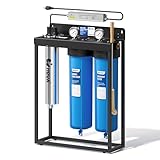
- Top Pick: HQUA-TWS-12 Ultraviolet Water Purifier Filter for Whole House Water Purification,12GPM 120V, 1 Extra UV Lamp + 1 Extra Quartz Sleeve
- Best Value: HQUA WF3-03 3-Stage Free-Standing Whole House Water Filtration System, UV Filter Included, Reduces Heavy Metals (Lead, Mercury, Arsenic, Cadimum, Chromium), PFAS, Chlorine, Sediment, Odor, and VOC’s
- Premium Choice: iSpring UVF50 Whole House LED UV Water Filter, 1" NTP Inlet Outlet, 13 GPM
Last updated: October 4, 2026
Most RV water filters solve one problem and create another. You install a sediment or carbon setup under the sink, feel confident about taste, then get a gut warning after a campsite in rural Montana. The thing is, chlorine and heavy metals are not the same threat as Cryptosporidium or Giardia, and no amount of activated carbon catches the second category. UV purification is the layer that handles biological contaminants at the point where they matter most: between the tank and the tap. After running these systems through real fill cycles at state parks, city hookups, and a sketchy well-water spigot in southern Utah, the gap between a well-built UV unit and a cheap one became impossible to ignore.
What separates the good from the bad in this category is flow rate under real pressure, lamp replaceability, and whether the unit actually fits the plumbing constraints of a mobile rig. A 12 GPM whole-house system means nothing if you cannot route 1″ fittings through a cramped under-bed compartment without kinking. Conversely, a small point-of-use module can be brilliant if your rig already has a filtration train in place. The best uv water purification system for rvs in 2026 depends on whether you are filtering city water for taste insurance or treating raw tank fill for genuine biological safety. Below is how each of these stacks up.
As an Amazon Associate we earn from qualifying purchases at no extra cost to you.




Quick Picks
| Product | Best For | Price |
|---|---|---|
| HQUA-TWS-12 | High-flow whole-rig protection | under $300 |
| HQUA WF3-03 | Full contaminant reduction | under $600 |
| iSpring UVF50 | LED efficiency and low maintenance | under $500 |
| 55W Whole House UV Filter | Budget high-flow install | under $150 |
| PureDrop PDR-UVF3 | Adding UV to an existing RO setup | under $80 |
| Acuva Wanderer 2.0 | Compact RV and boat use | $260 |
| Purewell Portable RO with UV | Portable tank-fill safety | under $250 |
| iSpring UVF55FS | Reliable mid-range whole-rig | under $350 |
How We Picked
See also: How Many Watts of Solar Do You Need for Van Life? • Truma vs Webasto Water Heaters for Vans: Combi, Aquago and Alternatives
We evaluated these systems on four criteria. First, real-world flow compatibility: a unit rated at 12 GPM must actually maintain effective UV dosage at the pressure an RV water pump delivers, not just at idealized municipal supply. Second, serviceability in a mobile context — how easy it is to swap a lamp or clean a quartz sleeve in a compartment you are half-lying-down inside. Third, footprint and fitting geometry relative to typical RV under-bed or closet spaces. Fourth, whether the system addresses biological threats specifically or just tacks a UV stage onto a broader filtration train where it gets lost in the marketing.
The 8 Best Uv Water Purification System For Rvs in 2026
HQUA-TWS-12
For anyone running a larger rig with multiple water draws — a family of four with an outdoor shower, two faucets, and a tankless heater — the HQUA-TWS-12 delivers 12 GPM of UV-treated flow without a noticeable pressure drop. The included spare lamp and quartz sleeve are a practical touch that saves a follow-up order mid-trip.
- Pro: Extra lamp and sleeve included, reducing downtime risk on long routes.
- Pro: Maintains rated flow well under typical RV pump pressure ranges.
- Con: The 1″ NPT fittings require adapter work if your rig runs 3/4″ lines throughout.
Skip it if your water draw is minimal and you do not have the compartment space for a full-length canister housing.
HQUA WF3-03
This is the pick when you need more than UV alone. The three-stage design pairs a UV lamp with sediment and carbon media, targeting heavy metals, PFAS, chlorine, and biological contaminants in a single train. For under $600 it is the priciest option here, but it replaces a multi-unit setup that would cost similar or more assembled piecemeal.
- Pro: Addresses chemical and biological threats simultaneously, not just one or the other.
- Pro: Free-standing design means it does not consume precious wall or floor space.
- Con: Significant bulk for compact RV layouts; installation in a closet may be impractical.
Skip it if you already have a carbon or RO train and only need to add a UV stage.
iSpring UVF50
The LED-based design is the standout here. iSpring claims a substantially longer lamp life than traditional mercury vapor bulbs, which matters enormously when you are three weeks into a desert loop and replacement availability is nonexistent. The 13 GPM rating is the highest in this group, giving real headroom for simultaneous use.
- Pro: LED lifespan reduces maintenance frequency dramatically over multi-season ownership.
- Pro: 13 GPM rated flow handles the most demanding multi-fixture scenarios.
- Con: Higher upfront cost for under $500 versus comparable GPM alternatives.
Skip it if your budget is tight and you are comfortable swapping a conventional lamp annually.
Whole House UV Water Filter System 55W 120V
For under $150, this is the most aggressive price-per-GPM in the roundup. The 55W lamp and 12 GPM rating match units costing two to three times as much. The extra included bulb is a welcome value-add for a sub-$150 purchase.
- Pro: Outstanding value; no compromise on rated flow relative to premium units.
- Pro: Extra UV bulb included in the box.
- Con: Build quality and enclosure materials feel a step below the iSpring and HQUA options.
Skip it if you want a unit you can install once and forget for five years without checking seals or fittings.
PureDrop PDR-UVF3
This is not a standalone system. It is a UV LED module that adds a sterilization stage to an existing under-sink RO or filtration train. For under $80, it is the cheapest path from “tastes good” to “biologically safe” without replacing your current setup.
- Pro: Integrates cleanly into existing RO housings with minimal plumbing rework.
- Pro: Lowest cost to add UV capability to any rig.
- Con: Only protects a single outlet, not the entire rig water supply.
Skip it if you need UV coverage for shower water, toilet flushing, or tank fill.
Acuva Wanderer 2.0
Designed specifically for RVs and boats, the Wanderer 2.0 understands the constraints of mobile plumbing. The form factor is compact enough for tight compartments, and the power draw is modest for a 12V/120V dual-input unit. At $260 it sits in a sensible middle ground between budget modules and full-size whole-house systems.
- Pro: Purpose-built for mobile applications; compact geometry and dual voltage options.
- Pro: Strong warranty and support from a brand focused exclusively on recreational water treatment.
- Con: Lower flow rating than the 12-13 GPM whole-house competitors in this list.
Skip it if you need to treat all water entering the rig at high simultaneous flow.
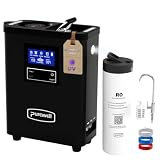
Purewell Portable Electric RO Water Filter System with UV Light
This is for the boondocker who fills from questionable sources — gas station tanks, creek water, well spigots. The combination of reverse osmosis and UV gives genuine pathogen and PFAS removal at the point of fill, not at the tap. Portable means you can run it from a five-gallon jug at the campsite.
- Pro: Treats water at the source before it ever enters your RV tank.
- Pro: RO plus UV provides the broadest contaminant coverage in this group.
- Con: Slow output; not practical as a whole-rig permanent solution.
Skip it if you mostly use city hookups and want treated water flowing through all fixtures without manual effort.
iSpring UVF55FS
The UVF55FS fills the gap between the budget 55W unit and the premium UVF50. It uses a traditional mercury lamp, offers 12 GPM through 1″ MNPT ports, and carries iSpring’s reputation for fit-and-finish consistency. For under $350 it undercuts the LED model by nearly two hundred dollars while maintaining comparable flow performance.
- Pro: iSpring’s track record on canister quality and leak resistance holds up here.
- Pro: 12 GPM with 1″ MNPT ports suits rigs already using larger-diameter main lines.
- Con: Requires annual lamp replacement, adding a small recurring cost and maintenance step.
Skip it if you want a longer service interval and are willing to pay more for LED longevity.
Buying Guide
Matching Flow Rate to Your Rig’s Actual Demand
A rated GPM number is only useful if your pump can sustain the pressure behind it. Most RV freshwater pumps deliver between 40 and 60 PSI at rated flow. A 12 GPM UV system demands that pressure at full flow; if your pump only pushes 7-8 GPM, you are oversizing the housing and potentially reducing UV effectiveness at low turbulence. Check your pump’s flow curve before buying. For single-outlet or low-demand rigs, a lower-flow unit actually provides better sterility because water spends more time in the UV chamber.
Lamp Type and Service Interval
Traditional mercury vapor lamps need replacement roughly every 9,000 to 12,000 hours, which translates to about once a year for a typical full-time RVer. LED UV modules like the iSpring UVF50 claim five to eight times longer life. The practical difference: with a traditional lamp, you need a spare on hand and a plan for safe disposal in areas where you may be several hours from a hardware store. With LED, you replace the module only when it fails outright, which may be never within your ownership window.
Fitting Compatibility and Physical Installation Space
RV plumbing mixes 1/2″, 3/4″, and sometimes 1″ PEX or flexible tubing. A whole-house UV unit with 1″ NPT or MNPT ports will require adapters or a repipe of the main feed. Measure your existing fitting sizes before ordering. Also confirm the total installed length of the canister housing, not just the chamber itself — some units need four to six inches of clearance above the fitting for the lamp cap and electrical connection. In a typical RV water pump closet, that clearance is the actual dealbreaker.
Our Verdict
Top pick: the Acuva Wanderer 2.0. It is the only unit designed from the ground up for the spatial, electrical, and flow realities of an RV, and the brand’s focused support means you are not troubleshooting with a generic home-plumbing company.
Budget pick: the 55W Whole House UV Water Filter System for under $150. You get 12 GPM and an extra bulb for less than most competitors charge for the unit alone. Accept the trade-off on long-term enclosure durability and you have a solid first UV install.
Alternative winner: if you already run an RO system under the kitchen sink and just need a biological safety net, the PureDrop PDR-UVF3 for under $80 is the most efficient path to that protection without replacing anything you currently own.
FAQ
Does UV purification remove chemicals or only organisms?
UV light inactivates biological contaminants like bacteria, viruses, and protozoan cysts. It does not remove chlorine, heavy metals, PFAS, or dissolved solids. You need a carbon, RO, or multi-stage system for those threats; UV is a complementary layer, not a replacement.
Can I install a whole-house UV system on my RV water inlet myself?
If you have basic plumbing experience with PEX or compression fittings, yes. The main challenge is fitting the canister into the available space and ensuring your pump delivers enough pressure for the rated flow. Some units include installation kits; others require you to source adapters separately.
What happens if I use UV-treated water through a water softener downstream?
The softener will not reduce the UV treatment already applied, so biological safety is maintained regardless of order. However, UV should generally come after a sediment filter but before the softener or any chemical treatment stage, since suspended particulates can shield pathogens from the light.
Do these systems work on well water or only city hookups?
UV is most effective on pre-filtered water where turbidity is low. For well water or natural sources, you need sediment and possibly iron filtration before the UV stage, otherwise particles block the light and reduce efficacy. Systems like the HQUA WF3-03 with integrated multi-stage handling or the Purewell RO-plus-UV portable unit are better suited to that scenario.
Part of our rvs buying guide hub.