Last updated: October 4, 2026
Buying a 12-volt refrigerator is not simply a matter of choosing the biggest cooler or the lowest price. Many shoppers compare listed capacity and temperature range, then overlook the compressor itself, power draw, ventilation, wiring, and how the unit will be installed. Those mistakes can lead to a fridge that drains a battery overnight, struggles in a hot vehicle, or does not fit the available space.
The most useful way to decide what to look for in 12v fridge compressor models is to treat the appliance as a complete system. The compressor, insulation, thermostat, cabinet, power connection, and warranty all affect real-world performance. A portable 23-quart cooler and a built-in 40-liter RV refrigerator may both run on 12 volts, but they serve very different needs. Use the guide below to compare them on practical details rather than marketing language.
As an Amazon Associate we earn from qualifying purchases at no extra cost to you.


Decide These 3 Things First
- Choose the installation type. A portable fridge can move between a car, boat, campsite, and home. A built-in refrigerator is designed for a fixed cabinet and needs adequate ventilation, a level mounting surface, and often a more permanent electrical connection.
- Decide whether you need cooling or freezing. A refrigerator that reaches around 35°F is suitable for drinks and fresh food. A unit rated to approximately 0°F or below can freeze food, but freezing generally requires more energy and a longer compressor run time.
- Measure power and space before shopping. Confirm whether you have a 12-volt socket, a dedicated battery circuit, or a 12/24-volt system. Measure width, depth, height, door clearance, and ventilation space. Allow at least 1 to 2 inches around compressor ventilation areas unless the manufacturer specifies a different requirement.
Size and Capacity
See also: How Many Watts of Solar Do You Need for Van Life? • Truma vs Webasto Water Heaters for Vans: Combi, Aquago and Alternatives
Capacity is usually listed in quarts or liters, but exterior dimensions matter just as much. A 23-quart refrigerator may suit drinks, snacks, and a few meals for one or two people, while a 30-quart model offers more flexibility for weekend trips. A 40-liter built-in refrigerator is closer to a compact household appliance and may be better for an RV, boat, office, or cabin.
As a rough planning guide, allow 10 to 15 quarts per person for a short trip if the fridge is used mainly for drinks and prepared food. For longer trips, fresh ingredients, or separate frozen storage, plan on 18 to 25 quarts per person. Remember that usable space is reduced by baskets, dividers, rounded corners, and any freezer compartment.
Check more than the advertised volume. A portable unit may measure approximately 23 to 30 inches long, 13 to 16 inches wide, and 14 to 18 inches high. Weight commonly falls between 25 and 45 pounds. Built-in models can be heavier and may require a cabinet opening that is several inches larger than the internal storage area. Verify the compressor location before assuming a unit will slide into an existing space.
Materials and Insulation
The outer shell should resist scratches, moisture, and the vibration that comes with travel. Textured plastic is usually lighter and practical for portable models. Stainless steel can provide a more finished appearance for an RV, boat, apartment, or office, but it may add weight and show fingerprints.
Insulation is more important than a premium-looking exterior. Thick, well-fitted insulation helps the compressor cycle less often, especially when the fridge is exposed to a hot vehicle interior. Look for a tightly sealing lid or door, a substantial gasket, and hinges that do not flex when opened. A removable basket is useful because it lets you lift food out without leaving the door open while searching.
For a portable fridge, also inspect the handles, corner protection, and lid latches. Handles should support the full loaded weight, which can easily exceed 50 pounds after adding food and drinks. For a built-in model, consider the finish around the door, the quality of the seal, and whether the cabinet can tolerate condensation and occasional spills.
Construction and Compressor Design
A genuine compressor refrigerator uses a refrigerant circuit to provide active cooling. It is fundamentally different from a thermoelectric cooler, which often has limited cooling performance and may only reach a certain number of degrees below ambient temperature. If you need reliable refrigeration or freezing, confirm that the listing specifically identifies a compressor system.
Check the rated voltage range. A model labeled 12/24 volts offers more flexibility for boats, RVs, solar setups, and battery systems than a 12-volt-only appliance. Look for low-voltage protection with selectable settings or documented cutoff points. This feature helps prevent excessive battery discharge, but it does not replace a properly sized battery monitor.
Construction details also include the power cable, plug, fuse, and compressor ventilation. A cigarette-lighter plug is convenient, but it can loosen or overheat in a worn socket. A dedicated fused circuit is generally more dependable for permanent installations. Never block the compressor vents, and avoid placing the unit directly against a hot wall or in a sealed cabinet.
Comfort and Cooling Performance
Performance is not just the lowest temperature printed on the box. Ask how quickly the unit is expected to cool, whether it can freeze while partly full, and how its controls work. A digital display is useful for checking the set point, while an interior light and removable divider improve everyday convenience.
Temperature ranges vary widely. A portable model advertised at approximately -8°F to 50°F is positioned as a refrigerator-freezer, while another may be listed at -4°F to 68°F. Those numbers describe the control range, not guaranteed performance in every ambient condition. A hot car, direct sun, poor ventilation, and frequent lid opening can all increase compressor run time.
Noise matters in a sleeping vehicle or small cabin. Look for a published noise rating, ideally around 45 decibels or lower, but remember that the compressor may sound louder during startup. Anti-vibration feet, a level installation, and clearance around the cabinet can reduce rattling. If the manufacturer provides no noise information, treat quiet operation as unconfirmed rather than assuming it.
Price Tiers
In the current market, portable 12-volt compressor refrigerators commonly fall into three broad price groups:
- Budget: $140 to $220. These models often provide 20 to 30 quarts of storage, basic digital controls, and a portable plastic cabinet. The EUHOMY 23-quart model for under $150 and a BougeRV 30-quart example for under $250 illustrate this range. Check cable quality, warranty coverage, and temperature consistency carefully.
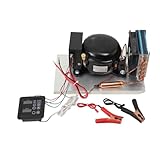
- Midrange: $220 to $400. Expect improved insulation, stronger handles, better baskets, more robust controls, and sometimes dual-zone storage. A standalone 12-to-24-volt compressor listed around $215 may be priced near the entry point, but it may require separate installation and does not represent the cost of a complete refrigerator.
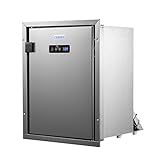
- Premium or built-in: $400 to $700 or more. These units may use stainless-steel finishes, larger capacities, fixed mounting, better trim, and features suited to boats or RVs. A 40-liter CIGREEN built-in refrigerator priced for under $600 is an example of this category. Budget separately for wiring, cabinet work, and ventilation if it is not a direct replacement.
Do not pay more solely for a lower advertised temperature. Pay for the capacity, construction, installation fit, service support, and power efficiency that match your use.
Warranty and Service
A compressor appliance is a long-term purchase, so warranty terms deserve the same attention as capacity. Look for at least a one-year limited warranty on the complete unit, with the compressor covered for a clearly stated period. Confirm whether labor, shipping, replacement parts, and return freight are included.
Read the exclusions. Damage from incorrect voltage, blocked ventilation, vehicle vibration, modification, or water exposure may not be covered. A seller that provides a phone number, replacement power cables, thermostats, baskets, and seals is more useful than one that only offers a generic contact form.
Keep the receipt, serial number, installation photos, and original packaging until the unit has operated successfully for several weeks. Test the temperature and power connection immediately, while the retailer’s return window is still open.
Delivery and Assembly
Portable models usually require little assembly, but they should be transported upright whenever possible. If the refrigerator has been laid on its side during shipping, allow the manufacturer’s recommended settling time before turning it on. Put it on a level, stable surface and leave ventilation space around the compressor.
Built-in models involve more planning. Measure the cabinet opening to within 1/8 inch, check whether the door can open at least 90 degrees, and identify the location of the power connection before delivery. Allow room for the cable, fuse, airflow, and service access. Professional installation may cost approximately $100 to $400 for a straightforward RV or boat replacement, while custom cabinet changes can cost more.
Inspect the box for crushed corners or punctures before signing for delivery. Photograph damage, test the door seal, and make sure all baskets, cables, plugs, and mounting hardware are present.
Spec Checklist
| Spec | Budget | Mid | Premium |
|---|---|---|---|
| Typical price | $140–$220 | $220–$400 | $400–$700+ |
| Capacity | 20–30 quarts | 30–50 quarts | 40–70 liters |
| Voltage | 12V | 12/24V preferred | 12/24V, installation-ready |
| Temperature capability | Refrigerator, sometimes freezer | Refrigerator-freezer | Refrigerator-freezer with finer controls |
| Typical running draw | Approximately 35–60 watts while running | Approximately 40–70 watts while running | Approximately 45–80 watts while running |
| Weight | 25–40 pounds | 30–55 pounds | 40–75 pounds |
| Installation | Portable plug-in | Portable or semi-permanent | Built-in mounting and dedicated wiring |
Wattage figures are buying-guide ranges, not universal specifications. Always use the manufacturer’s rated input and account for compressor cycling rather than multiplying running watts by 24 hours without adjustment.
Red Flags
- The listing calls the product an “electric cooler” but never confirms compressor refrigeration.
- No input wattage, voltage range, fuse guidance, or low-voltage protection is provided.
- The temperature claim is impressive, but there is no information about ambient conditions or ventilation.
- The product has no clear warranty, service address, replacement parts, or return procedure.
- Dimensions exclude handles, hinges, plugs, or the compressor bulge.
- A built-in model provides no mounting dimensions or airflow instructions.
- Reviews repeatedly mention melted plugs, condensation, inconsistent temperatures, or premature shutdowns.
FAQ
Is every 12-volt fridge a compressor refrigerator?
No. Some 12-volt coolers use thermoelectric technology. Confirm that the product description identifies a compressor and provides a compressor-style temperature range if freezing is important.
How many watts does a 12-volt compressor fridge use?
Many compact models draw roughly 35 to 80 watts while the compressor is running, but actual energy use depends on insulation, ambient temperature, set point, ventilation, and how often the lid or door opens. Use the manufacturer’s wattage and plan for startup and cycling demands.
Can I run a 12-volt fridge from a car outlet?
Yes, if the outlet and vehicle wiring are rated for the appliance. Check the fuse rating and plug fit, and avoid an extension cord that is too thin. For overnight or extended use, a dedicated auxiliary battery is safer than relying on a starting battery.
What is the best size for two people?
A 20- to 30-quart portable fridge is usually a practical starting point for short trips, drinks, and prepared meals. Choose 40 quarts or more for longer travel, fresh ingredients, or a dedicated freezer section. Measure the vehicle or cabinet first so capacity does not come at the expense of ventilation and access.