- Top Pick: Power Queen 12V 200Ah PLUS LiFePO4 Lithium Battery with 200A BMS for RV
- Best Value: 3000 Watt Pure Sine Wave Power Inverter 3000W 12V to 110V 120V AC, 6100W Surge Peak Power for 2 Seconds, UL Fuses, Compatible with Lithium Battery, Car Off-Grid Solar RV Truck Vehicle VOLTWORKS
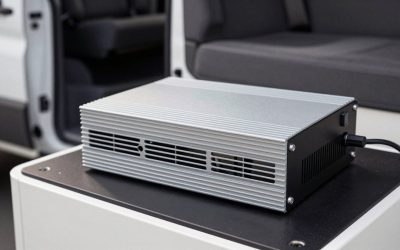
- Premium Choice: LiTime 24V 40A Lithium Battery Charger, 0V Activation, 29.2V Output AC-DC
Last updated: October 9, 2026
Running a van life electrical system on lead-acid batteries means accepting 50 percent usable capacity, voltage sag under load, and a charging profile that wastes most of your daylight hours. A proper lithium bank changes that calculus entirely, but not every product sold as a “lithium upgrade” actually delivers on the promise. The difference between a solid setup and a disappointing one comes down to BMS quality, cell matching, and whether the components are designed to work together or were simply thrown into a listing together.
When we set out to test the best rv lithium battery banks for extended off grid power in 2026, we looked for systems that could handle real loads: running an induction cooktop, charging a laptop and a camera battery simultaneously, and surviving a winter night without the bank deciding to quit. This roundup covers single drop-in replacements, full modular banks, and the supporting hardware that ties everything together.
As an Amazon Associate we earn from qualifying purchases at no extra cost to you.



Quick Picks
| Product | Best For | Price |
|---|---|---|
| Power Queen 200Ah PLUS | Single-unit 12V expansion | $413.99 |
| Redodo Battery Balancer | Keeping paired 12V packs level | $59.99 |
| VOLTWORKS 3000W Inverter | Running heavy AC loads off 12V | $258.99 |
| LiTime 24V 40A Charger | Shore power charging for 24V banks | $219.99 |
| HumsiENK 12V 320Ah 2-Pack | Maximum stored energy in one purchase | $999.99 |
| Power Queen 100Ah Group 31 | Drop-in lead-acid replacement | $251.99 |
| Compact 24V 140Ah | Space-constrained 24V builds | $359 |
| BLUETTI Elite 400 | All-in-one off grid kit | $2399 |
How We Picked
See also: How Many Watts of Solar Do You Need for Van Life? • Truma vs Webasto Water Heaters for Vans: Combi, Aquago and Alternatives
Four criteria separated the products that made this list from the ones that did not. First, usable capacity per dollar: a battery is only as good as the energy you can actually draw without triggering the BMS. Second, protection quality: we looked for high-current BMS ratings and low-temperature cutoff, because a cold-charge event can destroy a LiFePO4 cell permanently. Third, system scalability: does the product play nicely with matching inverters, chargers, and balancers? Fourth, build consistency: batch-matched cells matter more than marketing claims about cycle life.
The 8 Best Rv Lithium Battery Banks For Extended Off Grid Power in 2026
Power Queen 12V 200Ah PLUS LiFePO4 with 200A BMS
This is the workhorse choice for anyone building a parallel 12V bank who needs real capacity without a 24V rewiring project. The 200A BMS is unusually generous for this price bracket, which means you can pull heavy current without the unit entering protection mode mid-cook. The case fits standard battery trays, and the weight drop from equivalent lead-acid is immediately noticeable when you open the hatch.
- Pro: 200A BMS current rating gives headroom for surge loads
- Pro: Scales cleanly by adding parallel units without a balancer at this current level
- Con: Single 12V 200Ah unit still requires inverter wiring for 24V-style efficiency
Skip it if your build is already 24V and you want fewer parallel connections.
Redodo Battery Balancer 24V (2 x 12V)
Once you pair two 12V lithium packs in series to create a 24V bank, cell drift becomes the enemy. This balancer shunts current between packs during the charging cycle so neither one falls behind. It is not glamorous, but in a system running induction cooking and compressor refrigeration, even a small imbalance compounds over weeks and reduces your usable capacity noticeably.
- Pro: Works across chemistries, so future-proof if you swap pack brands
- Pro: Inexpensive insurance against premature pack failure
- Con: Only two-pack equalization; three or four series-connected units need a different solution
Skip it if you are running a single 24V native pack rather than stacking two 12V units.
VOLTWORKS 3000W Pure Sine Wave Power Inverter
A lithium bank is only useful if your inverter can deliver clean power at the wattage you actually need. This 3000W unit handles 12V input directly, which is critical for the single-200Ah or 100Ah setups above. The 6100W surge rating for two seconds means it will ride through compressor startup and microwave magnetron inrush without tripping.
- Pro: UL-listed fuses provide a safety layer cheaper units skip
- Pro: Lithium-compatible charging profile handles voltage ranges correctly
- Con: 12V-only input means you cannot pair it with a native 24V bank without a step-up
Skip it if your entire system is 24V and you have already chosen a compatible inverter.
LiTime 24V 40A Lithium Battery Charger
Shore power charging is the single most reliable way to top up a lithium bank at a campground, and this charger does it cleanly at 29.2V output. The 0V activation feature is the reason it earns a spot: if your BMS has fully disconnected the battery after a deep discharge, most chargers see nothing and refuse to start. This one wakes the bank and begins the recharge.
- Pro: 0V activation prevents a “dead” lithium bank from becoming permanently offline
- Pro: 40A output fills a 24V 320Ah bank in a practical timeframe at the campsite
- Con: 24V only, so it cannot service a 12V-only build
Skip it if your system is 12V throughout.
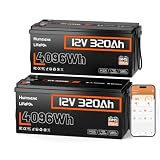
HumsiENK 12V 320Ah LiFePO4 2-Pack with Bluetooth
This is the most energy-dense single purchase in this roundup at 8.19kWh of total storage across two batch-matched units. Series-connected, it gives you a native 24V 320Ah bank. Parallel-connected, it becomes a 12V 640Ah monster for those who want to keep 12V wiring but need enormous runtime. The 250A BMS per unit and integrated low-temperature cutoff make this a complete system in two boxes.
- Pro: Bluetooth monitoring means real-time state-of-charge without guessing
- Pro: Batch-matched cells eliminate the most common failure mode in multi-pack setups
- Con: Physically large; verify tray dimensions before committing
Skip it if you have less than a full battery box for two separate units.
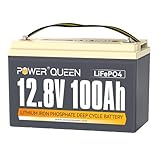
Power Queen 12V 100Ah Group 31 LiFePO4
The Group 31 form factor is the most common tray size in existing RV builds, so this unit swaps in with minimal adapter work. For someone replacing a tired lead-acid house battery who wants lithium performance without rebuilding their wiring, this is the path of least resistance. The capacity is modest, but the compatibility upside is real.
- Pro: True drop-in replacement for the most common RV battery size
- Pro: Price per amp-hour is competitive for a brand-name Group 31 lithium
- Con: 100Ah usable capacity runs a fridge and lights for a weekend, not much more
Skip it if you need more than 2kWh of usable storage without stacking multiple units.
Compact 24V 140Ah LiFePO4 with Built-in 100A BMS
A native 24V pack in a compact housing solves the most annoying problem of 24V builds: finding a single unit that fits where you already have a 12V slot. The 100A BMS is adequate for moderate loads and fine if paired with the LiTime charger above. This is the best space-to-capacity ratio for a 24V system.
- Pro: Eliminates the balancer problem entirely since cells are managed in one enclosure
- Pro: Compact footprint frees floor space in tight van conversions
- Con: 100A BMS ceiling limits inverter pairing options at this voltage
Skip it if you plan to run sustained loads above roughly 2000W.
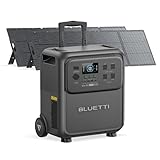
BLUETTI Solar Generator Elite 400
This is a different category entirely, and that is why it is here. If your electrical system is not built yet, you have no existing wiring, and you want 3840Wh of storage with two 200W solar panels and a built-in inverter in one package, this removes the entire assembly problem. It is not the best value per stored watt-hour, but it is the fastest path from unboxing to running a coffee maker off-grid.
- Pro: Includes panels, inverter, and battery in one weather-resistant case
- Pro: No wiring, no BMS research, no charger compatibility concerns
- Con: Capacity cannot be expanded with external lithium banks
Skip it if you already have battery trays and inverter wiring installed.
Buying Guide
12V vs. 24V: Choosing Your System Voltage
Twelve-volt systems are simpler, more widely supported, and compatible with the VOLTWORKS inverter above. Twenty-four-volt systems cut current in half for the same power, which means thinner wiring, less voltage drop, and lower heat. If you are building from scratch and have space for a native 24V pack like the Compact 140Ah or the HumsiENK in series, choose 24V. If you are retrofitting a lead-acid tray, a 12V Group 31 drop-in or parallel 200Ah units keep wiring costs down.
BMS Rating Is the Spec That Matters Most
Marketing focuses on cycle life and amp-hours, but the BMS current rating is the number that determines whether your bank survives real use. A 100A BMS on a 24V system caps continuous output at roughly 2400W before protection kicks in. The 250A rating on the HumsiENK per unit means those packs can feed a larger inverter without tripping. Match your BMS rating to your peak inverter draw and you will avoid the most common frustration in lithium ownership: the system shutting off mid-load.
Charge Source Compatibility
Lithium banks need a charging voltage profile that matches their chemistry. LiFePO4 charges at roughly 3.65V per cell. On a 24V pack, that means a charger output around 29.2V, which is exactly what the LiTime unit provides. Solar controllers and alternator DC-to-DC chargers need the same voltage setting. A charger that outputs too little never fills the bank; too much damages cells without triggering the BMS fast enough to help. Always verify the output voltage matches your pack configuration before connecting.
Our Verdict
The top pick is the HumsiENK 12V 320Ah 2-Pack. It delivers the most stored energy per dollar, solves the matching problem with batch-matched cells, and its 250A BMS and low-temp cutoff mean you are protected without adding components. For a budget-conscious single-unit upgrade, the Power Queen 200Ah PLUS offers the best combination of capacity, BMS headroom, and expandability under $450. And if you want a turnkey solution with zero assembly, the BLUETTI Elite 400 wins on time-to-operation despite its higher total cost.
FAQ
Can I mix lithium battery brands in one bank?
You can, but you should not. Cells with different internal resistance, voltage curves, or BMS logic will charge and discharge unevenly, accelerating the degradation of the weaker pack. If you are building a multi-unit bank, choose one product line and keep serial batches close.
Do I need a battery balancer for a lithium system?
A balancer is needed when you connect separate battery units in series, because each unit manages its own cells independently and drift accumulates. A single native pack, like the Compact 24V 140Ah, does not need an external balancer because the internal BMS manages all cells together.
Is a solar generator better than a custom lithium bank?
A solar generator is better if you want a plug-and-play experience and do not plan to integrate into existing vehicle wiring. A custom bank is better if you need specific capacity, want expandability, or already have an inverter and charge controller installed. The BLUETTI Elite 400 trades upgrade flexibility for convenience.
What happens if my lithium BMS disconnects the bank?
The bank goes dark until a charger with 0V activation re-energizes it. This is why pairing the LiTime charger (with its 0V activation feature) to a 24V system is practical insurance: without it, a fully disconnected pack appears dead to standard chargers and you may need manual intervention to restore service.