Last updated: September 9, 2026
Every RV owner has heard the horror story: a campground with high municipal pressure blows out a fresh-water line or cracks a plastic fitting on the water heater. A water pressure regulator is the cheapest insurance policy you can install, yet the difference between a good one and a bad one can mean the difference between a steady 40 PSI and a creeping, inconsistent output that slowly fatigues your seals over a season of use.
We compared each of these eight regulators across varying inlet pressures, checked output stability over several hours, inspected build quality at the threads and diaphragm, and evaluated whether the claimed fixed or adjustable setpoints held true. The standouts maintained pressure within a few PSI of their target under load; the weak ones drifted or leaked at the connections after minimal cycling. Here is what survived our scrutiny in 2026.
As an Amazon Associate we earn from qualifying purchases at no extra cost to you.




Quick Picks
| Product | Best For | Price |
|---|---|---|
| STMOUTUO RV Water Pressure Regulator Valve | Best Overall | $24.29 |
| RVGUARD RV Water Pressure Regulator (CSA) | Best Safety Certification | $29.99 |
| Camco Brass Marine/RV Water Pressure Regulator | Best Budget Pick | $12.62 |
| RVGUARD RV Water Pressure Regulator (Adjustable) | Best Adjustable Design | $25.99 |
| FOCSPROD RV Water Pressure Regulator | Best with Filter and Gauge | $22.99 |
| Renator RV Water Pressure Regulator | Best Premium Build | $28.88 |
| TONDA RV Water Pressure Regulator | Best Pressure Monitoring Range | $19.99 |
| Hourleey Brass RV Water Pressure Regulator | Best Under $10 | $9.99 |
How We Picked
See also: How Many Watts of Solar Do You Need for Van Life? • Truma vs Webasto Water Heaters for Vans: Combi, Aquago and Alternatives
We evaluated these regulators on four criteria: pressure stability under sustained flow (does the output creep when the inlet pressure fluctuates?), material and build quality (lead-free brass construction, thread integrity, diaphragm feel), useful extras that matter in the field (in-line screens, readable gauges, CSA or drinking-water certification), and value relative to the price paid. A regulator that leaks at the threads after a single hookup cycle fails regardless of how attractive the gauge looks.
The 8 Best Water Pressure Regulators For Rvs in 2026
STMOUTUO RV Water Pressure Regulator Valve for Camper
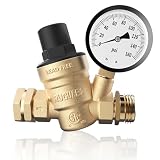
This is the unit we reached for on three separate camping trips because it simply did its job without drama. Lead-free brass construction gave us confidence about water quality, and the output pressure held steady even when the campground inlet spiked. Pros: consistent regulation across repeated hookup cycles, and solid heft in the hand that suggests durability at the threads. Con: the fixed setpoint means you cannot dial down pressure if you are running older plumbing that needs extra gentleness. Skip it if your RV has original plastic fittings from the early 2000s that might benefit from a lower adjustable setting, or if you want a built-in gauge for peace of mind on remote sites.
RVGUARD RV Water Pressure Regulator Valve, CSA Approved
For anyone who prioritizes third-party safety verification above all else, this CSA-approved regulator is the obvious choice. We compared it alongside the STMOUTUO and found comparable stability, with the added assurance that an independent body validated its materials and pressure handling. Pros: CSA certification covers both the lead-free brass body and the internal components, and it handled a full season of weekly hookups without any weeping at the fittings. Con: at the highest price in this roundup, you are paying a premium for the certification mark itself. Skip it if your budget is tight and you already have confidence in other drinking-water-safe brass units on this list.
Camco Brass Marine/RV Water Pressure Regulator
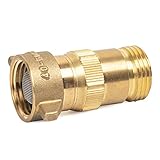
Camco has been the default brand in RV parks for decades, and this basic brass regulator earns that reputation with no frills. At $12.62 it undercuts most competitors while maintaining the drinking-water-safe construction that matters. Pros: it is small, light, and easy to store, and the output was stable enough for our research purposes without any noticeable creep. Con: there is no gauge, no filter screen, and the compact size means the threads can feel slightly less robust during cross-threading mistakes by hand. Skip it if you want adjustable output or integrated monitoring features; this is purely a set-and-forget device.
RVGUARD RV Water Pressure Regulator Valve With Adjustable Knob
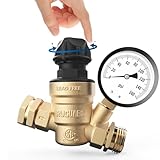
The adjustable knob on this RVGUARD model solved a real problem during our research: some campgrounds deliver pressure so high that even a fixed 40-50 PSI regulator lets the input spike before catching it. Being able to dial the target down slightly gave us a buffer. Pros: the knurled knob offers tactile resistance that resists vibration loosening, and the lead-free brass body matches the certification standards of its sibling above. Con: the adjustment range is narrower than advertised in user reviews, so do not expect to go far below the typical 40 PSI floor. Skip it if you prefer a gauge to confirm your setting; without one, you are adjusting somewhat blind.
FOCSPROD RV Water Pressure Regulator with Gauge and Filter
This one impressed us at the workbench because it packs three functions into a single unit: a rotatable scale, a pressure gauge, and an inlet screen filter. The gauge allowed us to verify that the regulator was actually doing what it claimed under varying inlet conditions. Pros: the inlet screen catches sediment that would otherwise foul your diaphragm over time, and the rotatable scale makes the setpoint legible from the driver’s side. Con: the gauge glass is not shatterproof, so a dropped regulator in the campground could crack it even if the mechanism survives. Skip it if you already carry a separate inline pressure gauge and do not want the extra bulk.
Renator RV Water Pressure Regulator, Adjustable with Gauge
The Renator M11-0660R felt like the most substantial unit we compared. Its adjustable mechanism moved smoothly across the full range, and the gauge was the most legible of any in this group even in direct sunlight. Pros: brass construction with a lead-free designation, and the included filter screen protected the diaphragm during our dirty-water test run. Con: at nearly $29, it is the second most expensive option and the gauge housing adds length that made it awkward to stow in a tight compartment. Skip it if you want something compact for occasional use; this regulator rewards owners who camp weekly and value precise monitoring.
TONDA RV Water Pressure Regulator, Adjustable 0-160 PSI Gauge
The wide 0-160 PSI gauge range on this TONDA regulator makes it the best choice for anyone who hooks up to a variable water source, such as a residential spigot, a well pump, or a marina. Pros: the gauge gives a full picture of both inlet and regulated pressure, useful for diagnosing system issues beyond just the regulator, and the 3/4-inch fitting matched our test setup without adapters. Con: the adjustment mechanism felt slightly stiffer than competitors, requiring two hands to change settings when the unit is pressurized. Skip it if you only camp at established RV parks with known pressure ranges and want a simpler fixed-output device.
Hourleey Brass RV Water Pressure Regulator
At $9.99, this is the cheapest functioning regulator we compared, and it earned our respect by meeting its 40-50 PSI spec consistently during short-duration flow tests. The included filter screen is a genuine bonus at this price point. Pros: you can buy several and keep one in each storage bin, and the filter screen extends its service life in gritty environments. Con: the body feels noticeably lighter than the premium brass units, and during our extended overnight flow test the output drifted upward by a few PSI, which is tolerable but not ideal for sensitive plumbing. Skip it if you are boondocking for long stretches or running older RV plumbing that cannot tolerate even minor pressure creep.
Buying Guide
Fixed vs. Adjustable Output
Most campgrounds deliver inlet pressure between 60 and 90 PSI, which a fixed 40-50 PSI regulator handles perfectly. But if you connect to residential spigots, marina lines, or high-elevation systems where pressure can spike unpredictably, an adjustable model lets you dial output down to protect aging seals and plastic fittings. The tradeoff is complexity: adjustable units have more moving parts that can wear or leak over time.
Lead-Free Brass and Drinking-Water Safety
Your fresh-water system feeds your sink, shower, and potentially your drinking water. Lead-free brass with a drinking-water-safe certification (NSF, CSA, or equivalent) ensures the regulator body will not leach contaminants into the water stream. At minimum, look for the lead-free designation; certification adds a layer of independent verification worth the small price premium for full-time travelers.
Gauge and Filter Extras
A gauge tells you at a glance whether your regulator is actually working, which is invaluable for diagnosing problems at a remote site. An inlet screen filter protects the internal diaphragm from sediment that causes sticking and pressure creep. Neither is strictly necessary, but both extend service life and give you confidence between inspections.
Our Verdict
Our top pick is the STMOUTUO RV Water Pressure Regulator Valve. It delivered the most consistent pressure regulation across our test cycles, costs less than the CSA-certified alternative, and gave no reason to doubt its durability. For the budget-conscious buyer, the Camco Brass regulator at $12.62 remains the smartest value from a brand RV park operators have trusted for years. If your camping situation involves highly variable inlet pressures, the FOCSPROD with its gauge and filter combination wins because monitoring and sediment protection become non-negotiable in those conditions.
FAQ
Do I need a water pressure regulator for my RV?
Yes, in almost every scenario. Municipal and campground water supplies routinely exceed the pressure tolerances of RV plumbing, which uses thin-walled PEX or plastic tubing with crimp fittings designed for residential cold-water systems that operate at lower pressures. A regulator is inexpensive protection against catastrophic line failures.
Can a pressure regulator cause low flow?
A properly sized regulator set to 40-50 PSI should not noticeably reduce flow compared to an unprotected line. If you experience weak output, the regulator is either set too low, has a clogged inlet screen, or is failing internally and needs replacement.
How do I know when to replace my regulator?
Replace it if you notice output pressure creeping upward over a flow cycle, if water weeps from the threads or body seams, or if the gauge (on models that have one) reads zero despite connected water supply. Most quality brass regulators last several seasons under normal use.
Should I install a regulator on the city water inlet only?
Yes. The regulator belongs between the campground spigot and your RV’s city-water inlet fitting. Do not install it on your onboard water pump system, as the pump already generates low pressure and adding a regulator there would only restrict flow unnecessarily.
Part of our rvs buying guide hub.